by Gabrielle DeSantis

While it’s easy to assume that large vehicles like pickup trucks will automatically offer higher levels of safety, this isn’t always the case. As such, it is always important to specifically shop for vehicles with high safety ratings and good crash test scores. If you’re on the hunt for a midsize pickup truck, the Toyota Tacoma, Honda Ridgeline, and Ford Ranger all made it to MotorTrend’s list of the safest trucks of 2021.

The Honda Ridgeline: MotorTrend’s safest midsize pickup truck

MotorTrend has compiled a list of the safest full-size and midsize trucks currently available for 2021. The 2021 Honda Ridgeline is the first midsize pickup truck on this list, with reviewers calling it “one of the safest trucks you can buy.”

The Ridgeline has five-star ratings from the NHTSA in both front and side impacts. Notably, it is also the only vehicle in its class to get an overall five-star rating from the NHTSA. The Ridgeline also received top ratings in almost every IIHS test, although its subpar standard headlights prevented it from becoming a Top Safety Pick.

This pickup starts at $36,490. It makes 280 hp and 262 lb-ft of torque and has a combined fuel economy of 21 miles per gallon. Standard safety features include adaptive cruise control, lane keep assist, and lane departure warning.

What to expect from the Toyota Tacoma pickup truck

Second on the list is the 2021 Toyota Tacoma, which outsells every other pickup truck in the segment, according to MotorTrend. This truck has a five-star side-impact rating from the NHTSA and received four stars in its front impact and rollover tests.

The Tacoma stands out as being the only vehicle in its class to receive a Good headlight rating from the IIHS, with the caveat that you must upgrade to the optional lights. It received Good ratings in almost every IIHS test, with a slightly lower Acceptable rating for passenger-side small overlap. Several key safety features, including emergency braking and pedestrian impact warning, are not available.

The 2021 Tacoma has an MSRP of $32,665. It features a 3.5-liter V6 that makes 278 hp and 265 lb-ft of torque and has a combined fuel economy of 20 miles per gallon. While this truck does not include emergency braking or pedestrian impact warning, it does come standard with the Toyota Safety Sense suite of features. These include lane departure warning and adaptive cruise control.

How the Ford Ranger ranks

The Ford Ranger pickup truck | Vachira Vachira/NurPhoto via Getty Images

The 2021 Ford Ranger made it onto MotorTrend’s list of the safest midsize pickup trucks thanks to its plethora of safety technology. It offers an emergency braking system and pedestrian impact warning, making it the only vehicle in its class with these features.

However, the Ranger ranks third on the list due to the fact that its aging platform resulted in lower crash test ratings. It has an overall score of four stars from the NHTSA and received just three stars in its rollover test. However, it performed well in the front- and side-impact tests, receiving four and five stars, respectively.

In IIHS testing, the Ranger performed identically to the Tacoma. It received perfect scores in each category except passenger-side small overlap, where it received a score of Acceptable.

This truck has an MSRP of $24,820. It features a 2.3-liter inline-four that makes 270 hp and 310 lb-ft of torque. Auto stop-start technology comes standard on the Ranger, and it is EPA estimated to get 23 miles per gallon combined. Standard safety features include a rearview camera, stability control, and a post-crash alert system.

Each of these vehicles offers excellent safety ratings. If you’ve been shopping for a midsize truck, it’s definitely worth taking a look at the Honda Ridgeline, Toyota Tacoma, and Ford Ranger.

RELATED: The Most Satisfying New Pickup Trucks According to Consumer Reports

The post The 3 Safest Midsize Pickup Trucks of 2021 According to MotorTrend appeared first on MotorBiscuit.
by Gabrielle DeSantis

Tesla may be entering the realm of science fiction. A patent recently filed by Tesla details technology never before seen in motor vehicles, and it’s headed for the Cybertruck. Have you ever wanted your truck to see where it’s going, like some sort of extra-terrestrial living thing? It just might happen.

Tesla Cybertruck | Frederic J. Brown/AFP via Getty Images

What kind of technology will be in the new Tesla Cybertruck?

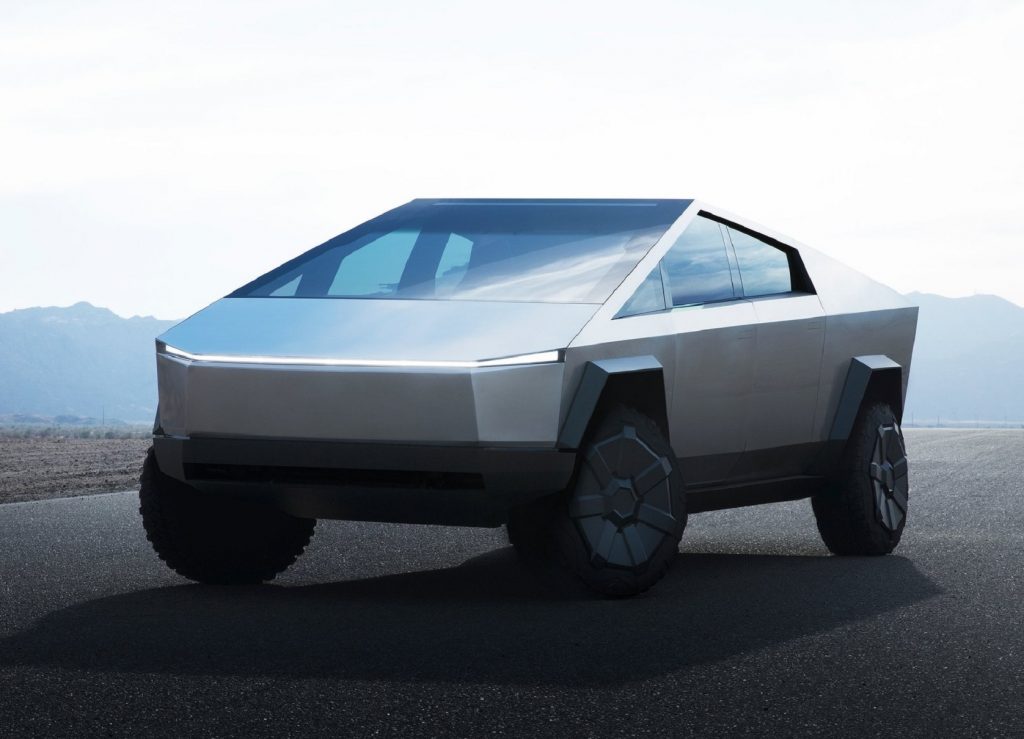
The first stainless-steel Tesla Cybertruck concept on a track
Tesla Cybertruck concept | Tesla

Well, for starters, Tesla’s new patent describes a vehicle operation user interface. New Cybertruck technology would be able to determine whether the driver or passenger was the person interacting with it. This would likely be done with internal cameras, which Tesla is already using.

If the Cybertruck determined that the passenger instead of the driver was attempting to interact with it, it would have the capability to switch buttons to the other side of the car. 

Your body will always be exactly the right temperature

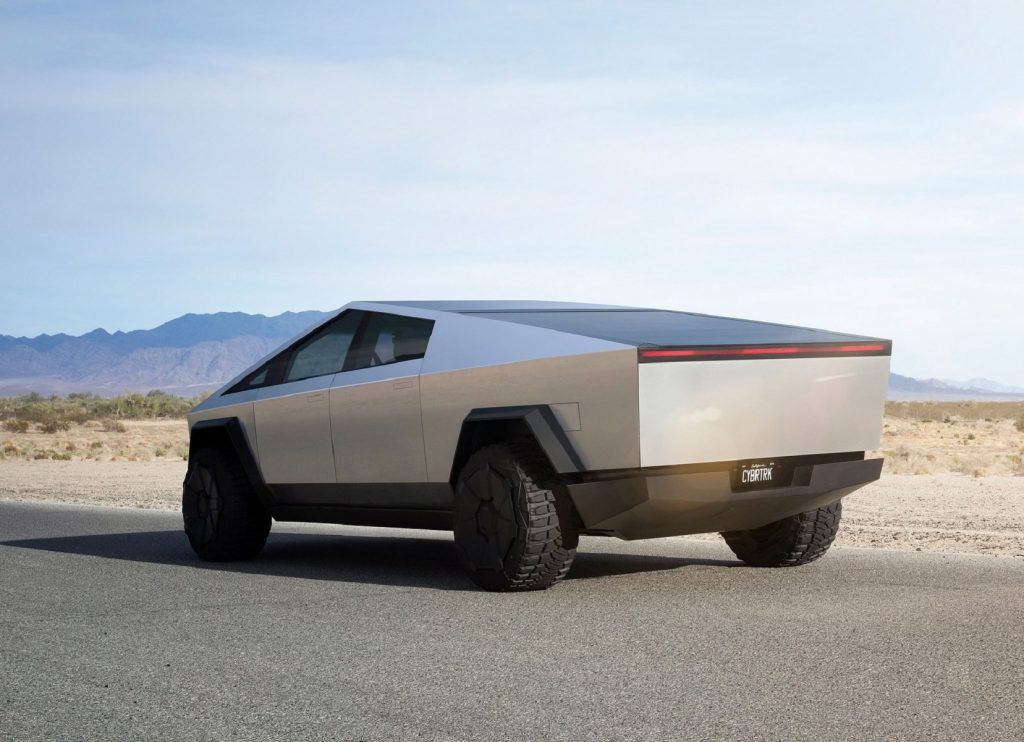
The rear 3/4 view of the stainless-steel Tesla Cybertruck concept on a desert track
Tesla Cybertruck concept rear 3/4 | Tesla

RELATED: Will the Tesla Truck Price Be Affordable?

Have you ever fiddled with the air conditioning or heat in your car, adjusting the vents so they hit you just right? Such pedestrian maneuverings are a thing of the past in the new Cybertuck. The Cybertruck will know who is in the passenger seat and blow cold or hot air at them. It will also know exactly where on occupants’ bodies air should go, meaning you’ll never get hit by a blast of cold air dead in the eye again.

Since the Cybertruck will already know where the driver and passenger are, it will be able to adjust mirrors to just the right height. The Cybertruck may be able to learn vehicle passengers and save their preferred settings, like air conditions, mirrors and the steering wheel height. 

The Tesla Cybertruck may have lasers

You know those movies where a bank robber has to catapult themselves through an array of lasers to escape detection? That’s what it will be like if you want to get into your Cybertruck without alerting the all-know system. A laser will determine when someone has entered the vehicle and then identify who that person is.

The Tesla Cybertruck will be able to see

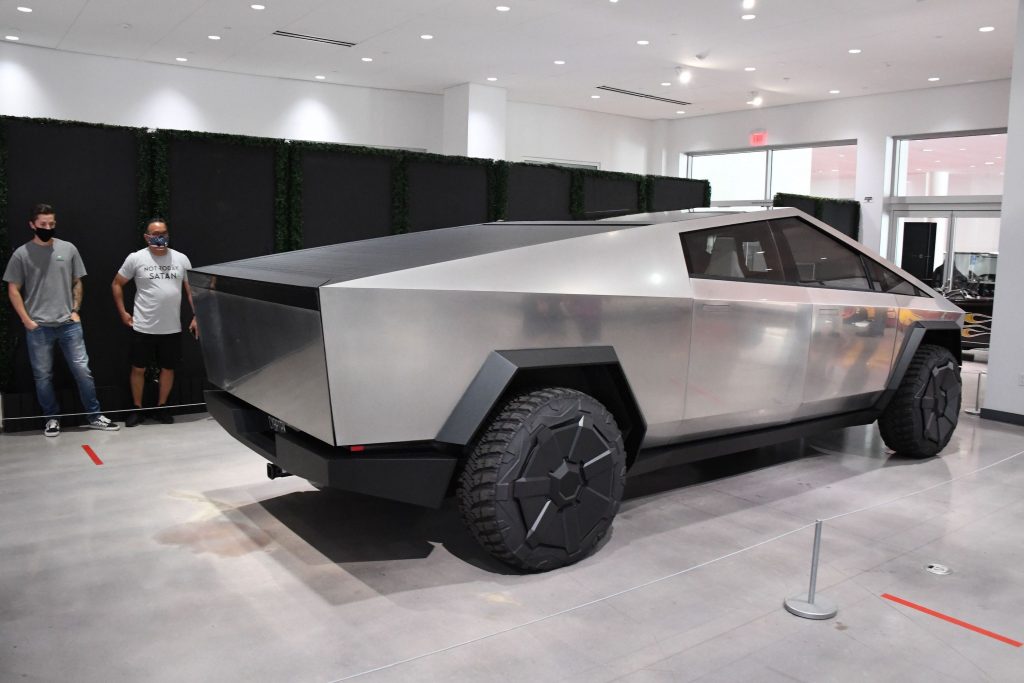
A steel Cybertruck electric pickup on display indoors
Tesla Cybertruck | Robyn Beck/AFP via Getty Images

Okay, so the Cybertruck won’t have eyes, but it might as well. The Cybertruck will be able to show the terrain it’s traversing on a screen inside the cabin. This will be super helpful when you’re hauling your boat or camper, or going off road. 

The Tesla Cybertruck will also be able to display a topographical map, possibly using sensors. Those sensors may also know what type of terrain it’s on, and whether the tires are slipping. 

If you are hauling a trailer, your Cybertruck may be able to talk to it wirelessly, the way your laptop can talk to your wireless printer. In return, a truck trailer may be able to communicate right back at your Cybertruck. 

Also of note is that according to the new Tesla patent, the Cybertruck may have a range of over 600 miles, which would be incredible. Short battery range, or range anxiety, is one of the leading reasons why car shoppers don’t consider an electric vehicle. Being able to drive 600+ miles on one charge would make the Tesla Cybertruck incredibly appealing.

What if I don’t want my Tesla Cybertruck to learn me? 

Tesla will offer an opt-out for people who don’t want their Cybertruck to know every inch of their face. Of course, you’ll have to adjust the air conditioning vents yourself.

The post Tesla Cybertruck Patent Is Straight Out of Science Fiction appeared first on MotorBiscuit.

by Gabrielle DeSantis

Battery technology is getting better each year but in very small steps. But they’re still heavy, big, and environmentally bad once they’re used up. Many great minds and companies are trying to figure out how to improve them. Believe it or not, a 3D-printed battery may be the direction to go. 

Sakuu is making a multi-material, multi-process 3D printer for batteries

Diesel trucks require two batteries to power the truck properly | Yegor AleyevTASS via Getty Images

A number of companies have been experimenting with 3D battery technology. Their focus is on changing the structure of batteries and finding common replacements for the expensive, sometimes scarce, minerals used in them. Now a company in California is ready to release a multi-material, multi-process 3D printer for making batteries. 

Sakuu plans to introduce the battery maker toward the end of this year. These 3D printers will make EV batteries from scratch. They call the solid-state battery system Sakuu AM Platform. And yes, these won’t be the common lithium-ion batteries used in almost all EVs. 

The 3D printed batteries use 30 to 50 percent fewer materials

A red 2021 Hyundai Kona Electric body meets its battery pack during factory assembly
2021 Hyundai Kona Electric battery pack assembly | Milan Jaros/Bloomberg via Getty Images

The batteries are called KeraCel and use 30 to 50 percent fewer materials than current Lithium-ion batteries. And, Sakuu claims they generate as much capacity as any lithium-ion battery on the market today. If true this would be a game-changer for battery production and electric vehicles in general. It is the technology everyone has been waiting for.

Sakuu says the batteries contain both metals and ceramics and make them easy to separate. This isn’t a priority to the end-user. But the easy separation of battery materials for recyclers is a huge advantage to conventional battery recycling. It will ultimately help reduce battery costs. 

These batteries can be configured for many different applications

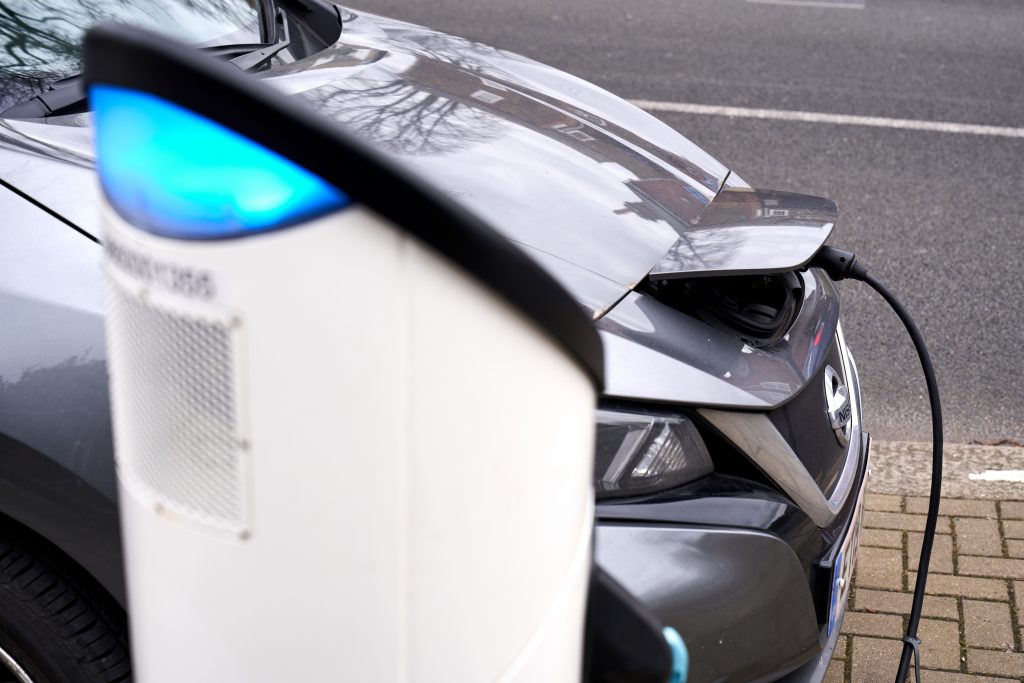
A gray 2021 Nissan Leaf EV sedan at a sharging station
2021 Nissan Leaf at charger | John Walton/PA Images via Getty Images

The advantage for EV manufacturers is that being 3D printed, these batteries can be configured for many different applications. Instead of one-size-must-fit-all, different shapes and sizes can be specified. And the printers can be programmed to change battery construction so one printer can make many different configured batteries. 

Right now solid-state batteries are both difficult to make and expensive. With “our unique and scalable AM process, we’re enabling battery manufacturers and EV companies to overcome these fundamental pain points,” Sakuu Corporation founder, CEO, and chairman Robert Bagheri told 3DPrint

On-demand manufacturing and localized production are just some advantages

Electric vehicle charging station | Michal Fludra/NurPhoto via Getty Images

RELATED: Will EV Batteries Truly Become Affordable in 2023?

“Furthermore, by adopting it as the technology of choice, these users also benefit from the wider opportunities our AM platform delivers, namely the ability to enjoy on-demand, localized production, which can help drive more efficient manufacturing operations and shorter supply chains,” he said. 

Don’t be expecting these to land in Ford Mach-Es and GMC Hummers-at least not soon. Sakuu plans on parsing out the battery makers for smaller two-and three-wheeled vehicles, first. It expects there to be some early teething pains with the process. It wants to work those out before jumping into larger vehicles with larger and more complex battery needs.  

The post 3D Printed Batteries: 3X Better Than Current Ones? appeared first on MotorBiscuit.

by Gabrielle DeSantis

The Mazda MX-5 Miata is a pretty well-rounded little car. It offers sophisticated styling, elegant interior features, and a sporty drive all for an attractive price. Despite its popularity, though, it isn’t seeing the sales figures that you would think it would have. 

GoodCarBadCar shows its sales figures over the last 16 years. How many sales has it really seen, and is it still a good sports car to buy? Let’s see what the charts have to say.

A brief history of sales for the Mazda MX-5 Miata

The Mazda MX-5 Miata | Chris Ratcliffe/Bloomberg via Getty Images

The production of the Mazda MX-5 Miata was no accident, and it didn’t appear overnight. In fact, the concept of this Miata version was born in the early 1980s. After several design tweaks, the Miata debuted in 1989. Over the years, it would see many changes, one of which was its engine.

Mazda, in 2004, decided to try out a turbocharged motor in the small sports car, known as the Mazdaspeed MX-5. This model produced 178 hp and 166 lb-ft of torque, which provided enough boost to cut the acceleration time by 1.4 seconds.

The Mazda MX-5 third-generation model joined the Miata lineup for the 2006 model year. Because of the Miata’s reputation, it saw some pretty strong sales figures for the first couple of years Mazda produced it. But, as GoodCarBadCar charts show, purchases started going down for the 2009 model. 

The highest selling year was in 2006, which saw 16,897 sales. The following year, 2007, came pretty close with a total of 15,075 purchases. After the 2008 model year, however, sales started dipping under the 10,000 mark. Sales figures continued to look dismal for quite a few years after that. 

But, in 2017 Mazda saw a comeback for the Miata with 11,294 purchases. Unfortunately, it only lasted for a year, and sales dropped again after that. In 2020, the Miata saw 8,807 purchases. So far in 2021, Mazda has sold 3,976 units. 

What happened to the Mazda MX-5 Miata experience?

The concept of the Mazda MX-5 Miata was to provide a simple-designed sports car that was light and could drive like a dream while remaining an affordable vehicle. Mazda hit the nail on the head for many years, but when it came to the third generation of Miatas, something went wrong. 

The first-generation offered a five-speed manual transmission, a four-cylinder engine along with a rear-wheel drivetrain. The second-gen vehicle offered the same except with a bit more power under the hood and a little more refinement. The third generation, however, was built on the RX-8’s platform, which added a bit of weight to it. 

Making matters worse, Mazda added a powered version of a retractable hardtop, which gave the Miata even more weight. Enthusiasts of this sports car feel that the extra weight and the added amenities affected the MX-5 popularity. It just went too far away from its roots. 

Is it still a good sports car to buy?

Where else can you get an entry-level sports car for an affordable price? Mazda’s MX-5 Miata has been on the market for over 30 years and in that time, it’s developed a pretty big fan base. While it’s not exactly known for optimal speed, it offers enough thrills when driving it to get many addicted to its experience. 

This fourth-generation offers a 2.0-liter four-cylinder engine that produces 181 hp, which is a few more than the old Mazdaspeed version did. It also has enough styling and tech features to garner attention from all kinds of drivers

While it still has the same lush interior, and aesthetic appeal, the MX-5 offers a quiet ride with strategically placed sound-deadening materials, so you’re not distracted from the smooth handling and fun ride that it’s known for. What’s the most thrilling part of buying the MX-5 Miata is getting it for a starting price of almost $27,000. 

The Mazda MX-5 has always been a popular little sports car since its debut in the late ’80s. Since the third and fourth generations hit the market, however, sales have dropped. But, despite that, it’s still an exceptional vehicle to buy if you want an entry-level roadster with exceptional handling capabilities. 

RELATED: 25 Snapshots of the Mazda Miata Through History

The post The Mazda MX-5 Miata Doesn’t Seem to Actually Be That Popular appeared first on MotorBiscuit.