
by Gabrielle DeSantis

Your camper is packed and ready to take you on your next adventure. Thanks to your RV, you’re not restricted to hotels and Airbnbs but are free lakesides, forests, deserts, beaches, and more. The only downside to a large motorhome is that it’s inconvenient for visiting local attractions or running errands. That’s why many RVers flat-tow a car behind their camper.

So, are you thinking of taking your car on your next adventure? Know that you can’t flat-tow every vehicle.

What is flat-towing?

Flat-towing is the practice of hooking a car behind an RV in a way that keeps the cars’ four wheels on the road. Other words to describe this type of towing include dinghy towing, four-wheel towing, and neutral towing.

Many RVers favor flat-towing because they don’t need as much equipment as they would when using a dolly to lift the front tires off the road. The lack of equipment keeps the overall cost of RVing lower. Flat-towing is also faster and easier to connect to the tow vehicle. And it requires less storage space once you reach the campsite.

Which car models can you flat-tow behind an RV?

RELATED: Are Campgrounds and RV Parks Safe?

The days when you could flat-tow nearly any vehicle are gone, Edmunds reports. These days, only a limited number of cars can be safely flat-towed. The reason is simple: Many newer cars have automatic or continuously variable transmissions.

Still dead set on flat-towing a car behind your camper? Stick with models with a manual transmission, rear-wheel drive, or a manual transfer case that allows you to place the vehicle in neutral. Edmunds recommends Jeep and Ram models for flat-towing. 

In some situations, you can install aftermarket equipment on your car that will enable safe flat-towing. Modification equipment includes:

  • A drive-shaft disconnect device for rear-wheel drive vehicles
  • Free-wheeling hubs that attach to front-wheel drive vehicles

RVshare points out that flat-towing modification equipment can be expensive and require a great deal of maintenance once installed. It could also void a manufacturer’s or dealer’s warranty.

Advantages of flat-towing a car

RELATED: Book Your Perfect RV Campsite With These Apps and Websites

The main advantage to flat-towing a car behind your camper is that it barely affects your RV’s gas mileage. Flat-towing is also one of the best ways to tote a vehicle without having to worry about it placing a great deal of wear-and-tear on your RV.

Tips for safely towing your car behind your motorhome

Whether you’re flat-towing your car or using a dolly to keep the front tires off the road, you need to do a few things to ensure the process goes safely.

Before you leave home or your campsite, check every piece of equipment to ensure it’s in good repair and properly attached. If there’s any question about a piece of towing equipment not working properly, delay your departure plans until you’ve repaired or replaced it,  CarTowDolly explains.

Even though the car looks small compared to your RV, it will still affect how your camper handles, especially if you have to stop quickly. To compensate for the increased braking distance, make sure you put additional space between yourself and other vehicles.

Driving a little slower than you’d normally go is the best way to ensure the car you’re towing remains in line with the rear of your RV and isn’t swaying. If you’re driving in windy conditions, you might have to drive even slower.

Safe travels!

The post Which Cars Can You Flat-Tow Behind an RV? appeared first on MotorBiscuit.
by Gabrielle DeSantis

Riding lawn mowers are expensive. In fact, according to Consumer Reports, a new riding lawn mower could have you spending anywhere between $1,300 to $5,500. For that amount of money, you’re going to want a riding lawn mower that’s built to last. The good news is that Consumer Reports has the inside track on the most reliable riding lawn mower brands.

John Deere riding lawn mowers. | Justin Sullivan/Getty Images

Choosing the best type of lawn mower for your yard

RELATED: The Best Lawn Mowers for Big Yards According to Consumer Reports

There are several different types of lawn mowers out there. Among the most common types of lawn mowers are riding lawn mowers and zero-turn mowers. According to Consumer Reports, riding lawn mowers are best for big yards and can cut two to three times faster than many push mowers.

On the other hand, zero-turn mowers come equipped with a rear engine and a pair of levers for steering. This type of lawn mower is often used by landscapers and is easy to maneuver around obstacles. 

It’s worth keeping in mind, however, that zero-turn mowers are usually more expensive than riding lawn mowers and, according to Consumer Reports, don’t always cut as well as riding lawn mowers.

The most common lawn mower problems to know about

RELATED: Lawn Mower Maintenance You Probably Aren’t Doing But Should Be

Lawn mowers aren’t always problem-free, says Consumer Reports. As a matter of fact, nearly 30% of riding lawn mowers are likely to develop problems or break during the first five years of ownership. 

“The most commonly reported problem among riding mowers had to do with the mower belt, affecting 13 percent of riding mowers,” explained Martin Lachter, a senior research associate at Consumer Reports. Another common lawn mower problem owners often complain about is related to the lawn mower’s bag not filling or attaching to the mower correctly. 

Fortunately, Consumer Reports incorporates ratings for brand reliability into its Overall Scores for riding lawn mowers and zero-turn mowers. Not only does that make finding a reliable riding lawn mower easier, but it also makes shopping for the best lawn mower for your lawn care needs an even more manageable task.

These are the most reliable riding lawn mower brands

RELATED: John Deere Topped Consumer Reports’ List of The Best Riding Lawn Mowers and Tractors

When it comes to the most reliable riding lawn mower brands, Consumer Reports says the old adage is true: Nothing runs like a Deere. In fact, of the nine riding lawn mower brands it tested, John Deere was the only lawn mower brand that received an Excellent predicted reliability rating. 

Of course, John Deere isn’t the only reliable lawn mower brand. According to Consumer Reports, Husqvarna earned a Very Good predicted reliability rating. Meanwhile, Cub Cadet and Simplicity received Good ratings for predicted reliability. Snapper and Troy-Bilt, on the other hand, were given Good predicted reliability ratings.

The most reliable zero-turn lawn mower brands

RELATED: The Worst Push Lawn Mowers and What to Buy Instead

Perhaps you would prefer a zero-turn lawn mower. If that’s the case, Consumer Reports explains that there are several reliable lawn mower brands to choose from. Take, for example, lawn mower brands like Bad Boy and Gravely, both of which earned Excellent predicted reliability ratings.

Meanwhile, popular lawn mower brands like Craftsman, John Deere, and Toro were given Very Good reliability ratings by Consumer Reports. Further, well-known lawn mower brands like Ariens, Cub Cadet, Husqvarna, Poulan Pro, Simplicity, Snapper, and Troy-Bilt were all given Good ratings for reliability.

Buying the best lawn mower doesn’t have to be stressful

Reliability is key when it comes to shopping for a new lawn mower. With this data in hand, the good news is that choosing the best lawn mower for your hard doesn’t have to be stressful. In fact, start by checking out these brands, and chances are you’ll be the proud owner of a reliable new lawn mower.

The post The Most Reliable Riding Lawn Mower Brands According to Consumer Reports appeared first on MotorBiscuit.

by Gabrielle DeSantis

Consumer Reports ranked cars, SUVs, and trucks to avoid buying in 2021. The company studies areas that give new buyers a headache or cost more than anticipated. While Volvo and Jeep made the list twice, many of the cars, trucks, and SUVs scored high in certain areas but fell short in others.

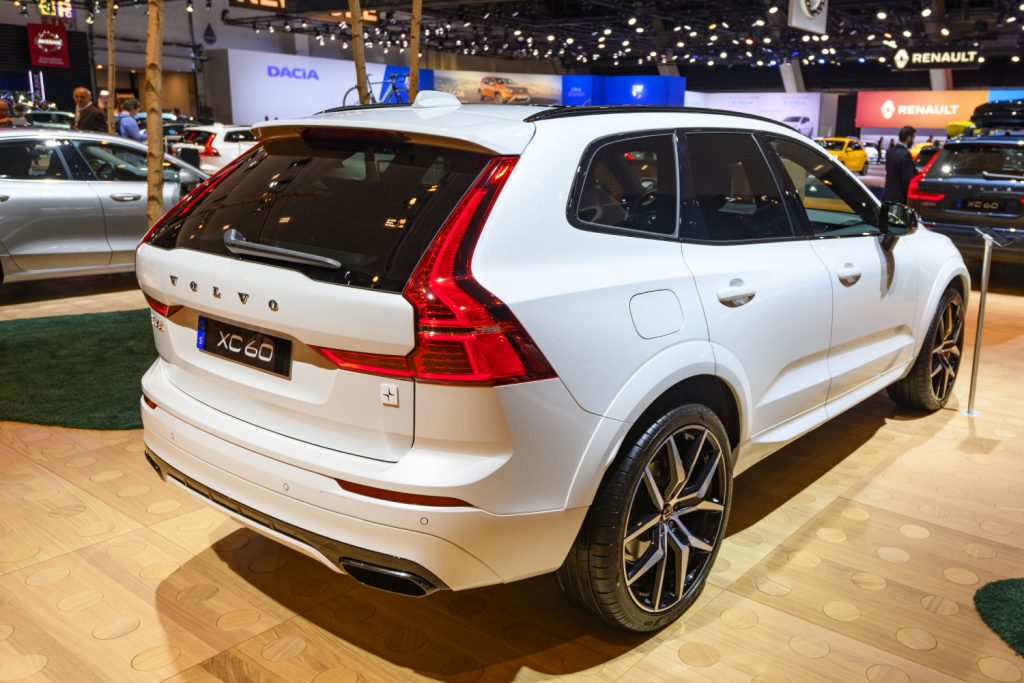
9. 2021 Volvo XC60

A white Volvo XC60 on display made the Consumer Reports Cars to Avoid List
The Volvo XC60 made it on the list of 2021 cars to avoid from Consumer Reports, but so did the Tesla Model S (Photo by Sjoerd van der Wal/Getty Images)

The 2021 Volvo XC60 scored a 28, which is at the top of the Consumer Reports least reliable list. This luxury compact SUV gets an EPA-estimated 23 miles per gallon overall. On the road test, it scored 79/100. The predicted reliability came in at a two out of five. Is it worth buying a new car in this instance? It might be worth waiting for this Volvo.

The owner satisfaction scored three out of five. Owners took issue with the brakes, power equipment, in-car electronics, and fuel systems. Consumer Reports noted the interior was elegant and comfortable, with upgraded safety systems standard.

  • Price Range: $41,700 – $69,500
  • Buy this instead: 2021 Lexus NX (Score: 82)

8. 2021 Jeep Wrangler

The 2021 Jeep Wrangler was given an overall reliability score of 27. It came in dead last on the list of Midsized sport-utility vehicles. The predicted owner satisfaction scored four out of five, and the reliability came in at two out of five.

The Wrangler comes with forward collision warning, automatic emergency braking for the city and highway, standard. Don’t buy these new cars just yet, perhaps check out a similar choice.

7. 2020 Tesla Model S

2020 Tesla Model S | VCG/Getty Images

RELATED: Man Buys 39 Cars Including Tesla and Escalade With $1.5M in PPP Money

This might be the most surprising option on this list. The 2020 Tesla Model S is noted to be a green choice, albeit an unreliable choice too. The owner satisfaction scored five out of five, and the reliability came in at one out of five. Why the discrepancy?

Consumer Reports noted more lows than highs for this electric vehicle. The range is short, the charging times are long, and cold weather further impacts it. The interior isn’t high-quality for the price, and Apple CarPlay and Android Auto are omitted. The steering and suspension could use some work, too.

6. 2021 Chevrolet Colorado and the GMC Canyon

Both the 2021 Chevrolet Colorado and the GMC Canyon scored a 26 for overall reliability. The predicted owner satisfaction scored three out of five, and the predicted reliability came in at a two out of five. The Chevrolet Colorado has one open recall for improperly attached seatbelts.

The overall EPA-estimated fuel economy is 18 miles per gallon. Issues noted by CR include the transmission, in-car electronics, and drive system.

5. 2021 Volvo XC90

CR gave a reliability score of 26 to the 2021 Volvo XC90. It ranked at number 12 of 22 on the list of luxury midsize sport-utility vehicles. For the road test, CR gave the XC90 a score of 84/100. The trouble spots noted by Consumer Reports are “brakes, steering/suspension, in-car electronics, emissions/fuel system, and power equipment.”

The predicted reliability came in at a two out of five. The predicted owner satisfaction scored three out of five. While Volvo is known for making solid cars, you might take a pass on this SUV.

  • Price Range: $49,000 – $70,250
  • Buy this instead: 2021 Lexus RX (Score: 80)

4. 2021 Jeep Compass

The 2021 Jeep Compass came in with a reliability score of 39. The road test scored 56/100, which leaves a lot to be desired. The trouble spots noted by Consumer Reports are “transmission major/minor, drive system, power equipment, in-car electronics, engine minor.”

The predicted reliability came in at a two out of five. The predicted owner satisfaction scored one out of five. While Jeep is known for making fun SUVs, you might skip this one.

  • Price Range: $24,495 – $31,395
  • Buy this instead: 2021 Mazda CX-5 (Score: 83)

3. 2021 Volkswagen Atlas

With a reliability score of 19, the 2021 Volkswagen Atlas currently has seven recalls. The SUV gets an EPA-estimated 20 miles per gallon overall. On the road test, it scored 84/100.

The predicted reliability came in at a one out of five. The owner satisfaction scored three out of five. It does come with forward collision warning, automatic emergency braking for the city and highway, standard.

2. 2021 Subaru Ascent

The 2021 Subaru scored an 18 on the reliability scale. While the Ascent scored a 93/100 on the road test, it scored a one out of five in predicted reliability. For the predicted owner satisfaction, Consumer Reports gave it a four out of five.

The overall EPA-estimated gas mileage came in at 22 miles per gallon. CR found the ride was comfortable and quiet, but thought that similar SUVs have better in-car electronics. Some noted trouble zones were the transmission and steering, which both were reported by owners.

1. 2021 Chevrolet Silverado and the GMC Sierra 1500

A slick red 2021 Chevy Silverado Z71 is on display outdoors at the Exchange Chevrolet, topping off Consumer Reports least reliable vehicles of 2021.
2021 Chevrolet Silverado Z71 | Joel Lerner/Xinhua/Getty Images

RELATED: Consumer Reports Ranked the 2021 Chevy Silverado as the Most Unreliable Truck

Out of all of the cars and SUVs on this list, the 2021 Chevrolet Silverado and the GMC Sierra 1500 both received a reliability score of 13 out of 100. The predicted reliability came in at a one out of five. The owner satisfaction scored three out of five.

Consumer Reports did not love this truck for a few reasons. The fuel economy had an EPA-estimated 17 miles per gallon overall. The brakes could be improved, as well as the drive system. CR also found an issue with the transmission as reported by owners.

  • Price Range: $29,300 – $57,700
  • Buy this instead: 2021 Ram 1500 (Score: 63)

Ultimately, the choice is yours

Overall, the Consumer Reports cars and vehicles to avoid on the 2021 list are not bad. However, there may be a more suitable option available at a commensurate cost on the market. All of the automobiles listed have a comparable vehicle from another brand listed as an alternative which can help you make the most logical car-buying decision.

Eric Schaal also contributed to this article.

The post Consumer Reports: Cars to Avoid Buying in 2021 appeared first on MotorBiscuit.

by Gabrielle DeSantis

All-terrain vehicles, more commonly known as ATVs, encompass several types of small four-wheeled machines designed to travel on terrains rougher than roads or trails. Sometimes, people lump utility terrain vehicles, or UTVs, into the same category as ATVs, but there are some key differences between these two vehicle classes. If you’re considering buying an all-terrain vehicle, there are a few things you should know first.

What is an ATV?

RELATED: NADA Has Taken the Stress Out of Shopping for a New ATV

As defined by the ATV Safety Institute, ATVs have four low-pressure or non-pneumatic tires, have a seat the rider must straddle, and handlebars that control steering. Type I ATVs carry one person — the driver — but Type II vehicles allow a passenger seated behind the driver. Passengers should never ride on Type I vehicles. 

Besides the two types, there are also ATVs for specific activities, ranging from racing to ranching.

Selecting an ATV for a specific use

An entire culture surrounds racing ATVs, also known as quads. Racing them takes every form imaginable but primarily takes place on dirt tracks or forest trails. The Yamaha Raptor 700, with a starting MSRP of $8,299, often races on ATV courses. These types of vehicles are fast and agile, and racing them takes special protective equipment and skill. It’s a dangerous sport with frequent rider injuries.

An example of an ATV built to work is the Honda Fourtrax Rancher, starting at $5,499. These working-class models often feature front and rear racks for hauling gear and tools to get the job done or equipment for recreation.

As with most things in life, more money opens more options when buying an ATV. Larger machines with more powerful engines, four-wheel drive, winches, and myriad add-ons for carrying gear are all available for a price.

If you’re not a racer or a rancher but still want to feel the thrill of riding an ATV, don’t despair. These machines will take you almost anywhere you want to go, whether it’s a high mountain camping trip, down to the family fishing pond, or an Oklahoma desert.

Manufacturers also design models for various experience levels and youth riders. It’s important to note that riding an ATV is a learned skill that benefits from professional formal training from the ATV Safety Institute. Riders should also wear all suggested protective gear at all times and obey all applicable laws surrounding the use of ATVs on public and private property.

UTVs, also known as side-by-sides, have a seating arrangement where the driver and passenger sit next to each other. These machines often have a four-wheel drivetrain and a windshield, and they operate similar to an automobile, with a steering wheel and foot pedals for brake and gas. Some have four seats, while others offer a truck-like bed for hauling whatever you need. Most models have enough towing capacity for a small trailer or boat.

Safely operating an all-terrain vehicle

RELATED: You Didn’t Know You Needed a 2021 John Deere Gator UTV

People are often in one of two camps concerning ATV safety. The first camp thinks these vehicles are inherently unsafe and bent on human destruction. The second camp sees the four wheels and wide stance and thinks nothing could go wrong. Experienced riders know that both camps are wrong. Riding all-terrain vehicles can be as safe as any other outdoor activity as long as you take the proper precautions. That includes wearing the proper protective gear. The ATV Safety Institute recommends riders always wear the following:

  • Over-the-ankle boots
  • Long sleeves
  • Long pants
  • Goggles
  • DOT-compliant helmet
  • Goggles
  • Gloves

Experts also strongly recommend all riders take safety courses. They’re available in person nationwide or online through the ATV Safety Institute. The online courses are available for adults, teens, and youths. The institute also has an online course for adults who intend to coach younger riders.

The post What You Should Know Before Buying an ATV appeared first on MotorBiscuit.