
by Gabrielle DeSantis

Is there anything purer than a drag race when it comes to measuring one supercar’s performance versus another? Of course, there is a myriad of scientific tests that can be utilized to compare and contrast two different vehicles. Yet, none of those tests are nearly as fun as a good old-fashioned drag race.

One of the best things about drag racing is that any two cars can be pitted against each other in an amateur setting. The potential pairings are only limited by the creativity of the participants. Thankfully the crew at Edmunds are pretty creative folks. The team recently took over a straightaway at Willow Springs Raceway in California to race the 2021 Ford Mustang Mach-1 against the BMW M4. American muscle versus German engineering. 

2021 Ford Mustang Mach-1

2021 Ford Mustang Mach-1 | Ford Motor Company

What can we say about the Ford Mustang that has not already been said? Like it or not, the Ford Mustang is an American icon. The Mustang is the first thing many people might picture in their heads when they hear the term “muscle car.” The Ford Mustang Mach-1 variant is legendary for being the ultimate expression of a “pony car.”

The 2021 Ford Mustang Mach-1 in this drag race is 100% stock, but that does not mean it isn’t packing heat. It is bringing a 5.0-liter V8 engine with 480 horsepower and 420 ft-lbs of torque to this face-off. The car in this race is equipped with a 10-speed automatic transmission. Wait, what? A 10-speed transmission? Why the heck does it have that? Whatever. It also does not have launch control for some reason. The important thing is that it is a formidable opponent for this match-up. 

2021 BMW M4 Competition
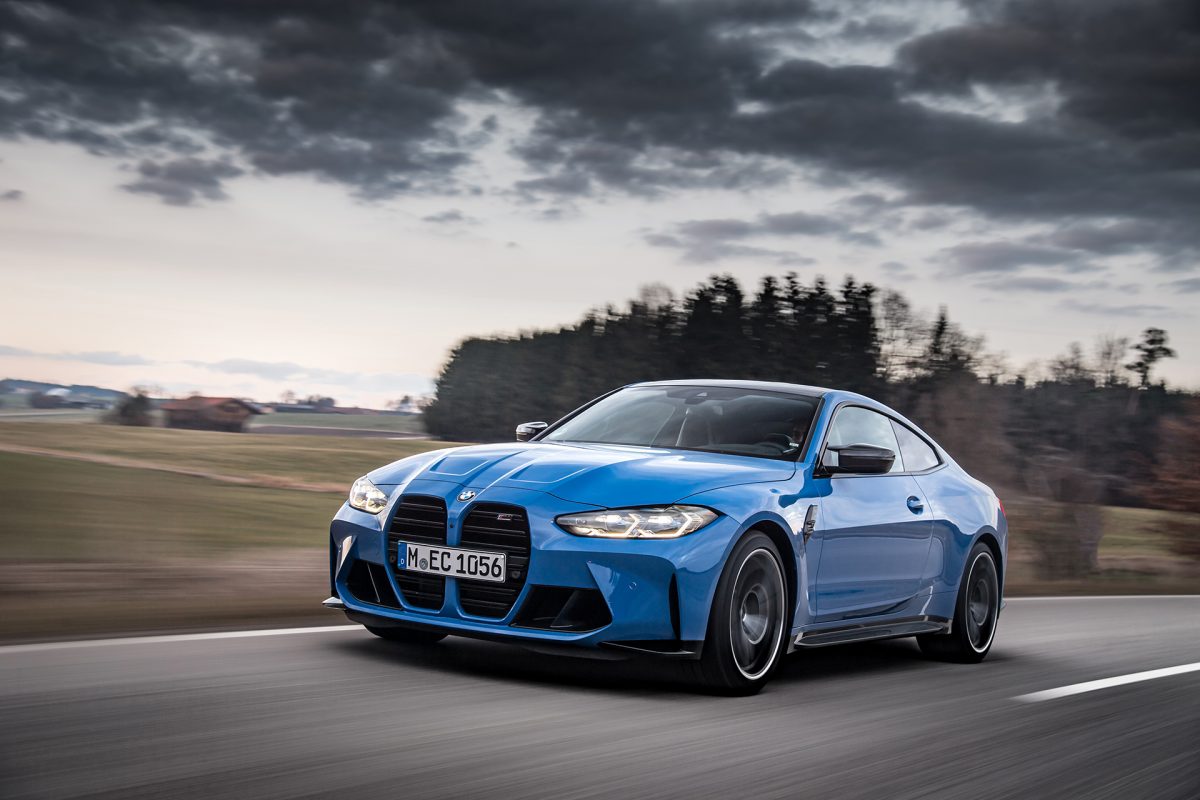
2021 BMW M4 Competition in blue driving on a road with an open field in the background.
2021 BMW M4 Competition | BMW

In the other corner of this fight is the 2021 BMW M4 Competition. Anyone can argue that BMW M cars are just as storied as the Mustang despite not being around for as long. What BMW has done with their M line in a relatively shorter amount of time is something to be commended. It is hard to argue with the brand’s strategy of bringing race car tech to their road cars.

A turbocharged 3.0 liter inline six-cylinder engine sits behind those considerable “nostrils” of the BMW M4. That engine produces 503 horsepower and 470 ft-lbs of torque. The specific car in this race is equipped with an 8-speed semi-automatic transmission with launch control. By the numbers, the BMW M4 has an advantage over the Mustang Mach-1, but even in a drag race, stats aren’t everything.

Ford Mustang Mach-1 vs. BMW M4 Competiton: Who wins?

We know the tale of the tape, but once tires hit the asphalt, everything can change. Will the BMW M4 walk away with this competition with its gargantuan nostrils flared? Or can the Ford Mustang Mach-1 defy physics and get the better of BMW’s performance coupe?

Edmunds raced pair of cars raced a total of four times. There are two races off the line and two from a 30 mph roll. We invite you to make your predictions before watching the video above. As usual, we will not spoil the ending, but we will say that things get interesting during the “roll” races.

At the end of the day, the real winner is us because we got to watch such a ridiculously entertaining race.

RELATED: Tesla Model S Plaid vs Rimac Nevera Drag Race

The post Ford Mustang Mach-1 vs BMW M4 Drag Race: Who Wins? appeared first on MotorBiscuit.

by Gabrielle DeSantis

One of the biggest incentives for purchasing an all-electric vehicle or plug-in hybrid vehicle is the potential for a hefty tax credit. And, of course, there are also the environmental benefits. So if you’re looking at Toyota’s line of EVs and PHEVs, you might want to know if the 2021 RAV4 Prime qualifies for the tax credit.

In fact, yes, it’s eligible for a sizable credit. It also packs plenty of power and has one of the best gas mileage estimates in the hybrid SUV class. Plus, it doesn’t hurt that the RAV4 is Toyota’s most popular SUV in sales and reviews from critics and consumers alike.

What is the federal tax credit for EVs and PHEVs?

Fueleconomy.gov — the official U.S. government source for all things related to fuel economy — maintains a list of all new EVs and PHEVs that qualify for the federal tax credit and the dollar amount of the credit. Vehicles must be new and purchased in or after 2010. In addition, the amount of the tax credit is based on the vehicle’s battery capacity. Also, the credit applies only to vehicles with an external charging source and a battery capacity of at least 4 kWh.

All of the EVs on the list qualify for the full $7,500. Some PHEVs, such as the Toyota RAV4 Prime, are eligible for the full $7,500, but most PHEVs qualify for only a partial tax credit. 

Click here for our guide on how to claim the $7,500 tax credit for the RAV4 Prime.

Why is the Toyota RAV4 Prime eligible for the tax credit but other new EVs, such as Teslas, are not?

2021 Toyota RAV4 Prime XSE | Toyota Motor Sales, U.S.A., Inc.

The 2021 Toyota RAV4 Prime qualifies for the full $7,500 tax credit because of its larger battery, Kelley Blue Book reports. The credit is calculated using a rate of $417 per kWh above 4 kWh, with a maximum of $5,000, added to the base credit, $2,500, for which all eligible vehicles qualify. Because the RAV4 Prime packs an 18.1-kWh battery, it qualifies for the full amount. 

Some notable vehicles are missing from the government’s list, including all Tesla models. And it has nothing to do with battery size. Unfortunately for companies like Tesla that have been successful in the EV market, the tax credit begins to phase out after the first 200,000 vehicles are sold. Typically, the tax credit expires about one year after the 200,000th sale.

Tesla is not the only manufacturer that has become ineligible for the federal tax credit. General Motors is also no longer eligible, and Nissan is the next manufacturer in line.

Overview of the 2021 Toyota RAV4 Prime

Starting at $38,350, the 2021 Toyota RAV4 Prime packs a powerful 2.5-liter inline-four engine producing 177 hp and 165 lb-ft of torque. It works with three electric motors, two up front, putting out 179 hp and 199 lb-ft of torque, and one in the rear, producing 53 hp and 89 lb-ft of torque. That’s a total of 302 hp, for a 0-to-60-mph time of 5.7 seconds, Toyota claims.

The RAV4 Prime is not only fast but also fuel-efficient. It gets an EPA-estimated 94 MPGe with a fully charged battery and 38 mpg for gas only. The large 18.1-kWh battery provides 42 miles of all-electric power and a total range of about 600 miles of combined power.

Inside, the RAV4 Prime is relatively spacious and comfortable. And thanks to the location of the battery, it doesn’t take up valuable cargo space. The base-model SE comes with a bevy of driver assists, LED headlights, and an 8.0-inch infotainment display. And the higher trim level, the XSE, adds steering-wheel-mounted shifter paddles, larger wheels (19 inches instead of the base trim’s 18 inches, blind-spot indicators, and rear cross-traffic alert. 

EVs and PHEVs offer numerous benefits for the environment in addition to fuel savings. And when you consider the federal tax credit — along with potential incentives in your state and the perk that some areas allow the Toyota RAV4 Prime to travel in HOV lanes regardless of the number of occupants — it ends up being a fairly affordable SUV. Plus, who doesn’t dream of driving in the HOV lane without any passengers?

RELATED: Resist the Lexus SUV and Get a Toyota RAV4 Prime Instead

The post Does the Toyota RAV4 Prime Qualify for the Federal Tax Credit? appeared first on MotorBiscuit.

by Gabrielle DeSantis

Windshield wiper fluid is helpful when the pollen film gets so thick we can barely see out of our windshields. When some friendly local birds leave us all sorts of yucky presents on the glass, it’s not a good time to be out of washer fluid. Keeping a car clean is part of regular maintenance, but the need still arises that we need to wash the glass while in transit.

Dirty Windshield | Geography Photos/Universal Images Group via Getty Images

But not everyone keeps a jug of it on hand. Tap water is easy to come by in modern U.S. society. Is it dangerous to use water instead of windshield wiper fluid? 

Can water replace windshield wiper fluid?

A view of the black front seats, steering wheel, dashboard, and touchscreen of a 2022 Toyota Sienna Woodland Special Edition minivan
2022 Toyota Sienna Woodland Special Edition interior | Toyota Motor Sales, U.S.A., Inc.

Some drivers may want to use water instead of windshield washer fluid because of the harsh chemicals that put people, animals, and the environment at risk. According to Cars.com, the majority of windshield washer fluid products are made with potentially toxic ingredients.

This includes methanol or “other alcohols like ethylene glycol.” In addition, these products can also contain ethanol or antifreeze composed of methylated spirits. Manufacturers add these in order to avoid freezing at low temperatures.

Due to the existence of these chemicals, some may opt to use water instead. But does it work well enough to do the job? Ultimately, water won’t clean a windshield as well as wiper fluid because it lacks the cleaning elements that make windshield wiper fluid so effective. 

Plus, it can actually create a potentially dangerous situation or damage the reservoir and other components if the water freezes. So water is really only a suitable substitute if you live somewhere that temperatures don’t ever freeze. While water can replace washer fluid products, it’s best as a temporary substitute unless you don’t mind having some streaks or otherwise imperfectly cleared grime on the windshield

Are there safer alternatives to windshield wiper fluid that work well? 

windshield wiper fluid on display at a gas station
windshield wiper cleaning fluid | Michael S.Williamson/The Washington Post via Getty Images

If you are on the hunt for the best windshield wiper fluid, Auto Guide recommends Prestone products. The all-season and winter Prestone washer fluid products are some of the best windshield wiper fluid options out there for those that want a sparkling clean and a product that won’t freeze. However, there are some options that contain fewer chemicals as well. 

For example, Nextzett Kristall Klar Washer Fluid is a concentrate option. Auto Guide points out that the pros for this product are that it’s ammonia-free and does not contain methanol. Water softeners also add to the effectiveness of this windshield wiper fluid. 

Wemk Windshield Washer tablets are another option. These are added to four liters of water before putting the resulting liquid into your washer fluid reservoir. This product isn’t chemical free, but it does also provide the option for use in a spray bottle during regular cleaning. Wemk is advertised as a fluid that’s effective for eliminating tree sap and road grime from the windshield. 

Note: both of these options are not suitable for use in freezing temperatures and should only be used in warmer climates where freezing is not a risk factor. 

Is water a suitable alternative to windshield wiper fluid? 

a dirty windshield streaked with grime in need of windshield wiper fluid
Dirty Windshield | Hendrik Schmidt/dpa-Zentralbild/ZB via Getty Images

At the end of the day, plenty of people do it. It’s not necessarily dangerous. Additionally, it can eliminate the dangers of toxic chemicals that are found in most mainstream windshield wiper fluid products. However, this won’t provide the same level of squeaky clean that many drivers desire when they are behind the wheel. 

Ultimately, it’s up to the driver to decide the best windshield wiper fluid option. The choice depends on their particular vehicle and the typical climate in their local driving area. Water can be used, but it’s not as effective. It’s also at risk of freezing in cold weather.

RELATED: What Is the Woodward Dream Cruise?

The post Is it Dangerous to Use Water Instead of Windshield Wiper Fluid? appeared first on MotorBiscuit.

by Gabrielle DeSantis

Every year, enthusiasts gather for the squealing cars, flying dirt, burning engines, and colossal crashes found only at the demolition derby. For fans, it’s almost a summer rite of passage. And for those who compete, demo derby night practically ranks up there with Christmas, full of excitement and anticipation. 

In a demolition derby, cars speed frantically on a dirt course, aiming to slam into opponents as part of the sport. But some vehicles end up smashed worse than others. So, which cars are considered the best for demolition derby?

How did this violent sport start?

A demolition derby in Ebensburg, Pennsylvania | DOMINICK REUTER/AFP via Getty Images

Believe it or not, the demolition derby phenomenon is celebrated worldwide, from small-town fairs to fan-packed stadiums. The historical beginnings of the sport date back to 1946 in Gardena, California, Napa explains. There, a group of “jalopies” took to Carroll Speedway and began crashing their cars into one another on purpose, marking it the first full-contact event. Since then, the sport has grown exponentially, with derbies in Australia, Canada, Italy, England, and other countries.

DD League suggests the sport really arrived when it appeared in the 1970s hit show Happy Days. The central plot of three full episodes involved a local demolition derby. It seems to have marked America’s embrace of the cultural phenomenon.

So, what is the best demolition derby car?

When it comes to evaluating which vehicles make the best demolition derby cars, a few models seem to work well for today’s contenders today. The Ford LTD and Crown Victoria are top rear-wheel-drive picks for their solid V8 engines and sturdy frames, Performance Plus Tire explains. The old-school Chevy Impalas tend to be popular, too, thanks to their size and weight. 

But bigger isn’t always better. You might’ve noticed Ford Escorts racing around your local demolition derby track. These smaller cars are easy to find, cheap to modify, and still capable of taking a beating.

The GM W-Body cars, including the Regal, Grand Prix, and Lumina, also fall into this category. In addition, they offer plenty of V6 power and great reliability.

What car is banned from demolition derby?

In the early 1960s, the Chrysler Imperial was intended to compete with luxury competitors Lincoln and Cadillac, Auto Evolution reports. It was a beast of a car for its time. Making it even more attractive to buyers was the Imperial’s incredible durability. Chrysler made significant improvements to the frame’s strength, including increased rigidity, designed to protect occupants in a crash better.

For that reason alone, the 1964-1968 Imperial was banned from demolition derby contention in later years, Performance Plus Tire says. The car possesses an unfair advantage in crash competitions, withstanding hits far better than nearly any other car on the field. Add some custom upgrades to the already robust 6.9-liter V8, and the Chrysler Imperial was unstoppable in demo derbies.

Other common demolition derby rules mandate that all participating vehicles have working brakes and that glass components be removed, the Five Flags Derby rulebook states. All of the vehicle’s doors must be welded or chained closed, and the radiator must remain in its original stock location. Most demo derbies insist, too, that only cars can compete, meaning no trucks, limos, SUVs, or even hearses are allowed.

If you’re a demolition derby contender and your event regulations allow, find a Chrysler Imperial. Otherwise, some of the previously mentioned models make great crash-worthy demolition derby cars. And if you’re just a spectator, now you know why you see some of these cars more often at these competitions.

RELATED: Car and Driver’s Best Cars to Crash at a Demolition Derby

The post What Is the Best Car for Demolition Derby? appeared first on MotorBiscuit.