by Gabrielle DeSantis

The typical depiction of a cowboy features a stoic man on a trusty steed. Cowboys and horses are a classic pair not only in Westerns but also on real-life ranches and farms. But recently, modern cowboys have left their horses in the stable in favor of ATVs to complete everyday ranch duties, and for good reasons.

The many uses of ATVs

A farmer on an ATV moves sheep down a narrow country road | Farm Images/Universal Images Group via Getty Images

ATVs have made their way onto farms, taking the place of horses and even pickup trucks and tractors for all kinds of tasks. Modern ranches use four-wheelers for herding cattle, mending damaged fences, feeding and providing water for cattle, and herding and controlling steer, The Seattle Times reports. 

Quads quickly transport the operator to even remote areas. They can also carry tools or equipment on-site to make regular repairs.

Cowboys use ATVs for herding

In the past, cowboys scoffed at the arrival of pickup trucks for tasks on the ranch. Today, modern cowboys see the value in using ATVs for herding cattle and horses. Amid the sprawling landscapes, cattle must be brought back home from the pasture. Four-wheelers provide quick work of wrangling stragglers and outliers to return them to the herd. 

Some ranchers still use horses to complete tasks like herding cows, but as The Seattle Times explains, quads are gradually pushing horses out. Some ranchers use both ATVs and horses.

The benefits of four-wheelers on farms and ranches

ATVs have a distinct benefit because they don’t require the same level of care as an animal like a horse, so they’re a significant time-saver. Since all-terrain vehicles only require the rider to hop on and turn a key, they prove useful in various situations.

According to PennState Extension, ATVs went from being introduced and marketed in the 1970s as fun toys to becoming useful replacements in agriculture. ATVs and UTVs can access areas that pickup trucks or horses can’t and even expedite regular walking tasks.

Besides accessing off-road areas, four-wheelers are also cost-effective. The Seattle Times reports that cowboys and ranchers spend about a third less on an ATV than a well-trained horse. Since ranches and agricultural businesses have had to make adjustments and employ fewer ranch hands and helpers, quads make financial sense.

Plus, horses need care and management. A rider cannot simply hop on and go. The horse must be shoed, saddled, and otherwise prepared for a ride. Afterward, the horse needs to be brushed and bathed. There is, of course, the added expense of feeding and stabling horses. Although ATVs need maintenance, it’s less frequent and arguably less expensive to maintain one.

Four-wheelers are a time saver, too, because they’re faster than walking or even driving a pickup truck to certain areas of a ranch. They are great for towing payload, riding out to access all kinds of livestock, and moving dirt, PennState Extension explains. 

There’s also the added benefit of ATVs having less of a learning curve than horses. While a person riding a horse needs training and experience to know how to handle and cope with reactions from the animal, the same is not true for quads. They also sit lower to the ground and are less fickle than horses. Not only that, but PennState Extension says ATVs also help people with mobility issues or injuries easily tend to their farm or ranch.

RELATED: Can You Drive an ATV on the Road in Alaska?

The post Do Cowboys Use ATVs? appeared first on MotorBiscuit.
by Gabrielle DeSantis

Could a 1986 Toyota pickup really be worth over $47,000? In this case, yes. While a bit puzzling, it proves that cars and trucks from the 1980s have some hidden value. Or is this just a one-in-a-million fluke?

This Toyota pickup has almost 160,000 on it

1986 Toyota pickup truck | Hyman

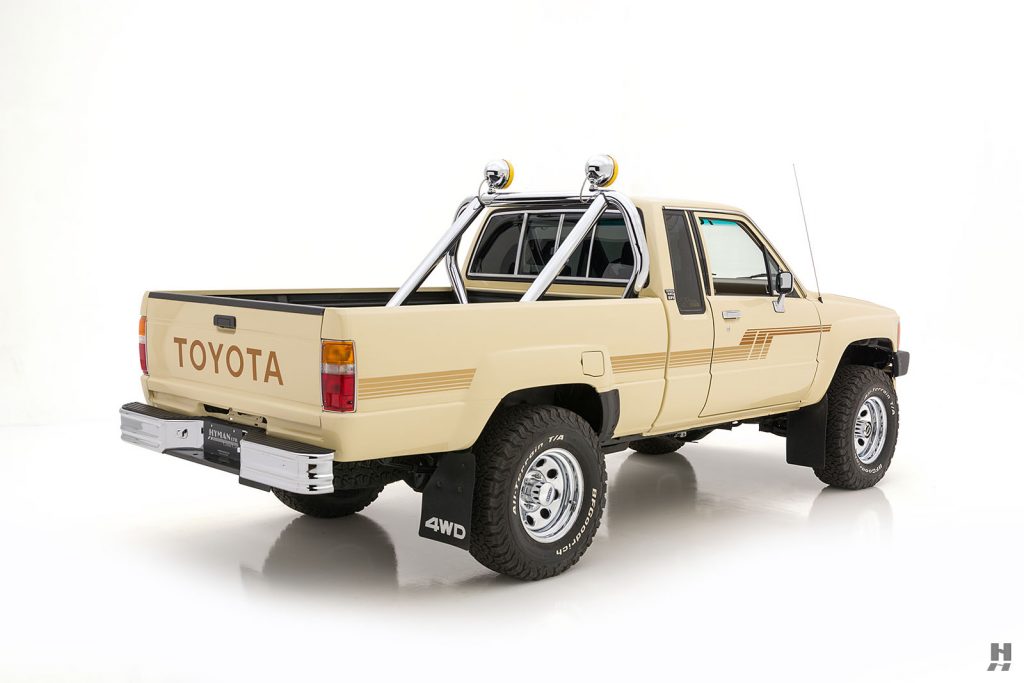
This particular Toyota pickup is an Xtracab model with four-wheel drive. Surprisingly, it is not a low-mileage creampuff. It has almost 160,000 miles on the ticker. But this pickup has gone through a “refurbishment” to make it look newer-at least in pictures.

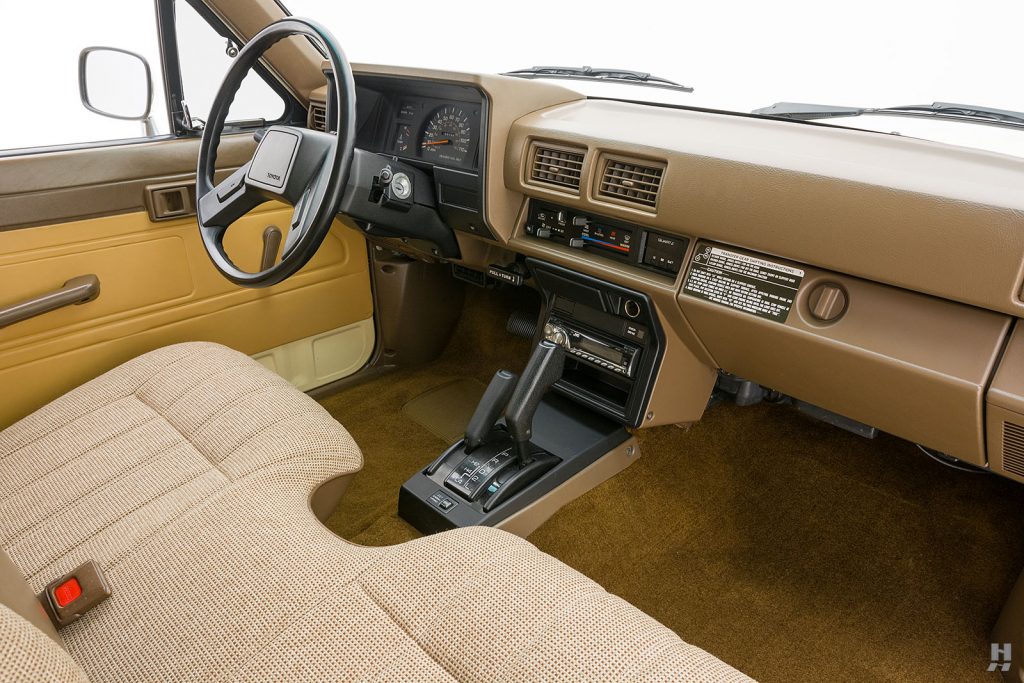
Everything has been cleaned up including the engine compartment. It looks almost like new. The same goes for the interior, except for the steering wheel which looks a little worn. You can see it is shiny, which happens to all plastic wheels.

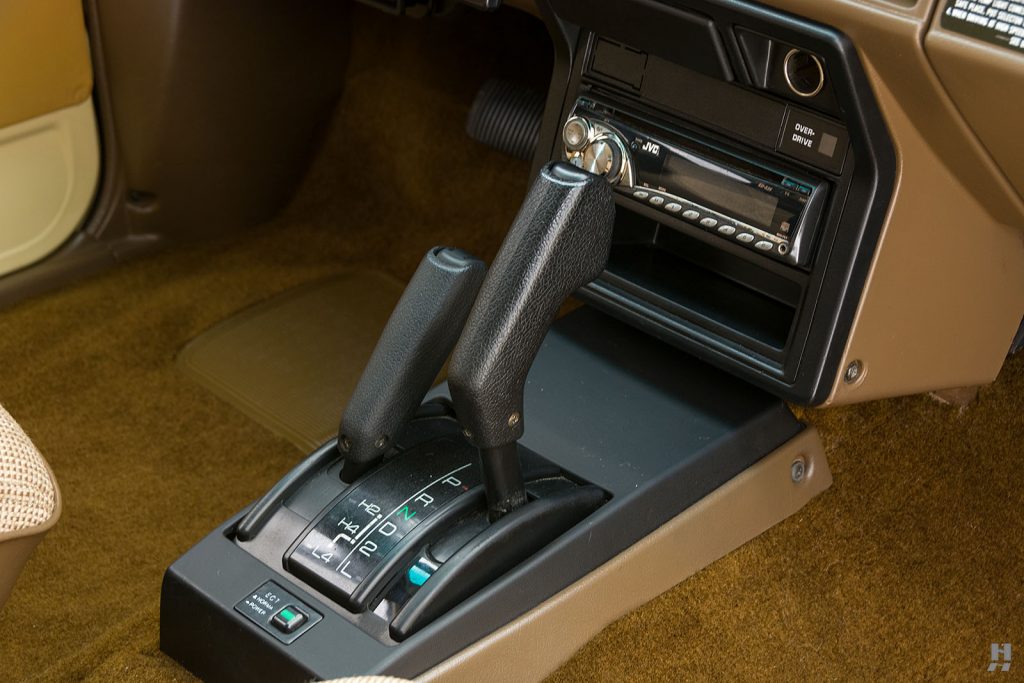
The only non-factory item inside is the aftermarket radio. Manufacturers were still bonking crappy radios into their offerings. This was before they figured out how much money could be made in offering audio choices. The same thing happened in the 1960s with air conditioning. 

The paint and graphics on the Toyota pickup look almost new

1986 Toyota pickup truck
1986 Toyota pickup truck | Hyman

The exterior looks fresh as a daisy right down to the factory graphics. How many of these Toyota pickups do you remember seeing in this beige color? It seemed like Toyota made millions of them, and it did. 

Since 1968 Toyota has cranked out over 11 million Hilux pickups worldwide. In 1986 alone it shot out just under half a million of them. And almost every one of them was this icky shade of beige. Not really.

Even the correct mud flaps and chip guards look brand new

1986 Toyota pickup truck
1986 Toyota pickup truck | Hyman

The correct mud flaps and chip guards are present, and the chrome has been redone in some cases. KC Daylighter auxiliary lights were a nice option in 1986. The spray-in bed liner looks great, though these pickups didn’t come with this. It’s a cheap and easy way to hide 160,000 miles of hauling stuff. 

Rounding out the exterior are the chrome steel wheels and BF Goodrich All-Terrain T/A off-road tires. All of these pickups came with a 2.4-liter fuel-injected 22R-E four-cylinder banger. When new they cranked out 113 hp and 140 lb-ft of torque. 

So, is this Toyota pickup really worth $47,500?

1986 Toyota pickup truck
1986 Toyota pickup truck | Hyman

And this could all be yours for the grand total of $47,500. Is it worth it? Would you pay that much for a 1986 Toyota pickup-even one as nice as this? To the right person, intrinsic value has almost no limits, so there is somebody out there that fits into this wheelhouse. 

You have to admit that seeing this at a show or in the parking lot of Psycho Taco you’d give it a look-see. It looks so clean. And if you were around back in the 1980s you would almost think this just landed from another dimension in 1986. There can’t be many like it. 

RELATED: These 11 Classic Trucks Have Skyrocketed in Value

The post Want a 1986 Toyota Pickup for Only $47,500? appeared first on MotorBiscuit.

by Gabrielle DeSantis

New drivers can choose many cars, and they’re probably looking at a wide variety of specs when car shopping. Safety and price are probably the two most important factors, but that still leaves many great options on the table. Here’s a look at 10 of the best new cars for new drivers in no particular order.

Kia Soul

The 2022 Kia Soul CUV | Kia America

As Edmunds reports, the Kia Soul is a stylish and small SUV. Despite its size, however, there’s more than enough room for drivers and their passengers. The Soul is a pretty safe SUV, but customers will need to choose one of its trims to get advanced safety features. The standard Soul starts at about $19,000, but Edmunds recommends the Soul S, which starts at about $22,000.

Hyundai Veloster

The Hyundai Veloster can be a great option for new drivers looking to have a fun driving experience. Not only is it cheap and safe, but its engine options can make it an affordable sports car. It starts at about $19,000, but Edmunds recommends the R-Spec trim, which costs about $24,500. 

Honda Accord

The Honda Accord needs no introduction as its one of the most popular cars for new drivers. It’s cheap, safe, and very reliable. Edmunds recommends buying the regular Accord, which starts at about $26,000 brand-new. However, a used Accord is also a good pick if you’re on a tighter budget.

Toyota Venza

The Toyota Venza is a safe car, but it’s not going to be a cheap one. Edmunds recommends the standard Venza, which starts at about $34,000. However, it’s a very fuel-efficient SUV. The Venza is a standard hybrid model and has a combined fuel economy rating of 39 mpg. This makes it a good option for new drivers who can afford to spend a little extra to go green.

Honda Fit

On the other end of the spectrum, there’s the Honda Fit. As Car and Driver said, the Fit is the best option for new drivers on a tight budget. A standard Fit starts at about $16,000. That said, Honda decided to kill the Fit recently, so the 2020 model year was its last in the U.S., and it might be hard to find.

Subaru Impreza

According to Car and Driver, the Subaru Impreza is the best bet for new drivers looking for a car with all-wheel drive. Not only is it safe and affordable, but it comes with all-wheel drive as a standard feature. It starts at about $19,000 and comes with a lot of additional features.

Mazda 3

Another great option for new drivers who want a sporty car is the Mazda3. Like Car and Driver said, it has great “road manners,” and it also comes with many desirable features. It starts at about $19,000 as well, so the Mazda3 is quite affordable.

Toyota Camry

The Toyota Camry, like the Honda Accord, is one of those cars that need no introduction. It’s safe, reliable, and at its starting price tag of about $25,000, it’s relatively affordable. It’s an overall great pick, and it’s why Car and Driver said that it’s the best midsize car for new drivers.

Volkswagen Golf

While the Camry was the best midsize car, Car and Driver named the Volkswagen Golf the best overall car. The Golf, a compact car/hatchback, is smaller than the Camry, but it’s more affordable with a starting price of about $23,000. Like the Camry, the Golf is a great blend of qualities that new drivers want.

Toyota Corolla

Last but not least is the Toyota Corolla. It’s similar to the Camry but smaller and more affordable. As such, like the Camry, it’s a great option for new drivers, as it starts at about $20,000.

RELATED: The Toyota Corolla Is Cheaper and Better Today Than It Was 20 Years Ago

The post 10 Best New Cars for New Drivers appeared first on MotorBiscuit.

by Gabrielle DeSantis

Fire can be warm and pretty, but it can also burn down a house or a forest. Forest fires can be deadly, so it’s important to know how to escape one if you live in an area where wildfires are common. Can you outdrive a forest fire? We take a look at whether you can, plus some of the best car safety tips to try to do that.

Can you drive through a forest fire?

Cars escaping a fire near Silverado Canyon in Orange County | Leonard Ortiz/MediaNews Group/Orange County Register via Getty Images

The answer is that you’d maybe be able to drive through a forest fire, but it’s probably not a smart idea. Forest fires can be very unpredictable and are dangerous for even expert firefighters. It’s easy to get confused due to the smoke and heat and your rising panic, says HowStuffWorks. In addition to decreased visibility, inhaling smoke can make you disoriented. Changes in the wind can also cause the fire to change directions quickly, and fires can grow in size very quickly.

Driving away depends on the road being clear of debris, including trees, signs, or buildings that may have burned and collapsed. The drive could also be slowed by traffic if other people are also evacuating. Additionally, there needs to be enough oxygen in the air for the gas engine to function properly without stalling. Heat can also cause problems for your car and can even melt auto parts or tires.

Quora suggests that driving through a fire is a last resort to escape. It’s best to evacuate much earlier when possible. People often overestimate the amount of time they have to leave their homes when a forest fire is headed their way, so it’s best to leave as soon as there is an evacuation order.

Get a sense of the fire

If there’s time, see if you can assess the fire’s size and direction. If you can tell which way the fire is moving and can see the sides of the fire, you should head toward the nearest side instead of driving in front of the fire.

It’s best if the side area has already been burned, but if not, try to find spaces that are mainly rocks or dirt and not materials that burn easily. Additionally, fire tends to move uphill faster than downhill due to the wind, so try to head downhill if you have the option.

How to drive through a forest fire

You can do a few things to make it more likely to survive driving through a forest fire. Make sure to bring bottled drinking water and any medication with you when you leave. In the car, keep a fire extinguisher and a dry wool or fireproof blanket to cover yourself, recommends Inside Edition.

The first goal is to keep going. Try to get away from the fire area as fast as possible. This means keeping your gas tank full during fire season since running out of gas has led to people being trapped and dying in their cars during a fire.

Keep driving, and don’t get out of your car. To keep smoke out of the cabin while the engine is running, close the air vents and put the air conditioner on recirculate. Additionally, turn on your headlights and hazard lights to make your car as visible to others as possible. Also, know your driving route plus a backup route, so you don’t waste any time or get lost.

If you do have to stop at any time, try to find a location that doesn’t have brush or other materials that can burn. That means a parking lot, a rocky area, or a road are the safest spots to stop. Having a wall separating you from the fire is also a plus. If the fire surrounds your car while parked, keep the engine on, and keep low in the car to avoid the heat that’s coming through the windows. The car isn’t likely to explode and will provide some protection from the fire outside until it passes.

So, if one is headed your way, can you outdrive a wildfire? That depends on how hot and smoky the conditions are and whether the road is still clear. It’s also important to follow a few tips to increase your chances of reaching safety.

RELATED: The American Station Wagon Is Dead-Long May It Live

The post Can You Outdrive a Forest Fire? appeared first on MotorBiscuit.