by Gabrielle DeSantis

In Europe, Volkswagen just announced a killer sporty wagon, the 2022 Golf R Estate. Meanwhile, here in the states, when VW announces a new car, the real ones know that it will inevitably be a boring crossover. So, when Volkswagen (sort of) announced the new Volkswagen ID.8, it came as no surprise that it was, yet again, another midsize SUV. At least it’s electric? 

2021 Volkswagen Atlas | Volkswagen of America, Inc. Newspress Limited

Volkswagen’s CEO let the boring cat out of the boring bag

El Hefe at VW, Herbert Diess, recently headlined an event announcing the group’s new global strategy, dubbed (the very German) “New Auto.” Even though Diess had notes to help him navigate the conference, he seems to have spoken prematurely about the newest in the ID line, the Volkswagen ID.8. Although he didn’t reference anything specific or even its name, the clues point to another in a long line of future electric crossovers.

VW gave Americans the midsize crossover we deserve, the Volkswagen ID.8

A blue metallic 2021 Volkswagen ID.4 Pro S electric SUV parked in a desert with mountains in the distance
2021 Volkswagen ID.4 Pro S with the Gradient Package | Volkswagen of America, Inc.

To the surprise of literally no one, the Volkswagen Atlas is one of the most popular offerings from VW in America. So, as penance for our poor automotive taste, Volkswagen is rewarding us with the surprise of what might be the VW ID.8, another midsize electric crossover. 

As noted by Autoblog, if this new electric crossover is anything like the VW ID.4 being based on the VW Tiguan, the ID.8 will most likely be an electric version of the Volkswagen Atlas. It will most likely be a roomy, comfortable, three-row crossover with a battery pack. 

This isn’t a bad thing or anything like that; it’s just not the most exciting move VW could do to create buzz for the EV segment. This lack-luster surprise will likely be massively popular, seeing as how Americans have a seemingly insatiable appetite for large SUV-ish things with more seats than sense. 

What do we know about the Volkswagen ID.8?
An image of a 2021 Volkswagen ID.4 parked outdoors.
2021 Volkswagen ID.4 | Volkswagen

Literally nothing other than the fact that “this vehicle is not for sale yet,” as noted by Diess at the conference. However, we can make some decent assumptions based on what we already know about the ID family. So far, the other ID cars that we know about are built on the MEB platform. Also, the Chattanooga, TN plant is already slated to be the hub for making the ID.4. It isn’t a stretch to think that this is likely where VW might build the ID.8, too. 

Although the references to the potential Volkswagen ID.8 were vague and shrouded, Diess did mention some other models by name. The ID.3, ID.4, ID.5, China-only ID.6, and ID.Buzz all got a bit of air time despite their various states of existence. Some of these electric Volkswagen models are currently being built, while others are slated for some future date. 

Does VW make an electric car? 

Volkswagen ID.4 in blue
Volkswagen ID.4 | Volkswagen

At this conference, Diess mentioned that Volkswagen intends to become the “global market leader in electric vehicles” by 2025. According to AutoBlog, in efforts to pursue that goal, VW engineers are working on a single electric platform called the Scalable Systems Platform (SSP) to supplant the MEB and PPE structures currently in use. 

To really drive the point home, while we may be getting another people carrier, the VW CEO did mention two models called the ID.Vizzion sedan and ID.Space Vizzion wagon. These rad-sounding electric cars will be Volkswagen Passat-sized, and one of them will be a shooting brake! Of course, these will be built and sold in Europe. 

Maybe if Americans start buying cooler cars and prove we like cool stuff, something will change. However, we are destined to have little else other than big, boring people carriers for now. 

RELATED: How Many Electric Cars Will Volkswagen Have by 2025?

The post VW CEO Spills the Beans on the Mysterious Volkswagen ID.8 appeared first on MotorBiscuit.
by Gabrielle DeSantis

Tesla is arguably the best-known EV maker, but it didn’t produce the first widely produced electric car. That accolade goes to General Motors. It produced the EV1 in the late ’90s. And although the GM EV1 wasn’t successful, it was still ahead of its time, and other automakers learned from its failure. 

The life and death of the GM EV1

The GM EV1 | David Butow/Corbis via Getty Images

The idea of an EV isn’t new, as electricity has been used to power things for a long time. For example, in the ’60s, GM experimented with converting a Corvette into an EV. But like many things in that decade, EV tech was in its infancy, and those experiments never led to any production models of an EV. 

That was the case until the ’90s when GM was in the middle of designing and producing the EV1, the world’s first mass-produced EV. It wasn’t actually called the EV1 at the time, but rather the Impact. It was a concept car, and like many concept cars, it was impressive in its numbers. In fact, the Impact set a speed record for EVs, and that earned it plenty of positive press, Car and Driver reported.

But like many cars that go from concept to production, the Impact’s transition into the EV1 didn’t go so well. It looked futuristic for the time, but its numbers ultimately doomed it. In short, the EV1 cost a lot, and GM thought the segment would be unprofitable. So after producing about a thousand EV1 vehicles, General Motors canceled the project. 

A failed car, but many lessons learned

Though the EV1 failed, the journey ultimately was more worthwhile than the destination. According to Car and Driver said, GM’s engineers had a tough task ahead of them because they needed to pioneer new technologies to get the EV1 ready for the road. 

The development of the EV1 also led to GM claiming a lot of “industry firsts,” C/D reported. Some of them include inductive charging, the tech that allows wireless charging to happen, and keyless ignition because the EV1 had a keypad. One of the more eco-friendly firsts was regenerative braking, which can help save fuel.

Many of the things the EV1 engineers pioneered are now so common that they’re practically everywhere. For example, the EV1 had “the grandfather” of today’s HVAC systems, and it also had the predecessor to power steering, Car and Driver reported. The list of the EV1’s innovations goes on and on, and the car was “a true technological triumph,” C/D said.

The GM EV1’s developmental process

Unfortunately, though, the EV1’s doomed fate was almost inevitable. After all, the main reason why the EV1 ever got mass-produced was that GM liked that the Impact was getting good reviews, Car and Driver reported. In 1993, GM put the program on hold due to the company’s financial issues. But when some car reviewers got their hands on the Impact, their rave reviews persuaded GM to keep the EV1 going.

Eventually, General Motors produced the EV1, but it was available only for lease. That GM never sold the EV1 irked TV celebrity and car enthusiast Jay Leno, who wanted to buy the car, C/D reported. In any case, the fact that GM was ready to pull the plug on the EV1 before it was mass-produced was a sign of the things to come. But fortunately, General Motors has changed its tune about EVs.

RELATED: Tesla Fell to Ford for 2021 EV of the Year, but Don’t Get Too Upset

The post The Failed GM EV1 Electric Car Was Ahead of Its Time appeared first on MotorBiscuit.

by Gabrielle DeSantis

Are electric vehicle batteries going to solve one climate crisis just to create another? Electric and hybrid vehicle battery production is at an all-time high. Reducing carbon emissions from burning fossil fuels can help save our planet but are electric vehicle batteries really eco-friendly?

Are EV batteries doing more harm than good?

An electric car powertrain | Jens Schlueter via Getty Images

Electric and hybrid batteries are often viewed as the solution to our planet’s carbon emission problem. Little did we know this solution could also cause some problems of its own. EV batteries don’t burn any fossil fuel, but the materials they use may prove to be problematic in the future.

EV batteries use materials like cobalt that often come from the ocean floor. They require deep-sea mining. Deep-sea mining is extremely invasive for the many species that live near the ocean floor. Special mining machines scavenge the ocean floor for these precious materials. According to BBC, we have no idea what this process will do to the environment and the species living in this ecosystem.

Deep-sea mining will increase as electric vehicles enter the lineups of more automakers. When electric vehicles eventually replace gas-powered vehicles in the decades to come, we will be removing an unprecedented amount of cobalt and other metals from the ocean floor. At the very least, this process will kill many of the species that live where we are mining. The unfortunate truth is that we have no clue what unintended consequences the mass-production of EV batteries will bring. Let’s just hope we don’t create another climate crisis while trying to survive the one at hand.

How long do electric cars last?

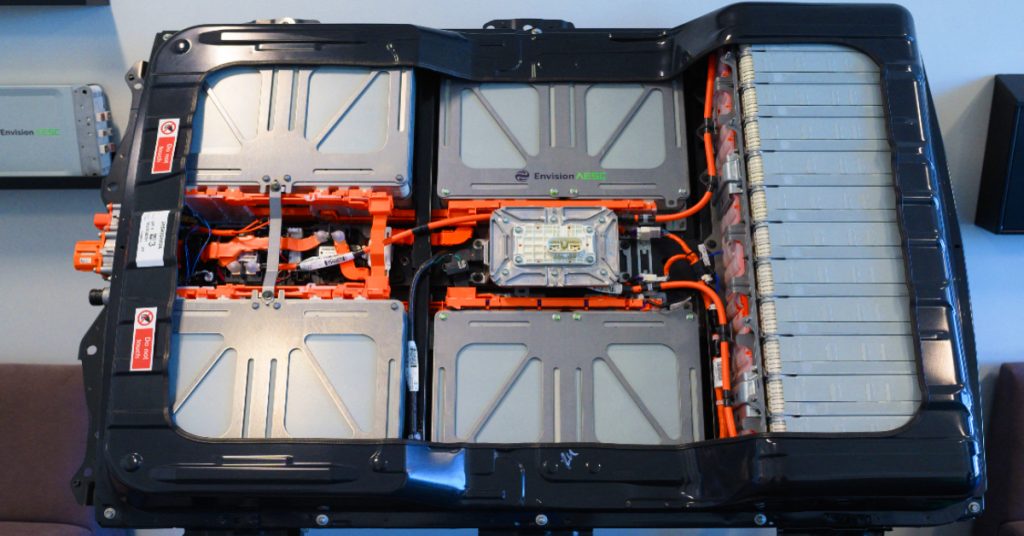
A Nissan Leaf electric vehicle battery.
A Nissan Leaf electric car battery | Oli Scarff/AFP via Getty Images

We may not have the answers to the long-term consequences of deep-sea mining for EV battery materials, but we do have a sense of how long EVs will last using them. Thankfully electric car batteries are currently estimated to last for approximately 200,000 miles with proper maintenance. They may begin to lose battery capacity around the 100,000-mile mark.

Electric vehicles will actually last as long as most gas-powered vehicles when properly maintained. This is a relief when considering the deep-sea mining process. As a consumer, most automakers offer warranties on electric vehicle batteries as well, so you won’t have to worry about your EV dying on you in your first few years of ownership. The introduction of new battery technology could even extend the life of EV batteries.

Which is the best electric vehicle?

Model 3 electric vehicles at Tesla's gigafactory in Shanghai, China, on October 26, 2020.
Model 3 EVs at Tesla’s gigafactory in Shanghai, China, on October 26, 2020 | Xinhua/Ding Ting via Getty Images

Electric vehicles are still very new to the automotive industry, yet there are already standout models. The Tesla Model 3 and Model Y are currently the most popular EVs. Tesla has been working on electric vehicles for years and is one of the few fully-electric automakers. As a result, the Palo Alto, California-based company has had ample time to work some of the bugs out of its electric lineup.

Tesla has succeeded in making its EVs fun to drive, something other automakers have struggled to do. Electric vehicle ownership has been viewed as the responsible thing to do rather than the fun thing to do. Electric vehicles only make up for a small portion of the total market share, and a big reason is that they are a tough sell today.

The Tesla Model 3 and Model Y put the minds of consumers at ease by offering great range, decent performance, and reliability. There is also a certain novelty to Tesla ownership because the company was once so inaccessible to the average consumer. Tesla is focused on releasing more entry-level models that are affordable for everyone. As electric vehicles take over the automotive industry, we still have a lot to learn about the batteries that power them.

RELATED: Do Electric Cars Produce a lot of Carbon Dioxide (CO2)?

The post Will EV Batteries Create a New Climate Crisis? appeared first on MotorBiscuit.

by Gabrielle DeSantis

Used car prices have skyrocketed. This isn’t great for consumers, but you could make a major profit if you are looking to sell your vehicle. When it comes to selling a car, there are plenty of ways to leave money on the table as well. Here’s a breakdown of how you can make the most money selling your used car.

When should I sell my used car?

A used car lot | Justin Sullivan via Getty Images

If you are looking to get rid of your used car, there is no time like the present. Thanks to a global chip shortage, vehicle supply is extremely strained. It is so strained that automakers have had to slow down production. The “supply and demand” your high school economics teacher taught you about has changed the used car market completely. The demand is high, and the supply of vehicles is historically low. You should sell your used car as soon as possible.

There are many ways drivers can sell used cars. According to CNN, there are several rules drivers should abide by when selling used cars. Before even considering selling your used car, you should make sure you have a backup plan for when you need some new wheels. Unless you’re ok with being car-less for a while, you need a good plan of action.

When you have decided to sell your used car, you’ll want to make sure it’s in the best shape possible. You need to convince buyers that your car is desirable. This may mean doing some mild detailing, getting an oil change if needed, and checking your tires. Are your car’s fluids topped off? Would you buy a car in this condition? Be sure to make a small checklist of things that may need fixing. Before even considering selling your car it should be in good condition.

What is the best way to sell a used car?

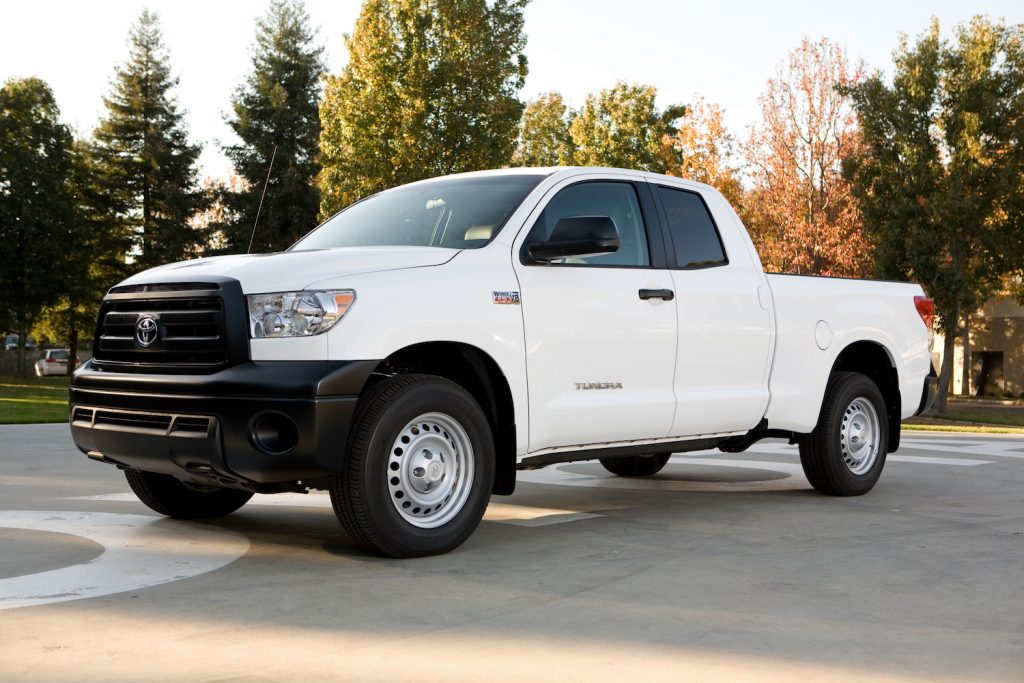
A white 2013 Toyota Tundra parked outdoors.
2013 Toyota Tundra | Toyota

So your car is shined up and ready for a new owner, now what? One surefire way to get the most money from selling your used car is by bringing it to an auction. Serious buyers who either know what they are looking for or came to leave with a good deal often frequent auctions. If you set a reasonable reserve price and your used car is in good condition, there is a high likelihood of your vehicle selling at the auction.

Another way to get the most money for your used car is through a private sale. Private sales are trickier than auctions because most inquiries don’t end up being from buyers willing to pay the price you set for your vehicle. People will try to bargain with you, and you will ultimately waste time on folks who are looking for a steal instead of a deal. That being said, a private sale could be extremely lucrative. It just requires holding out for the right buyer.

The last way to get the most money for your used car is by selling it to a dealership. Normally this wouldn’t be ideal, but used car prices are at a record high. Some dealerships are offering decent payouts for used cars so they can flip them themselves. Beware, car dealerships aren’t in the business of losing money. Thanks to the chip shortage, this last resort may produce more green than you think.

What is the best used vehicle to sell right now?

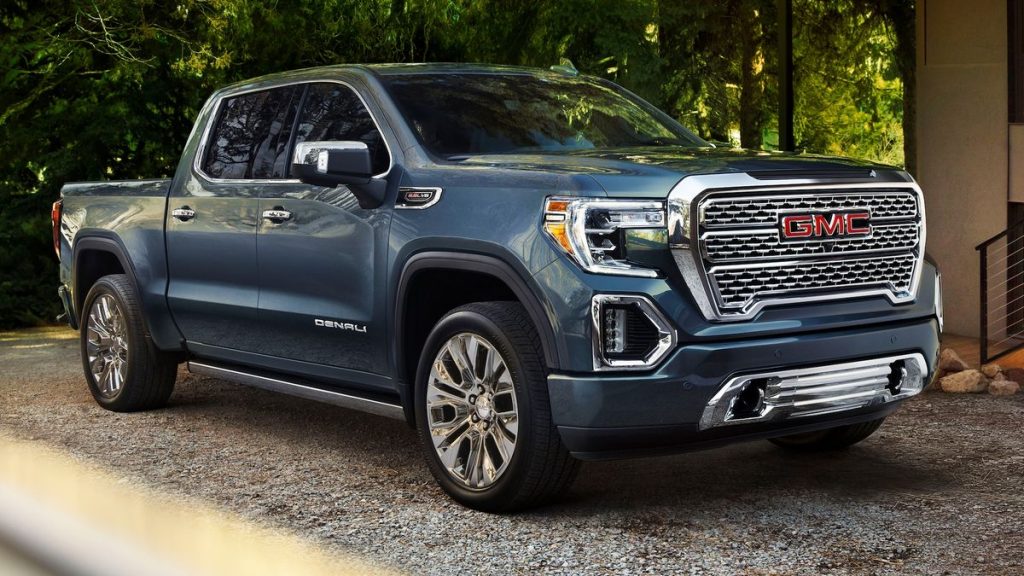
A blue 2021 GMC Sierra 1500 parked near trees.
2021 GMC Sierra 1500 | GMC

Trucks may not be the most popular vehicles on the market, but they are experiencing unprecedented markups. Trucks like the GMC Sierra 1500, Ram 1500, Toyota Tacoma, and Toyota Tundra have all been selling for more money as used vehicles than as new vehicles. This sounds outrageous, but since the supply chain has been affected by the chip shortage, these trucks have become more scarce and rare. The summer of 2021 is a great time to sell a truck.
RELATED: The Dumbest Mistake You Can Make When Selling Your Car

The post How to Make the Most Money Selling Your Used Car appeared first on MotorBiscuit.