by Gabrielle DeSantis

Consumers may have warmed to the idea of owning a semi-autonomous car, but hopeful owners will be waiting a while. Despite what some automakers may claim, there aren’t any truly autonomous vehicles available today. Nevertheless, that hasn’t stopped some drivers from abusing the advanced driver-assistance packages that are available. And this abuse can have fatal consequences. That’s why the National Highway Traffic Safety Administration is stepping in with a new semi-autonomous car crash report mandate.

The NHTSA hasn’t issued many regulations over semi-autonomous cars so far

A Waymo semi-autonomous Jaguar I-Pace car testing in San Francisco | Photo by Smith Collection/Gado/Getty Images

Up until now, the NHTSA has been relatively lax in terms of regulating semi-autonomous cars, Autoblog muses. Presumably, the agency took that stance to let automakers freely develop their autonomy tech. But this approach has also drawn criticism, including from the NTSB, which recently pushed for the NHTSA to be more ‘hands-on.’

However, recent events have shown that semi-autonomous car technology requires additional oversight. For one, more automakers have reached Level 2 on the SAE’s autonomy scale thanks to improved driver-assistance packages. Honda is even flirting with Level 3 in a limited fashion.

Secondly, and more concerningly, are the continued lethal incidents where these systems are involved. And statistically, Tesla’s Autopilot is involved in most of them. Since June 2015, the NHTSA’s teams have investigated 31 crashes involving semi-autonomous cars. And 25 of those crashes involved an Autopilot-equipped Tesla, Autoblog notes.

Properly investigating and learning from these crashes, though, is difficult because there isn’t enough data being reported. And that’s where the new NHTSA crash report mandate comes in.  

What does the NHTSA semi-autonomous car crash report mandate entail?

The NHTSA’s crash report mandate applies to all cars equipped with ADAS or other semi-autonomous tech ranging from Level 2-5. And it doesn’t apply solely to the automakers, either, Automotive News explains. If the ADAS package was engaged at the time of the crash, the equipment and software manufacturers have to issue reports, too, and the vehicle operator(s).

This new mandate also describes what these crash reports contain. Within one day of learning about the crash, the covered companies have to report it to the NHTSA. The report also has to mention if the crash involved any of the following:

  • Hospital-treated injuries
  • Fatalities
  • Vehicle tow-aways
  • Airbag deployments
  • Vulnerable road users such as pedestrians and cyclists

After submitting the initial report, companies have 10 days to issue an updated one to the NHTSA. And every month, the reports must be updated if there is any new or additional information. Furthermore, the mandate also includes a stipulation for monthly reports involving semi-autonomous car crashes featuring injuries or property damage.

How will this affect consumers?

The goal of all this is to help the NHTSA do its job better, Roadshow explains. And that job is keeping people safe from car-related dangers.

With more data, the agency can identify safety issues remaining in existing driver-assistance packages. That way, it can advise Americans on how to stay safe and manufacturers on what still needs work. Also, the NHTSA’s Acting Administrator says that the increased oversight “will help instill public confidence that the federal government is closely overseeing the safety of automated vehicles.”

Semi-autonomous cars still have a long way to go before they get to Level 5. But hopefully, steps like this will make the journey smoother and safer for all.

Follow more updates from MotorBiscuit on our Facebook page.

RELATED: What Is Nissan ProPilot Assist Technology?

The post NHTSA Makes Crash Reports Mandatory for Semi-Autonomous Cars appeared first on MotorBiscuit.

by Gabrielle DeSantis

As minivans have waned and SUVs have become increasingly popular, hatchbacks are also gaining traction. Volkswagen has seen the potential for hatchbacks and is taking advantage of it with the 2021 Golf GTI. It’s a fast, good-looking car that even won a Good Housekeeping award for the best family hatchback.

How does Good Housekeeping pick its top 18 family cars?

2021 Volkswagen Golf GTI | Volkswagen of America, Inc. Newspress Limited

What makes a car a great family vehicle? That’s the question Good Housekeeping set out to answer. Rather than just looking at how fast a car could go and if it had enough horsepower, the magazine took a different approach.

Testers drove each vehicle over 5,000 miles before handing it over to another tester. As soon as the keys exchanged hands, the test drivers began to put the cars through their paces. Phones were paired up, car seats were installed, the noise levels were tested, and the fuel-economy rating. Good Housekeeping also took into consideration Car and Driver reviewers’ thoughts before ranking each vehicle. 

The Volkswagen Golf GTI won for best hatchback

Hatchbacks make sense for families. They offer room and versatility at a time when that’s becoming more important to consumers. Though small sports cars are great for some people, getting kids in and out isn’t easy. Plus, hatchbacks are generally more affordable than SUVs, saving more money for groceries, diapers, toys, and everything else that comes with having children.

And that’s where the Volkswagen Golf GTI shines. It’s not a large vehicle by any means and isn’t suitable for families with three or more children. But for small families with one or two kids, the Golf is an ideal car. Whether you’re headed to Walmart or the beach, this hatchback provides plenty of room.

What features make the Volkswagen Golf GTI stand out?

One of the best things about the 2021 Volkswagen Golf GTI is the sticker price. It starts at $28,695, which might be a bit of a stretch for some budgets, but owners get plenty for that price.

For example, the base-model Golf GTI S comes with a leather-wrapped steering wheel, a Wi-Fi hotspot, and heated seats. These are features often reserved for higher trim levels at higher prices, so the fact that consumers can get it for so cheap is a major plus for the Golf GTI. There may be cheaper hatchbacks on the market, but there’s no denying the GTI has enough features to justify the price. If you want even more amenities, the SE trim offers LED headlights, leather upholstery, blind-spot monitoring, and a panoramic sunroof for $33,660.

The 228-hp four-cylinder engine has the right amount of power and speed to make the Golf GTI a fun car for cruising around town. Manual transmission fans will be pleased to know it’s an option. For those who don’t want a stick shift, the GTI comes standard with an automatic transmission. 

However, a significant problem with the 2021 Volkswagen Golf GTI is the lack of standard safety features. If you’re interested in driver assists such as forward-collision warning, automated emergency braking, lane departure warning, lane-keeping assist, and adaptive cruise control, you’ll have to pay for it. Unfortunately, the Golf GTI S has no standard safety features at all, which is a major ding against this cute hatchback. That means the starting price of $28,695 might be a little deceptive, as you’ll have to pay to get the features that many families value most.

RELATED: Does VW Make a 2-Door GTI Anymore?

The post The 2021 Volkswagen Golf GTI Is a Surprise Pick for Families appeared first on MotorBiscuit.

by Gabrielle DeSantis

If you’re a fan of the Mitsubishi Lancer Evolution, then you’ll remember its abrupt demise for the 2016 model year. Unfortunately for this iconic Mitsubishi, not enough buyers pulled out their wallets to support it at their local dealership. Since its disappearance, the Japanese carmaker has had a massive void in its sports car division. For the U.S. market specifically, Mitsubishi only offers a few small crossovers.

However, a new report covered by The Drive highlights that several shareholders recently voiced their interest in reviving the iconic nameplate. Despite this, it seems the brand has bigger fish to fry, starting with its efforts to become profitable once again.

Why did the Mitsubishi Lancer Evolution die in the first place?

Mitsubishi Lancer Evolution | Mitsubishi

Before we dive into the Mitsubishi Lancer Evolution’s future, let’s take a look at what caused its demise back in 2016. As you might imagine, it all comes down to sales, and such a niche product was costing the Japanese carmaker money rather than generating it. According to CarSalesBase, the entire Lancer range, including the base models, routinely sold well under 20,000 units per year. In contrast, other small sedans such as the Elantra routinely sell well into the six figures.

According to Mitsubishi’s official response, the carmaker pulled the plug because its customers wanted crossovers for added practicality. On the surface, this makes complete sense as a small SUV is far easier to sell than a road-going rally car. Additionally, the brand expressed its efforts to embrace an electrified lineup of vehicles.

Regardless of what officially killed the Mitsubishi Lancer Evolution, it seems the Japanese carmaker might not be in the best financial state to revive it.

Who wants this rally car back?

An image of a Mitsubishi Lance Evolution parked outdoors.
Mitsubishi Lancer Evolution | Mitsubishi

It seems the Mitsubishi Lancer Evolution has some friends in high places, more specifically amongst the Japanese carmaker’s shareholders. According to The Drive, a recent shareholder’s meeting saw several people asking for the revival of the Evo. As far as influencing real change, the shareholders have significantly more pull than any average enthusiast.

The question arose as the Japanese carmaker announced its plans to revive its Ralliart division and efforts to compete in motorsport once again. However, The Drive reports that Mitsubishi’s CEO, Takao Kato, quickly cited the company’s financials to make a case against its revivals.

Despite making excellent efforts to boost profits, the Japanese carmaker still isn’t profitable. Additionally, Kato cited the brand’s efforts to develop electrified models and how much research and development money it’ll require. As a result, it seems the Evo won’t make a comeback just yet.

Will we ever see another Mitsubishi Lancer Evolution?

An image of a Mitsubishi Lance Evolution parked outdoors.
Mitsubishi Lancer Evolution | Mitsubishi

RELATED: Man Wins 2006 Mitsubishi Lancer Evo 9 Dream Car Giveaways and Destroys It In 24 Hours

At this point, it seems the Mitsubishi Lancer Evolution is dead for good. However, this doesn’t completely eliminate the possibility of having a sporty Mitsubishi sometime in the distant future. If the brand decides to pivot toward making a sports sedan in the future, it’ll likely be an electric one. The Japanese carmaker has repeatedly stated its intentions to go electric, which means that all models might eventually follow that path.

The post Report: Powerful Shareholders Want the Mitsubishi Lancer Evolution to Make a Comeback appeared first on MotorBiscuit.

by Gabrielle DeSantis

Congratulations! If you own a recently manufactured Subaru Impreza WRX, you just made a little money! However, it may not be in the way you thought. Per a new study by iSeeCars, owners of newer used ‘Rex models are among those who profited from the recent used auto market hysteria. Resale values are up for models on the list, and the WRX is one, albeit just barely.

Congrats, Subaru Impreza WRX owner

An STI-spec Subaru WRX | Steve Russell via Getty Images

This frankly isn’t a common trend, especially with used sporty models like the ‘Rex. It’s a bit of a trope, but a true one: Sporty cars depreciate quickly. If you require proof simply look at the values of any number of used sports sedans or coupes over the last year. However, Subaru Impreza WRX models are known to at the very least retain their value due to their popularity and reliability.

Now, thanks to the current state of the auto market, recently manufactured models have actually appreciated. $81 may not seem like much of a value increase, but keep in mind this is an average. A 2018 model likely appreciated less than a 2020 model Subaru Impreza WRX simply due to its age. That means the newer your model, the more appreciation you’ll see. But why?

Why did owners just make money?

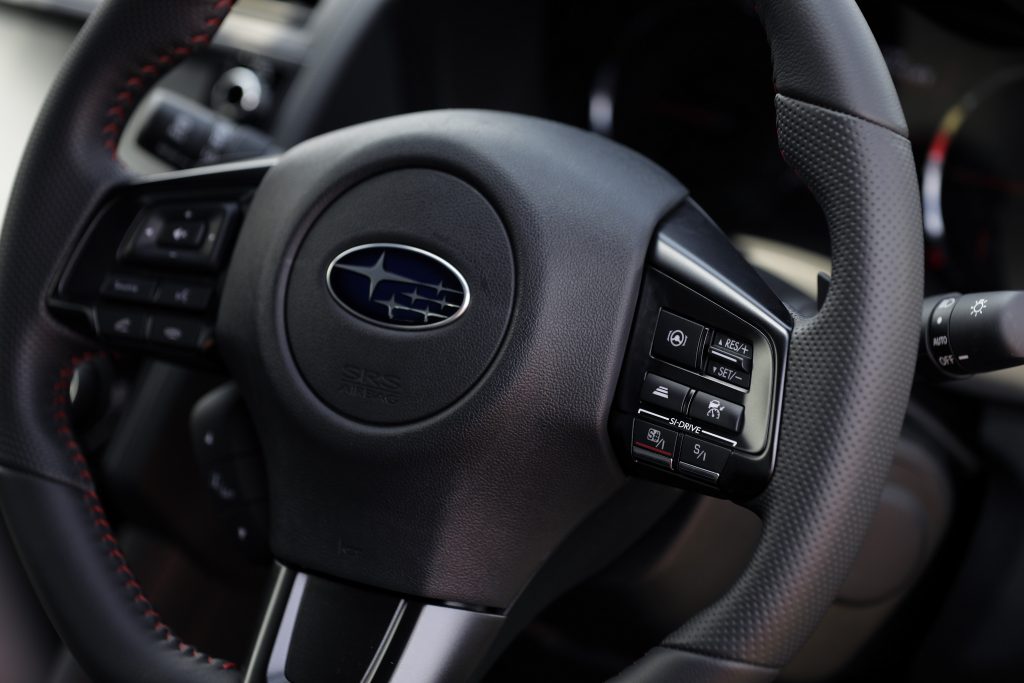
The leather-wrapped, red-stitched steering wheel of a Subaru WRX
The wheel of the WRX | Kiyoshi Ota via Getty Images

All of this recent appreciation in newer used models has to do with the shortage of semiconductors occurring right now. The shortage was brought on by the pandemic and a recent increase in demand. These little electronic components control everything in new cars. Because of the shortage, it has become hard for manufacturers to push out new models to satisfy recent demand.

As a result, consumers are willing to pay for a car they can get in and drive right now rather than waiting for a new model that may take much longer to arrive. Evidently, this is exactly why all you lucky Subaru Impreza WRX owners made a little money. Used owners were helped by the fact that Subaru, for whatever reason, was hit particularly hard by the chip shortage.

The ‘Rex isn’t the only example of this

A blue 2001 model year Impreza WRX
2001 Subaru Impreza WRX | National Motor Museum via Getty Images

Funnily enough, this isn’t the first time Subaru Impreza WRX models have risen in value. Older generation models like the one above have been on the rise for years, especially low-mileage and unmodified examples. Outside the world of Subaru, other “new” used models are seeing appreciation as well. Generally, the more popular the car, the higher the demand. Think Kia Telluride.

It’s hard to say how much longer owners will be able to ride this wave of appreciation for, but if you’re looking to get out of your 2018-2020 Subaru Impreza WRX, now may be the time to sell. If you’re in the market for a newer WRX, it’s best to wait, as the seller’s market won’t be going anywhere until the semiconductor shortage comes to an end.

RELATED: Skip the SUV: You Need a Subaru Outback for Only $15,000

The post If You Own a Subaru Impreza WRX You Just Made $81 appeared first on MotorBiscuit.