by Gabrielle DeSantis

Businesses across the globe have been affected by the chip shortage, with many automakers having to delay vehicle deliveries. One highly anticipated new SUV, the Volkswagen Taos, is reportedly not letting the shortage stop it from sticking to its June delivery schedule. Already reported to be the most efficient small SUV coming into the market, it also has a starting price that makes it one of the least expensive subcompact SUVs in its class. And there are some other features that look to make the Taos very popular. 

What kind of technology does the 2022 VW Taos have?

The 2022 Volkswagen Taos | VW

Possibly one of the coolest things about the new 2022 Volkswagen Taos is all of the ingenious and useful, technology that it has. The VW Digital Cockpit is standard on all models, with base models getting an 8-inch digital instrument cluster and a 6.5-inch center touchscreen, with higher trim levels receiving a 10.3-inch instrument display and an 8-inch touchscreen.

It also comes with VW’s AppConnect smartphone integration system, Sirius XM, and BeatsAudio®, which amplifies the sound system. Apple CarPlay and Android Auto also come standard, along with an easy-to-use navigation system.

In terms of safety, the IQ.DRIVE® bundle of active-safety features comes standard on the top SEL trim and can be added to any of the lower trims. Some of the driver’s assistance technology includes stop-and-go adaptive cruise control with semi-automated assistance, active blind-spot monitoring, lane-keeping assist, automatic forward-collision warning, and emergency braking. 

When does the 2022 Volkswagen Taos come out?

According to Car and Driver, even though there is a global shortage of the microprocessor chips that control the IQ.DRIVE® safety bundle, Volkswagen is confident deliveries will start in June as promised.

In fact, there seems to be a general consensus at VW that the new Taos will be prioritized over the 2021 Tiguan if the shortage forces a choice. As it stands right now though, both vehicles are expected to be released on schedule. 

The 2022 Volkswagen Taos

This brand-new SUV is beautiful on the inside and stunning on the outside. Each 2022 Volkswagen Taos comes with a 1.5-liter turbocharged inline-four that puts out 158 hp and 184 lb-ft of torque. Front-wheel-drive models feature an eight-speed automatic transmission, with all-wheel-drive models getting a seven-speed dual-clutch automatic transmission.

The estimated fuel efficiency is pretty impressive for this class of vehicles, with front-wheel-drive models getting an estimated 31 MPG combined and all-wheel-drive models getting an estimated 28 MPG combined.

The VW Taos has three trim levels available – the base model S, the SE, and the SEL. The base model starts at $24,190, with the top trim, the SEL, starting at $32,685. Cloth seats are standard, but you can get genuine leather seats on the SEL trim.

The top trim also comes with a panoramic sunroof as a standard feature, but you also have the option to add one to the lower trims if you want. The SE and SEL trims also come with the ability to remote start, along with 18- or 19-inch wheels instead of the standard 17-inch wheels.

Volkswagen seems to be putting everything it has into the launch of the 2022 VW Taos, even potentially delaying the 2021 Tiguan if the chip shortage gets worse. And if the final product lives up to the expectations, then it will probably turn out to be a good choice for the German automaker. And hopefully, we will even see the Taos Basecamp concept in production. It’ll probably become the off-road Taos we did not even know we needed.

RELATED: Who Should Buy the 2022 Volkswagen Taos?

The post The Chip Shortage Won’t Stop the 2022 Volkswagen Taos From Launching appeared first on MotorBiscuit.
by Gabrielle DeSantis

Have you been on the road recently and been blinded by a pair of car headlights? If so, you aren’t alone. While car safety is a hot topic for automakers and consumers combined, technology has not yet caught up to fix the issue. While lights have gotten brighter in the past 50 years, other factors have a bigger impact.

Do newer cars have brighter headlights?

A black taxi cab with bright headlights | Tim Graham/Getty Images

The New York Times recently did a piece investigating the state of lights these days. In the past few years, pickup trucks and SUVs have surged in popularity. For those driving in smaller cars or sedans, the headlights of large trucks seem to be at the perfect height to blind oncoming drivers. The New York Times suggests that recent technological advances to improve driving at night have also introduced brighter lights.

Matt Kossoff is the CPO for The Retrofit Source, a headlight distributor, noting that headlights have gotten brighter in recent years. From the 1950s through the 1980s, automakers used “sealed-beam” headlights in cars. These were not very advanced and offered a poor stream of light for drivers. Through the early 1990s, headlights were mainly halogen lights with tungsten filaments. These offered a better light output over the sealed-beam version, but there was still a long way to go.

By the time the late 1990s came around, high-intensity discharge lights had offered various glowing headlight colors. LED lights surged in popularity by the 2010s as these were brighter, lasted longer, and were more efficient in the long run. These also came in different “colors” like blue and purple, which tend to look brighter than conventional white lights.

While these new headlights do make night driving easier, there is another side to the coin. There is even a Facebook group called Ban Blinding LEDs and a Change.org petition called Ban Blinding Headlights and Save Lives! Eric Kennedy is an associate professor of biomedical engineering at Bucknell University in Lewisburg, questioned the change. “The balance we are always trying to strike is what is the mitigation and what are the unintended consequences?”

One of the major pushes toward improved headlights has been in the name of safety. The Insurance Institute for Highway Safety (IIHS) scores cars, trucks, and SUVs for headlight visibility. This has made automakers acutely aware that brighter headlights are the way to go.

The angle of the lights has a major impact

Back in 2019, Popular Science wrote about this exact issue. The National Highway Traffic Safety Administration (NHTSA) noted that thousands of complaints had been filed related to headlights. Popular Science notes that there has not been a major update to headlight regulations since 2008. Headlights are not necessarily getting brighter, but many factors might make it seem as if that’s the case.

Headlights mounted at a certain angle allow for optimal vision. That angle is a line parallel to the ground. Matthew Brumbelow of the IIHS says, “anything above that horizontal level is supposed to be restricted brightness.” Brumbelow notes that even if the headlights meet the requirements set forth, the lights could be mounted at the wrong angle.

If you have ever been at a stoplight and had to adjust your mirrors to escape a set of blinding lights, this could be the cause. Often the lights can point at an upwards angle, even by a minuscule amount. This can happen on the assembly line by accident.

There is advancing technology for cars that helps the beams automatically adjust if another car is in view. European countries use adaptive headlight technology, but that has not made its way to the U.S. yet. The NHTSA is currently working on legalizing the technology.

The moral of the story? Headlights are brighter than the original versions, and certain factors are amplifying the lights. Automakers are adjusting to the technology, but it hasn’t had enough time to trickle down to the consumers yet.

RELATED: J.D. Power’s Newest Study Proves New Cars Are More Reliable Than Ever

The post Are Headlights Getting Brighter, or Is It Just You? appeared first on MotorBiscuit.

by Gabrielle DeSantis

Even if you’re still skeptical about an all-electric future, it’s hard to ignore the benefits of electric vehicles (EVs). While these vehicles usually have expensive price tags, they make up for it with outrageously low charging costs. Some electric cars, like a Tesla Model S Performance, are even just as fast as iconic sports cars.

Recent research has found that rural drivers can get the best bang for their buck from electric cars. The Union of Concerned Scientists found a study that suggests these drivers can save thousands of dollars from driving EVs. It’s an enticing incentive to buy one, but there are still some drawbacks to consider.

How much can rural drivers save with an EV?

An electric car charging station | Sebastian Kahnert/picture alliance via Getty Images

Studies show that the average driver saves at least $1,900 per year by switching from driving gas-powered cars to electric. Some drivers were even able to save $2,800 in the same length of time because they had shorter commutes. The study points out that rural drivers are actually in a better position to own electric cars.

Rural residents are more likely to live in their own building structures as opposed to an apartment, so they can install their own charging infrastructure. Electric cars are also an excellent low-cost alternative to public transportation, which usually isn’t available in rural areas. They could always use a rideshare service like Uber or Lyft, but those costs add up fairly quickly.

Why electric cars are suited for rural driving

Many people who live in rural areas have longer work commutes than the average driver. A roundtrip to town and back can rack up a lot of miles, especially if you have to make stops. Drivers who are employed in logging or construction often have to make multiple trips to transport all their supplies.

While most of the electric cars on the market are currently sedans and SUVs, electric pickup trucks are on the way. You’ve probably heard of the Ford F-150 Lightning, which can tow up to 10,000 pounds. We suspect that it might impact the F-150 Lightning’s 300-mile range somewhat, but it’s still a cheaper alternative in terms of refueling. 

Electric cars can save drivers even more money if they’re just used for local grocery trips. Without any heavy cargo, most electric sedans and SUVs can get around 250-300 miles of range. Even half a charge can get drivers to the store and back without issue.

Potential cons of rural living with an EV

While the price of electricity is much lower compared to gasoline, charging station availability is an issue in rural areas. Looking at the Department of Energy’s map, we can see that some states only have a few charging stations compared to others. In Montana, there are less than 40 public charging stations in the entire state. 

Some drivers might have to commute to the next town over just to charge their cars. You can usually restore a good amount of battery in just a half-hour, but it’s still inconvenient. 

Although it’s easier for rural drivers to install their own chargers at home, this might not be feasible for their budgets. According to HomeGuide, the cost of the charger plus installation fees can total as much as $2,600. Given that many EVs retail for over $40,000 already, it’s a hard sell for some shoppers.

Buying a cheaper EV might seem like a better solution, but Forbes has found problems with that strategy. When test-driving cars like the Hyundai Ioniq, its range was almost forty miles less than advertised. This was probably because it needed more juice to keep up with its peers on the highway.

RELATED: Would Buying an Electric Vehicle Change Your Life for Better or Worse?

The post Rural Drivers Can Save Over $2,800 a Year By Switching to an Electric Car appeared first on MotorBiscuit.

by Gabrielle DeSantis

If you were to go on a long road trip, what kind of car would you take? A minivan? Or perhaps a large sedan? A hybrid car? Any of those choices would be great but, believe it or not, a sports car would do just as well. Sure, a sportscar might not be as practical as a sedan or minivan, but it can be comfortable and fuel-efficient enough for the long haul. Here are five of the best sports cars to take on a road trip, according to Carvana.

The Ford Mustang has power and fuel efficiency

The 2021 Ford Mustang Mach 1 | Ford

The Ford Mustang might not have the largest trunk or back seat area, but it’s easy to drive and has plenty of power to boot. The base Mustang EcoBoost comes with a turbocharged 2.3-liter engine that puts out over 300 hp and is able to achieve up to an EPA-estimated 30 mpg. But if you need even more power for your trip, then the venerable Mustang GT is equipped with a 460-hp, 5.0-liter V8 that should give you the thrust you crave.

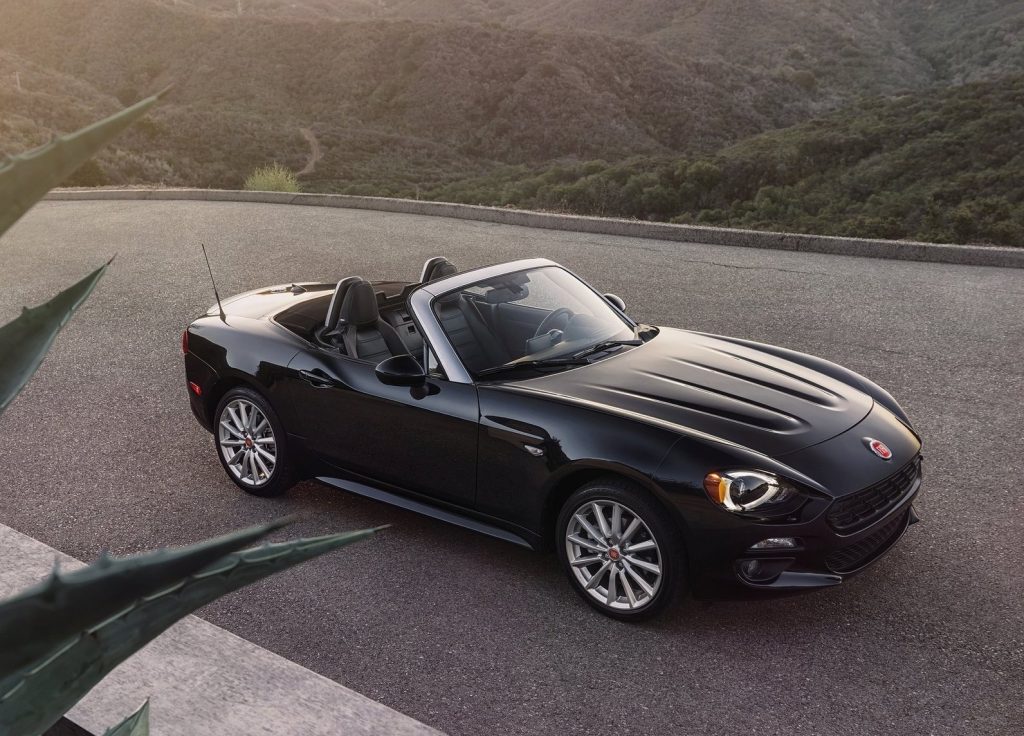
The Fiat 124 Spyder adds a little class

Fiat 124 in black
Fiat 124 | Fiat

If you are a fan of the Mazda MX-5 Miata but want something with a classier look, the Fiat 124 Spyder might work for you. The Fiat 124 is built on the same chassis as the Miata, but it features a turbocharged 1.4-liter engine instead. This engine is good for 160 hp and can achieve up to an EPA-estimated 25 mpg in the city and 35 mpg on the highway, so it can definitely go the distance and get you there in style.

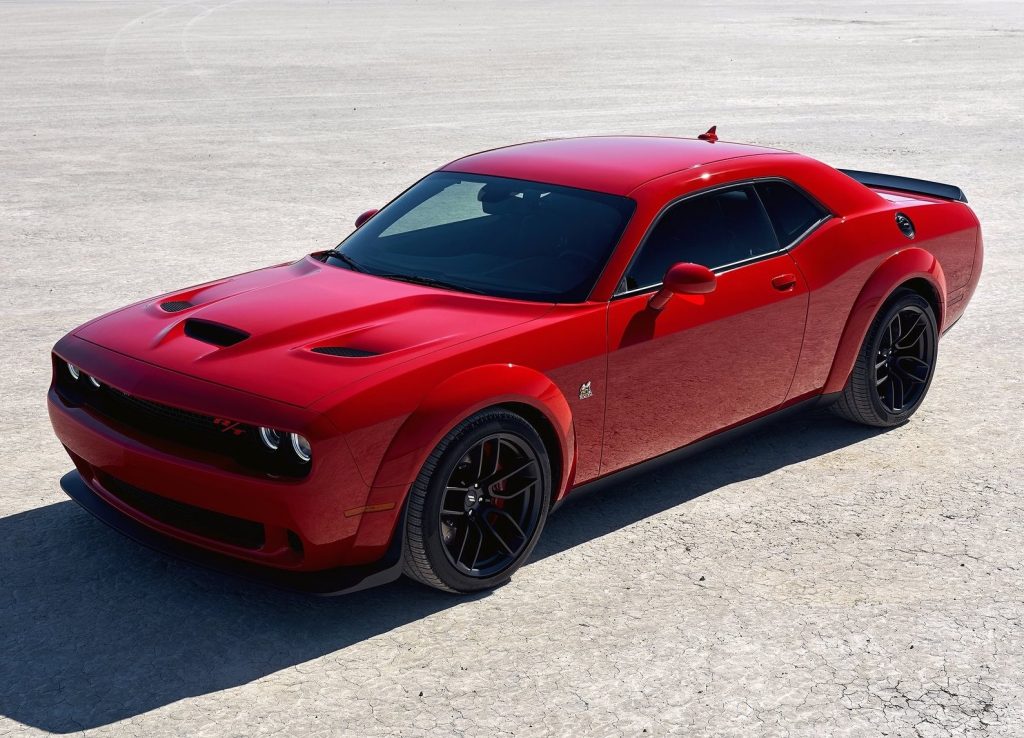
The Dodge Challenger doubles as a large cruiser

Dodge Challenger 392
Dodge Challenger 392 | Dodge

While the Dodge Challenger is a considered a muscle car, it can do double duty as a comfortable cruiser as well. The Challenger is a little larger than its rivals, which means that it has plenty of room for four adults and a large enough trunk for most of their stuff. Practicality aside, the Challenger also comes standard with a 305-hp, 3.6-liter V6 engine that can achieve up to an EPA-estimated 30 mpg on the freeway and run on 87-octane fuel. Who says that a muscle car can’t be a practical road trip car?

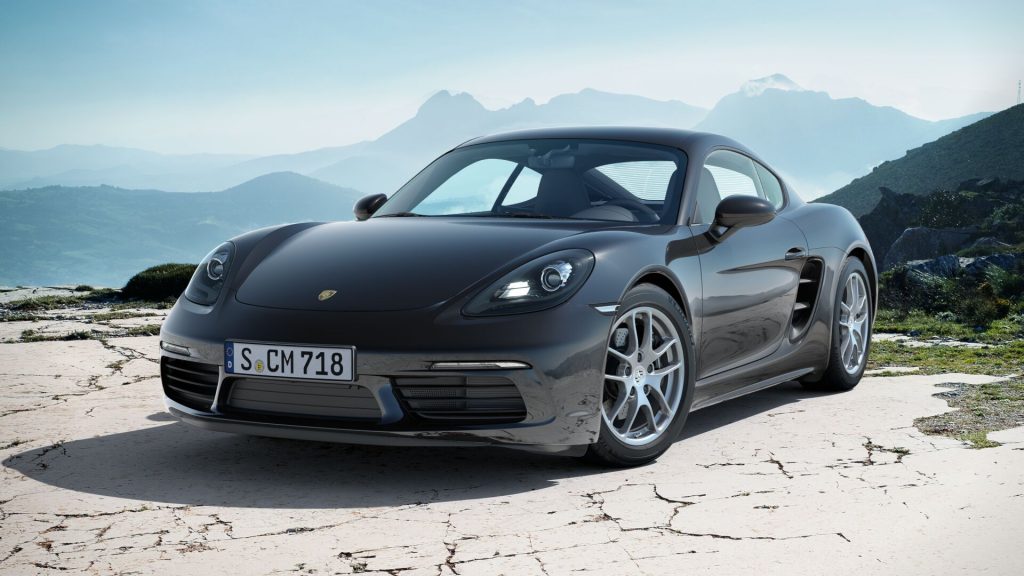
The Porsche Cayman is more practical than you think

2021 Porsche Cayman
2021 Porsche Cayman | Porsche

If you would rather have a German sports car to command the road with, the Porsche Cayman provides surprising practicality and power. The 718 Cayman comes with a potent turbocharged, 2.0-liter engine that pushes out 300 hp and 280 lb-ft of torque. It’s a fuel-sipper, too, as it’s able to achieve up to 27 mpg on the highway according to Fueleconomy.gov.

In addition to its power and efficiency, the 718 Cayman also has two trunks; one in the front and one in the back. Thanks to its mid-engine layout, the Cayman’s rear trunk offers 9.7 cubic feet of space while the front trunk – or “frunk” – has 5.2 cubic feet under the hood.

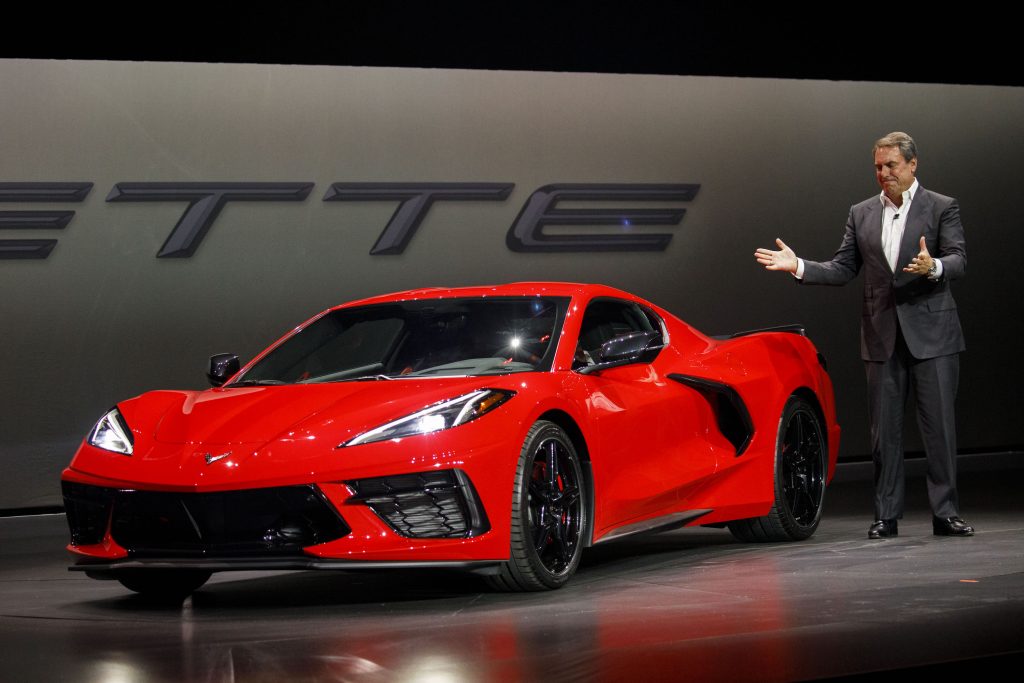
The Chevrolet Corvette offers a lot of muscle and a large trunk

Mark Reuss, president of General Motors Co. (GM), speaks during an unveiling event for the GM red 2020 Chevrolet Corvette Stingray sports car in Tustin, California, U.S.
The Chevy Corvette C8 | Patrick T. Fallon/Bloomberg via Getty Images

Lastly, a Chevrolet Corvette can give you what you need if you want power and practicality on your long road trip. The Corvette has a 6.2-liter, V8 engine that produces up to 460 hp and 465 lb-ft of torque. That massive engine is mated to an eight-speed automatic transmission and it’s not a gas-guzzler either. The EPA estimates that the Corvette can achieve up to 27 mpg on the highway.

But what’s even more impressive is that the Corvette has ample room for two adults and provides plenty of support with its sport seats. The trunk is large, too, as it provides 15 cubic feet of storage space, which is large enough for a couple of carry-on bags.

Sports cars are road trip cars too

As we can see, there are definitely some fine options to choose from if you want to take a sports car on a long trip. Sure, none of these are as comfortable as a minivan or hybrid car. But they will definitely get you to your long-awaited destination with a huge smile on your face.

RELATED: Is the 2020 Mazda MX-5 RF Good For Road Trips?

The post 5 of the Best Sports Cars to Take on a Road Trip appeared first on MotorBiscuit.