
by Gabrielle DeSantis

Stopping to fill up your gas tank can be a total headache for some drivers, and it seems like the minutes themselves slow down as you wait for the tank to be full. It can also mean stretching your budget, especially with constantly fluctuating gasoline prices. Besides buying a car with responsible fuel economy, there are other ways you can stretch your tank and daily or weekly habits you can form to keep you from topping off your tank just a little bit longer.

Pay attention to your driving habits

The reported fuel economy that you see from manufacturers and review websites isn’t always what you get from your vehicle in real life. That can be frustrating if you buy a car with fuel efficiency in mind, but it isn’t necessarily the manufacturer’s fault. In fact, your personal driving style and habits can contribute to your vehicle’s fuel economy. If you pay attention and even make some changes, you can improve your car’s fuel economy.

Driving smoothly is an important driving habit that’s easy to leave behind in the dust. Hard accelerations and braking might make your driving experience seem more exciting, but it can also negatively impact your car’s fuel economy. According to Consumer Reports, the science behind this is rather simple.

When you accelerate harshly, you use more fuel, and it doesn’t always make your car get up to speed that much faster, especially if you drive a heavy vehicle. Just the same, when you break too heavily or too often, you essentially waste the fuel that you used to get up to speed in the first place.

A fuel station worker fills a car with fuel | Camilo Erasso, Long Visual Press, Universal Images Group, Getty Images

Stop falling for old fuel saving myths that don’t work

In our search to improve our fuel economy and stretch our tanks just a bit further, it can be easy to follow for easily debunked fuel-saving myths. For example, using premium gas or a gas that has a higher octane rating than what your vehicle requires doesn’t do anything to improve your fuel economy. Of course, if your car requires premium or plus gas, you can damage your engine by using a lower octane. The point here is that there is really no reason to pay more money for a higher octane rating than your vehicle actually needs.

Closed gas pumps at an empty gas station
Closed pumps at an empty gas station | Elijah Nouvelage, Bloomberg, Getty Images

RELATED: Owning an Electric Vehicle Now Shows the Potential for Overcoming Gas Crisis

Keep up with vehicle maintenance and repairs

The condition that your vehicle’s engine and other components are in can also affect your vehicle’s fuel economy. Having low tire pressure, for example, means that the gasoline used by your engine to accelerate your car forward isn’t being used effectively, essentially wasting fuel. Dirty engines that have old, overused oil aren’t as effective overall and can also hurt your vehicle’s fuel economy.
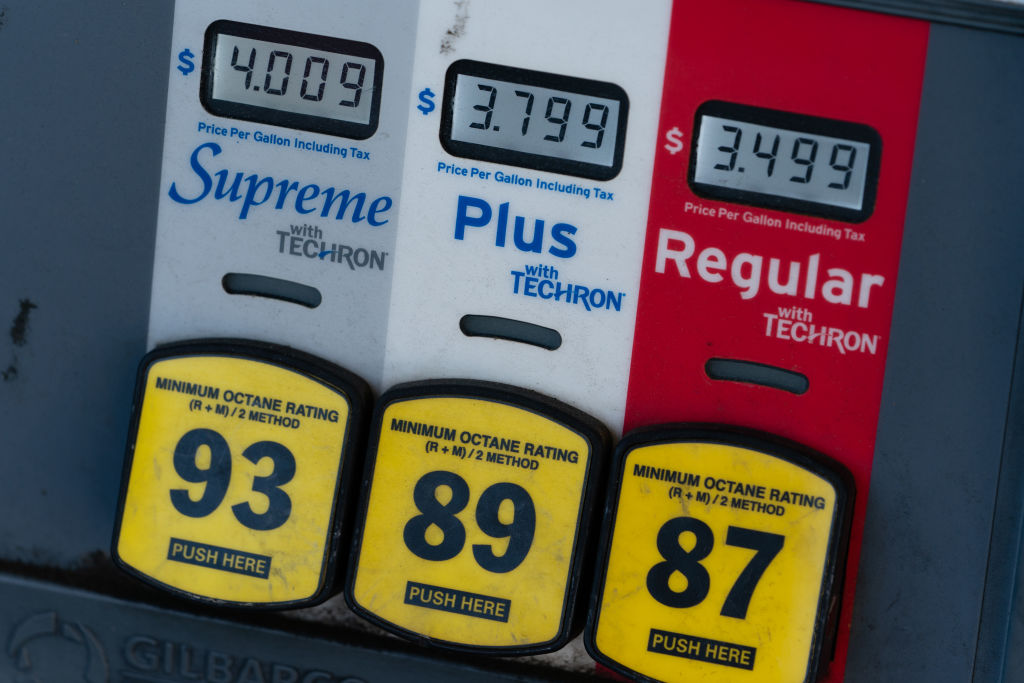
gas pumps with octane and pricing
A gas pump | Elijah Nouvelage, Bloomberg, Getty Images

RELATED: Police Chase Goes Awry as Gas-Hoarding Woman Crashes Setting Off Multiple Explosions

Paying attention to the aerodynamics of your car doesn’t hurt either. While roof racks, bike racks, and other external devices that can you help you travel with more cargo can be incredibly helpful, studies have shown that leaving your bike racks and other devices secured to your car can actually ruin your car’s fuel economy, too.

The post These Tips Will Keep You From Topping off Your Tank a Bit Longer appeared first on MotorBiscuit.

by Gabrielle DeSantis

Buying a new Nissan Leaf can be expensive, but so is purchasing a new EV in general. That said, the government wants Americans to buy EVs, so it offers a pretty significant tax credit to consumers. However, not all EVs are eligible for the credit. Here’s a look at whether the Nissan Leaf can get one.

What is the federal EV tax credit?

To address the high purchase prices of EVs and hybrids, the U.S. government created a federal EV tax credit over a decade ago. First and foremost, the government looks at a few factors to determine which cars are eligible for the tax credit and how much the owner can receive. For example, EVs must weigh less than 14,000 pounds, the size of the battery affects the dollar amount of the tax credit, and automakers will lose that credit if they sell over a certain number of eligible vehicles.

That last part is why Tesla EVs are no longer eligible for the federal tax credit. The limit is set at 200,000 vehicles, which means that when an automaker sells more than 200,000 eligible EVs, the government gradually phases out the tax credit for that automaker to $0. 

Furthermore, it’s important to mention that it’s a tax credit, not a stimulus check. That means the tax credit amount affects how much you owe for your taxes. Suppose you owed $10,000 and received the max EV tax credit of $7,500, your tax bill lower to $2,500. But if you owed $1,000, your EV tax credit would lower the amount you owed to $0. If you were due a refund, you’d get the full $7,500.

Yes, the 2021 Nissan Leaf qualifies for the credit

For better or worse, Nissan hasn’t hit the 200,000-EV mark yet. So, according to the EPA, the automaker qualifies for the full $7,500 tax rebate. This makes sense because Nissan sells only one eligible EV model in the United States, and that’s the Leaf. This means that for Nissan to hit the 200,000-EV limit, it would have to sell 200,000 Leaf cars, and that hasn’t happened yet.

On the other hand, automakers that have invested heavily into EVs and hybrids are no longer eligible for the EV tax credit. And so far, other than Tesla, General Motors is also no longer eligible, according to the EPA.

Other than the federal tax rebate, though, some areas may have their own incentives. For example, according to Clean Vehicle Rebate, California customers can get thousands of dollars in rebates for buying an EV or hybrid, including a Leaf. These rebates are not tax credits, and they will be paid in full no matter how much you owe in taxes.

An overview of the 2021 Leaf

Admittedly, the Nissan Leaf isn’t as fancy or eye-popping as some rivals. But it’s nonetheless an affordable EV that lives up to the promise of electric vehicles, Car and Driver reports.

The $33,000 base model packs a 147-hp electric motor and a 40.0-kWh battery. They allow the Leaf to get 150 miles on a full charge. That’s not a huge range, but it’s enough for many city dwellers.

As for the Leaf’s interior, it’s basic compared to a Tesla, but that’s not necessarily a bad thing. It has a standard 8.0-inch touchscreen display and a suite of advanced safety features for an overall smart, safe, and affordable EV.

RELATED: The 2021 Nissan Leaf Is a Low-Budget, High-Safety Option

The post Does the Nissan Leaf Qualify for the EV Tax Credit? appeared first on MotorBiscuit.

by Gabrielle DeSantis

The BMW X5 is a thoughtfully designed luxury SUV that’s hitting the road with a brand-new innovation in sustainability. Legendary tire maker Pirelli has launched an eco-friendly tire line, and the X5 is the first production car to hit the road on them. Green initiatives will only increase over time, and BMW is joining the trend. What sets these tires apart, and why did BMW choose them for the 2021 X5? The answer is a shared vision for the future.

Pirelli Tires | Mark Thompson via Getty Images

Pirelli changes the game, this time with eco-friendly tires

The name Pirelli is ubiquitous with performance tires and innovation. The company could easily be called one of the first lifestyle brands. More than a century ago, Pirelli employed artists to create innovative visual advertising. These ads used elegant and highly stylized images to captivate customer’s attention. These ads helped usher in a new era in branding and remain some of the most iconic images in automotive marketing history. 3

Pirelli began its life as a rubber processor and SCUBA equipment manufacturer. The company evolved into a telegraph cable manufacturing then bicycle tires before it ever made its first automotive tire. The first Pirelli tires were not the high-performance versions the brand is known for today. Pirelli made tires for street use first.

Pirelli has become the first company to produce Forest Stewardship Council certified tires in its most recent innovation. The Forest Stewardship Council certifies products that are sourced from carefully managed forests. These forests must be cultivated and harvested in ways that provide environmental benefits and contribute to local economies.

The BMW X5

A purple 2021 BMW X5 luxury SUV on display
2021 BMW X5 | Ji Haixin/VCG via Getty Images

RELATED: Does the 2021 BMW X5 Offer a V8 Engine Option?

This pairing between BMW and Pirelli makes sense. According to Standard & Poor’s 2019 report, Pirelli is ranked as the most eco-friendly tire producer. BMW is the world’s second most sustainable automaker, beaten only by Audi. The similarities between the two brands don’t end there.

Both brands have shaken things up since the beginning. Pirelli is known for innovation across several markets. BMW has been changing the landscape of the automotive industry since its launch. Both companies have a proven track record of innovation in sustainability. The 2021 BMW 5X will be the first production car to hit the street with sustainably sourced tires. This may be the first of many eco-conscious projects between the two brands.

How nature produces a performance tire

Sunlight passing through coniferous trees in a thick forrest
conifer trees | Claire Gillo/PhotoPlus Magazine/Future via Getty Images

RELATED: The 2021 BMW X5 Has an Absurd Number of Recalls Already

Southeast Asia is heavily planted with latex-producing forests. The industry has been heavily criticized for its environmental impact and employment practices. Many companies and organizations are pushing back against unethical rubber production. Pirelli is one of many manufacturers seeking out sustainable materials.

Not only is Pirelli setting higher standards for the source of its materials, but it’s improving the health of tires from the ground up. Modern tires are typically made from more synthetic rubber than natural. On average, tires are around 25% synthetic materials. Pirelli aims to increase the organic content of its products to 65%.

These changes are welcome news to conservationists who have long warned of the impact tires have on the planet. The production of synthetic rubber can contribute to groundwater contamination as well as air pollution. Tires also make up a large percentage of non-biodegradable waste. Nearly 16% of all tires produced end up in landfills, where it can take hundreds of years for them to decompose. Tires even contribute to plastic waste in oceans.

The post The 2021 BMW X5 Is the First Car to Sport Sustainable Tires appeared first on MotorBiscuit.

by Gabrielle DeSantis

The 2021 GMC Acadia has some stiff competition in the third-row midsized SUV came, like the popular Kia Telluride and Ford Expedition, but it does well to hold its own. The Acadia is well priced among options in its segment, and it does well to balance modern touches with simplicity in both good and bad ways. For the right buyer, the new GMC Acadia offers sought-after safety features, a high expectation of reliability, and a modern touch.

GMC Acadia | Raymond Boyd, Getty Images

The 2021 GMC Acadia has a lot going for it

There is a lot of high points when it comes to the 2021 GMC Acadia. While you wouldn’t consider it a luxury SUV by any means, it still offers a rather smooth and refined ride quality for a modest price, at least in comparison to much more expensive high-end luxury cars. The MSRP for the new Acadia starts at $30,995 and goes up significantly among the various trim level options.

Among the five trim level options, the Acadia offers smooth acceleration and ample handling for such a large vehicle, and combined with a rather quiet cabin space and gentle ride quality, it does well to provide drivers and passengers with a high-quality driving and riding experience.

GMC Acadia fisheye display
GMC Acadia | JEWEL SAMAD, AFP, Getty Images

But, it has some downsides, too

Of course, no vehicle is perfect, and really it’s all about balancing out the bad with the good. For the 2021 GMC Acadia, there are a few areas where the vehicle is lacking, but they aren’t necessarily a deal-breaker. From the outside, the new Acadia looks modern and aggressive, giving buyers a much-needed upgrade over previous generations without making the car look too crazy or unrecognizable. From the inside, however, the Acadia is rather plain.

In fact, according to Edmunds, the interior is one area that the 2021 GMC Acadia lacks in the most, skimping on luxuries like soft-touch surfaces or stylish trim. For the right buyer, this simplicity might be appealing, as it is designed to be a versatile vehicle but also a family-focused one. With a more basic interior, you may not be as worried about small messes and a little chaos here and then, and the overall layout of the backseats still makes it a great option for many families.

RELATED: 2021 Buick Enclave vs. GMC Acadia: 1 Remains the Better Premium SUV

The overall picture and best trim level option

The 2021 GMC Acadia is still a great option for a large SUV that offers plenty of space and a third row of seating. Whether it is enough to compete against competitors that offer a bit more luxury for the same price is up to buyers, but the refined driving quality of the Acadia is certainly enough to make it stand out.

According to Edmunds, the best bang for your buck is the SLT trim. It’s selected for its turbocharged engine option that gives the SUV a bit more power, making it more enjoyable to drive. Besides that, there are more available options at this trim level that makes the car more customizable to the needs and wants of different drivers. It also offers quite a bit of a step up in driving aids and safety features than the lower trim levels.

RELATED: U.S. News Recommends the 2021 GMC Acadia for Your Family

The 2021 GMC Acadia might not sit in the spotlight that the popular 2021 Kia Telluride does, but perhaps that is also part of the appeal. After all, most large SUVs have to balance out the good with the bad, and buyers have to decide what is most important to them as individuals. For many drivers and families, the new Acadia is still a great option, even if it isn’t perfect.

The post The 2021 GMC Acadia Balances the Good with the Bad appeared first on MotorBiscuit.