by Gabrielle DeSantis

Thanks to film and TV, we’re all familiar with the stereotype of the sleazy, only-out-for-a-buck car salesman. They’re often depicted as harassing customers to buy overpriced lemons, only for those cars to break down minutes after leaving the dealership lot. But that’s far from the truth.

To break the spell, here are five ways dealerships make car sales without taking advantage of customers. So the next time you go car shopping, you’ll feel more comfortable.

Dealer cash and dealer holdback 

A GMC car dealership | Bill Pugliano/Getty Images

The nitty-gritty of car pricing can be confusing. When it comes to new cars, dealerships and car manufacturers work together to move cars off the lot and keep the dealership profitable. They do this in two ways: dealer cash and dealer holdbacks. 

Dealer cash is a bonus paid to dealerships by the manufacturers under certain conditions. For instance, if the dealer buys or sells a particular model, the car company adds a cash incentive that can increase with volume. Dealerships can keep this money or pass it on as a discount to customers.

Dealer holdbacks are also payments the manufacturer makes to the dealership. However, this works as a percentage of the invoice price, typically 2% to 3%. As with dealer cash, dealers won’t get the money until after the sale.

Trade-ins and used cars

Another avenue for revenue: used cars from trade-ins. Used cars bring the dealership more profit than new ones. Plus, it’s easy for them to turn down offers that don’t work in their favor. And they can handle the repairs and refurbishment in-house, letting them keep more of the profit for themselves versus using a third-party repair center.

Even if the car is a clunker, they can use the parts in their service departments. 

Dealer financing

Another slice of the profit pie for dealerships comes from financing. Most people can’t afford to pay for a car in full upfront, so they take out an auto loan and pay interest to the lender. According to Edmunds, consumers finance some 90% of new cars and 73% of used cars.

Dealerships also get paid through something called a “finance reserve.” This is a few percentage points (1% to 3%) added on top of the consumer’s loan interest rate that’s given to the dealership. For example, if the dealer can get you a 3% interest rate through its finance department, they can quote you at 5%. That difference of 2% will go to the dealership when you make your payments.

Car dealership service departments

When car sales are slow, service departments can be a lifeline for dealerships. Cars need regular maintenance, and dealers are in a great position to provide that service. That’s why they offer perks like free oil changes or tune-ups. So when it’s time for the more expensive repairs, they’ve already built a relationship with you. Service departments are the big moneymakers for dealerships.

Sales commissions

Dealerships pay salespeople a percentage based on the car’s price. This is called a commission. The structure varies from dealership to dealership, but it’s typically around 20% of the sale price. That means it can be a pretty paycheck sometimes.

Unfortunately, this is where those negative stereotypes come from. Though it’s part of salespeople’s tactics not to take “no” for an answer, they’re just trying to make a living and provide for themselves and their families. However, to help weed out some unscrupulous salespeople, some dealerships offer them a bonus for customer satisfaction. 

If you factor in things like GAP insurance and warranties, dealerships can make a lot of money without nickel-and-diming their customers. Now that you understand these five ways they make their cash, you can choose a reputable place to do business the next time you go car buying.

RELATED: Never Let a Car Salesman Talk You Into a Worse Deal After the Sale

The post Here Are 5 Ways Car Dealerships Make Their Money appeared first on MotorBiscuit.

by Gabrielle DeSantis

Have you seen the new Hyundai Tucson? It has really upped its game with a unique style, enhanced tech, and more value. However, before buying the 2022 Hyundai Tucson, there are three potential drawbacks to think about. 

Is the 2022 Hyundai Tucson worth buying? 

2022 Hyundai Tucson Hybrid | Hyundai

Yes, the 2022 Hyundai Tucson is a great option to consider. It includes tons of value with a long list of standard features. You can get started in a new Hyundai Tucson for about $24,950. This is the MSRP, and it doesn’t include destination fees or dealership markups. 

There are a total of nine trim levels to choose from, including a hybrid and plug-in hybrid model. This allows people to find the best fit for their individual needs. But let’s see what the team at Cars.com didn’t enjoy. 

Three potential Tucson drawbacks 

1. The gasoline models are laggy 

The gasoline-powered 2022 Hyundai Tucson comes with a 2.5-liter four-cylinder engine with 187 hp and 178 lb-ft of torque. This sounds like a solid amount of power, but it takes the Tucson about 10.2 seconds to accelerate from 0 to 60 mph. 

It’s programmed to maximize fuel economy, so the transmission is eager to upshift. It can leave the engine feeling laggy and slow to respond. But at higher speeds, the downshifts are a little easier, and the powertrain seems more responsive. The engine is also a tidbit noisy. 

2. The controls can be frustrating 

If you move up in trim levels, you get more luxury features and benefits. But they also come at a cost. Higher trims don’t have physical knobs and buttons for most of the climate and audio controls. You have to use the touchscreen, which can be distracting for simple adjustments. 

Plus, lower Tucson trim models have Wireless Apple CarPlay and Android Auto. But higher trim levels lose this function and require a cable. 

3. Space can feel limited 

If you equip the 2022 Hyundai Tucson with the panoramic moonroof, it can cut into headroom. But it allows more light and fresh air to enter the cabin, creating a possible fair trade-off. It takes up about two inches of space in the front and half an inch in the rear. 

But Tucson provides plenty of space. There are 38.7 cubic feet of space behind the rear seats with up to 74.8 cubes total. There are also tons of cupholders and storage nooks for organizing personal items. 

What’s good about the new Tucson? 

The interior of the 2022 Hyundai Tucson
2022 Hyundai Tucson interior | Hyundai

The team at Cars.com had plenty of great things to say about the 2022 Hyundai Tucson as well. For example, it has tons of value. An 8-inch touchscreen with Wireless Apple CarPlay and Android Auto come standard. Standard safety features include automated emergency braking with pedestrian detection, lane departure warning, and lane-keeping assistance. 

Plus, the interior is plush and spacious. Passengers in the front and rear will have plenty of room to stretch out. Also, installing a child seat in the rear should be quick and easy. The Tucson has more room than the Mazda CX-5 and Subaru Forester. 

The Tucson has a smooth and comfortable ride. The suspension glides over bumps for one of the best riders in the class. If you can get past the laggy engine, possible lack of headspace, and potentially frustrating tech, take the Tucson for a spin.

RELATED: Which 2022 Hyundai Tucson Trim Level Is the Best Value?

The post The 2022 Hyundai Tucson Has 3 Drawbacks to Think About appeared first on MotorBiscuit.

by Gabrielle DeSantis

The Toyota Camry is one of the best-selling sedans on the market today. This high-quality favorite is not only reliable but also affordable, with a solid resale value. But not all Camrys are created equal, especially older models. In fact, there’s one Camry model year you should avoid at all costs.

The worst Toyota Camry model year you should never buy

2007 Toyota Camry Hybrid | Bryan Mitchell/Getty Images

The 2007 Toyota Camry is universally understood as one of the worst models to buy.

Torque News suggests avoiding this vehicle because of a “known engine defect.” Excessive oil consumption is a significant problem that could lead to engine failure.

Though Toyota and many mechanics claim that burning oil is not troublesome, this issue is more complex, and the 2007 model year is known for its ongoing problems.

CarComplaints.com advises consumers to avoid this Camry model “like the plague” because of the number of owners reporting engine issues. The 2007 Toyota Camry has received a Beware of the Clunker award for multiple complaints regarding burning oil, engine knock, unintended acceleration, and oil line leaks. There have even been numerous reports of the engine blowing up, resulting in costly repairs exceeding $5,000.

The most common complaint is excessive oil consumption that starts to appear around 97,500 miles. The average repair cost is $2,420, making a used 2007 Toyota Camry a vehicle not worth buying.

Avoid these model years too

The 2009 Toyota Camry also has an alarming number of complaints, again related to engine troubles. CarComplaints.com says that although the 2007 model year has more overall complaints, 2009 owners report higher repair costs and serious problems occurring at lower mileage.

If you have your heart set on a used Toyota Camry, be sure to avoid the above models, along with the 2008, 2013, 2014, and 2015. They have known problems that are not worth dealing with.

This is the best used Toyota Camry model year

Consumer Reports recommends the 2010 Toyota Camry. Due to a refresh for this model year, the car is more reliable and has less frequently reported issues. CR’s testers found the handling “sound and secure.” The vehicle gets a 5 out of 5 reliability score and 4 out of 5 for owner satisfaction.

The 2.5-liter four-cylinder engine gets above-average fuel economy and produces 169 hp. There is also a 3.5-liter V6 variant that puts out 268 hp and a four-cylinder hybrid that churns out 187 hp.

The cabin is comfortable, and the storage space is generous. The average price for a used 2010 Toyota Camry in good condition ranges from $7,900 to $8,725.

The 2012 Camry is also a solid choice. U.S. News ranks it number one in 2012 for affordable midsize cars. Although the price is higher, between $11,500 and $12,900, the complete redesign makes this model attractive.

With a nicer interior than ever before, U.S. News says that the “redesigned 2012 Toyota Camry’s great reliability rating, comfortable ride, and roomy interior contribute to its high position in our midsize rankings.”

If you aren’t opposed to spending more money, Consumer Reports ranks the 2016 and 2017 Toyota Camry model years on its list “Best Used Cars and SUVs for $15,000 to $20,000.”

Improved technology, better fuel economy, and good crash test ratings make these newer Camry sedans worth checking out. It also might be worth spending a little more on the purchase price to avoid the headaches of a 2007 Toyota Camry.

RELATED: Is This Really the Toyota Camry’s Answer to Crossover SUVs?

The post Avoid This Toyota Camry Model Year at All Costs appeared first on MotorBiscuit.

by Gabrielle DeSantis

Being on the short side has its benefits, but driving all cars is not one of those benefits. If a vehicle doesn’t have adjustable seats or mirrors, it can be challenging for some drivers to see correctly out of the windows. Consumer Reports says that these are some of the best new cars for those on the shorter side.

Consumer Reports says these are the best new cars for short people

The Lexus ES made Consumer Reports list of best new cars for shorter people | Lexus

Consumer Reports says these are the best new cars for short people for a few reasons. A driver needs to fit well in the car, truck, or SUV to safely navigate the roads. “This is a particular challenge for shorter or smaller drivers, who might not be able to reach the pedals and steering wheel on some vehicles or have good visibility all around,” CR says. With this in mind, CR says the opinion of the shortest staff members is essential.

  1. Kia Soul

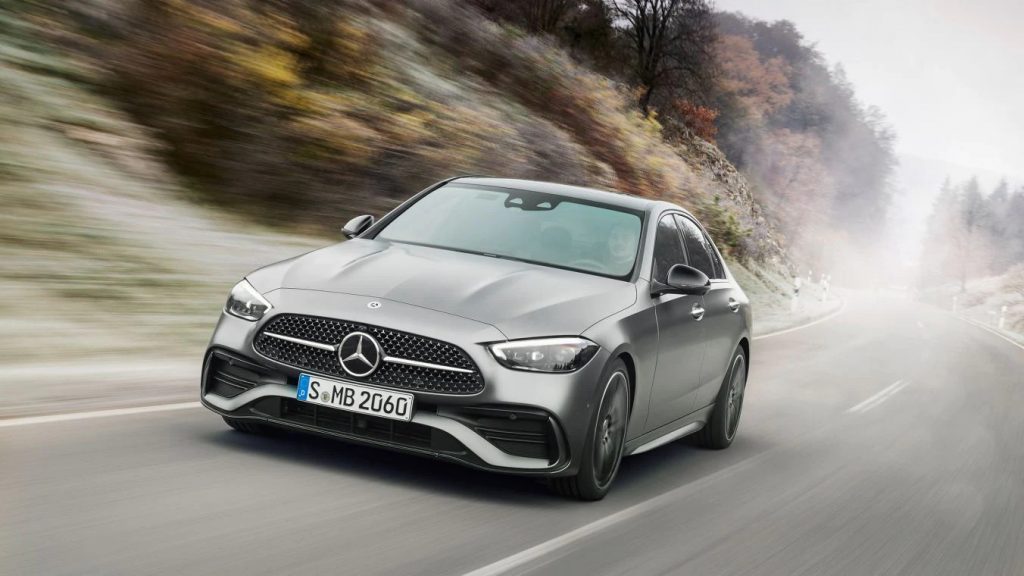
2. Mercedes-Benz C-Class

3. Subaru Legacy

4. Lexus ES

5. Toyota Avalon

6. BMW 7 Series

1. Consumer Reports says the Kia Soul is one of the best cars for short people

The Best New Cars for Tall Drivers according to Consumer Reports, the 2021 Kia Soul
The Best New Cars according to Consumer Reports, the 2021 Kia Soul | Kia

If you read the other list of best cars for tall drivers, the Kia Soul was on that one too. The 2021 Kia Soul happens to have a highly adjustable interior. Consumer Reports says to pay particular attention to how the head restraints and shoulder belts fit. The 2021 Kia Soul passed all of these tests. Plus, it is reliable and scored well on the road test.

2. Best new car, luxury option: Mercedes-Benz C-Class

Consumer Reports: Best New Cars, the Mercedes-Benz C-Class

The Mercedes-Benz C-Class was named the best luxury compact vehicle for short drivers. Consumer Reports found the C-Class reliable and a solid contender in the luxury compact car category. It also offers 26 mpg overall. The Mercedes-Benz interiors are luxurious and usually have many adjustable ways to make the seat, seatbelt, steering wheel, and mirrors fit your preference.

3. Don’t overlook the Subaru Legacy

The 2021 Subaru Legacy came in second on the list of midsize vehicles. CR says that it has an adjustable seatbelt and seat situation that make it ideal for shorter drivers. Coupled with large windows and small blind sports, the Legacy makes a good pick.

4. The best new car for short drivers from Lexus is the ES

The Lexus ES has above-average predicted reliability, predicted owner satisfaction, and a road test. It came in first on the list of luxury midsize cars and made an excellent vehicle for someone short. The 2021 Lexus ES is a highly reliable luxury automobile that also gets 25 mpg. Not a bad deal.

5. The ever reliable Toyota Avalon

Are these cars starting to run together now? The best cars on this list also happen to have the same general shape. The 2021 Toyota Avalon is reliable, a green choice, and has above-average ratings for the road test. The Avalon is a large car but also has large windows for visibility.

6. An ultra-luxury option, the BMW 7 Series

The BMW 7 Series came in first on the list of ultra-luxury cars. It gets 21 mpg and scored well on the Consumer Reports road test. BMW has a large following for the impressive interior and exterior design, which the 7 Series delivers.

Buying a new car doesn’t have to be stressful

Finding the perfect new car can be a breeze if buyers do some research ahead of time and prioritize certain features. Consumer Reports does a lot of testing before recommending vehicles, which gives buyers a jumping-off point.

RELATED: Consumer Reports Says You Should Consider Buying Your Leased Used Car

The post Consumer Reports: Best New Cars for Short Drivers appeared first on MotorBiscuit.