
by Gabrielle DeSantis

Perhaps one of the most surprising details about the arrival of the 2021 Ford F-150 Lightning was its sub-$40,000 base price. However, this limited you to a base model truck with an estimated electrical range of around 230 miles. As a result, most F-150 buyers would likely opt to add the Extended Range option to their particular build.

Unfortunately, a new report by CarsDirect indicates that the average consumer likely won’t be able to buy this specific trim level. That’s because the American carmaker intends to sell the Pro model with the Extended Range pack exclusively to commercial customers.

How much does the 2021 Ford F-150 Lightning Pro cost?

2022 Ford F-150 Lightning | Ford

As stated in the intro, a base Ford F-150 Lightning Pro will cost you $39,974. However, this base truck and all other configurations are eligible for a $7,500 tax credit from uncle sam. As a result, we’re talking about an all-electric version of America’s most popular vehicle for around $33,500. The main caveat here is that you’d get stuck with the shorter estimated electric range of 230 miles.

While 230 miles is certainly more than enough for most consumers, many buyers would like to have the peace of mind that comes with the Extended Range option. According to CarsDirect, this bumps the truck’s base price up to $49,974. However, the same tax credit stated before applies here as well.

In the standard range model, you’re getting an estimated 426 hp, while the Extended Range model generates 563 hp. Aside from the extra range and power, the Extended Range pack is the only way to achieve the truck’s maximum 10,000-lb towing capacity. It’s also worth mentioning that you’ll need the Max Trailer Tow Package as well.

Here’s why you might not be able to buy one with Extended Range
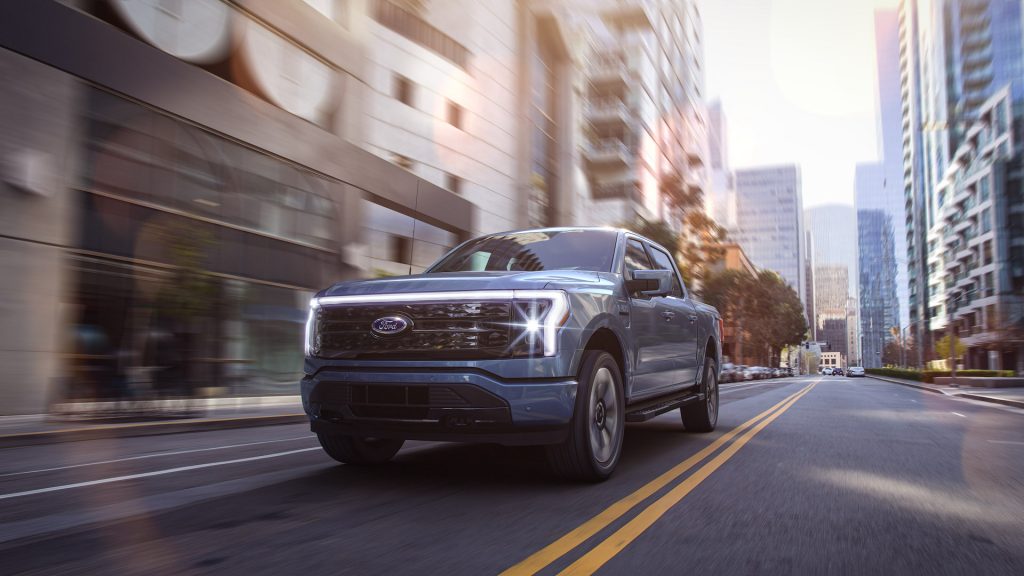
An image of a 2022 Ford F-150 Lightning parked outdoors.
2022 Ford F-150 Lightning | Ford

RELATED: The New Ford F-150 Lightning Is the Cheapest Full-Size Pickup Truck in One State

If you want one of these base Ford F-150 Lightning Pro models with the Extended Range pack, chances are you’ll never be able to buy it. As mentioned earlier, CarsDirect reports that the American plans to offer that option exclusively to commercial customers. While this might seem like it’ll work against the normal consumer, it actually makes a fair bit of sense.

Since the Extended Range model is the cheapest way to reach the maximum towing capacity, it makes sense that it would be offered exclusively to commercial customers. This way, its production can be focused on meeting individual orders rather than having them sit at dealerships across the country.

If we had to guess, these trucks would likely sit at dealerships because the bulk of F-150 buyers don’t opt for the base model. As a result, the average model that already wanted an XLT trim or higher will remain unaffected by this decision.

Which Ford F-150 Lightning can I buy with Extended Range?
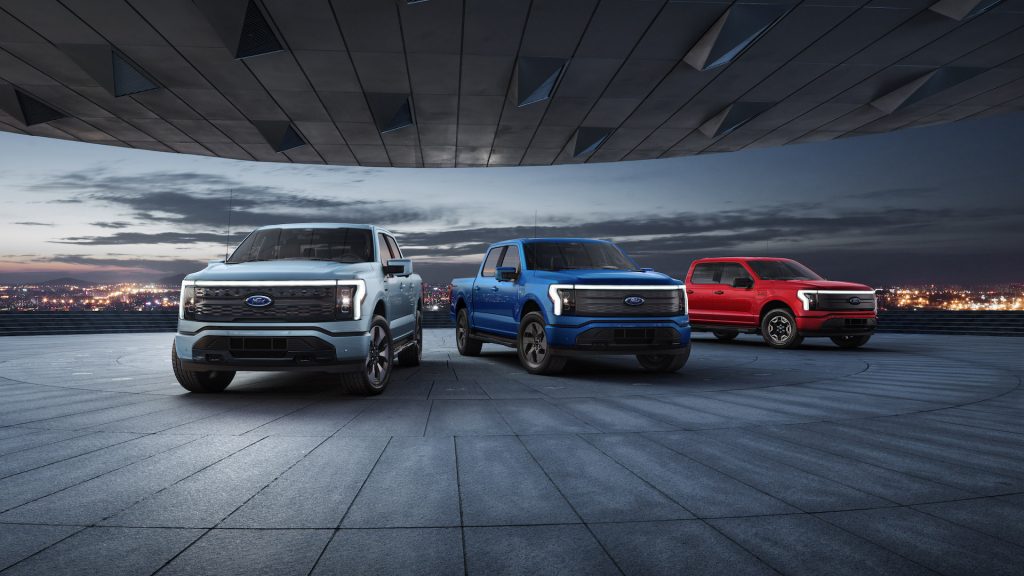
An image of a 2022 Ford F-150 Lightning parked outdoors.
2022 Ford F-150 Lightning | Ford

Speaking of the XLT, CarsDirect reports that it’ll likely be the cheapest version of the Ford F-150 Lightning you’ll be able to buy with the Extended Range pack. Unfortunately, the American carmaker hasn’t released official pricing for this model. However, for the sake of context, an internal-combustion XLT starts at around $35,000. As you might expect, the electric model will likely carry a considerable premium over this, potentially landing closer to the $60,000 range.

The post Buying a Ford F-150 Lightning Pro With Extended Range Might Be Impossible appeared first on MotorBiscuit.

by Gabrielle DeSantis

Tesla is getting rid of radar in its 2021 Model 3 and 2021 Model Y vehicles, the company said in a blog post on Tuesday, May 25, 2021. Elon Musk announced Tesla Vision, a camera-based system for Tesla’s semi-autonomous driving feature. Tesla is so over radar, in fact, that they’ve started shipping cars without it. 

The Tesla logo | VCG/VCG via Getty Images

Currently the Tesla Autopilot feature uses radar 

The Tesla semi-automated driving feature known as Autopilot operates by sending radio waves out and measuring the time it takes for them to bounce off of objects and return. Now Tesla semi-automated cars will operate using a camera-based system, called Tesla Vision. Tesla Vision will use neutral net processing to allow the 2021 Model 3 and 2021 Model Y to maintain safety while driving semi-autonomously. This new monitoring system will allow Tesla to utilize functions like lane-keeping assistance and cruise control without the help of radar. 

Will camera-based systems work as well as radar sensors?

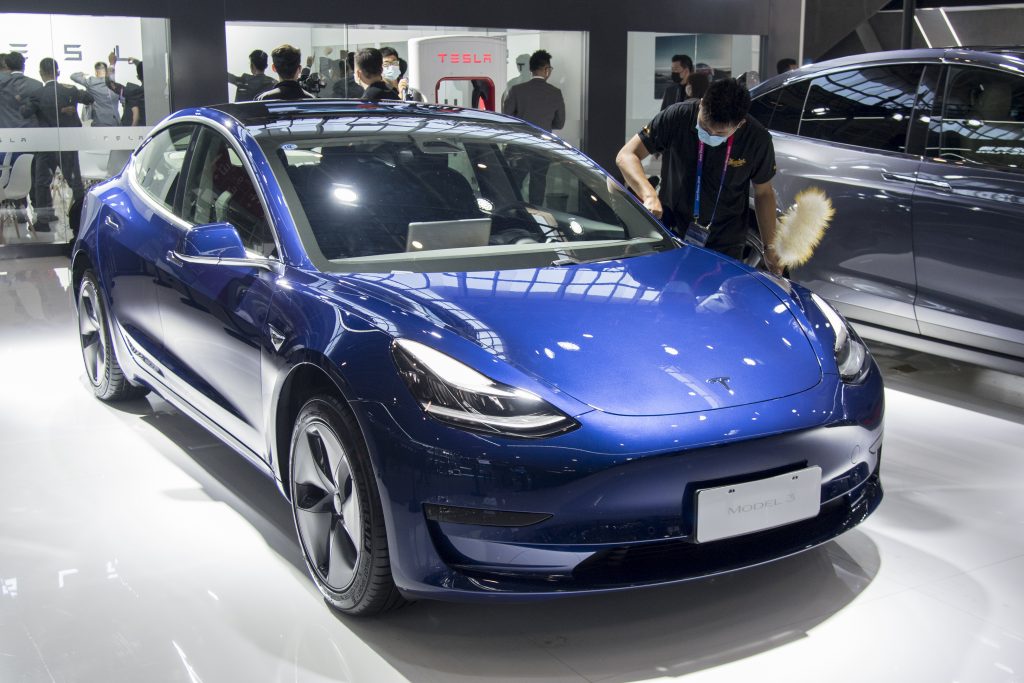
A blue 2021 Model 3 on display.
A Tesla Model 3 | VCG/VCG via Getty Images

RELATED: The Tesla Model 3 and Model Y Face Price Jumps Once Again

That remains to be seen. Most car manufacturers making semi-autonomous vehicles are using radar and lidar in addition to cameras. Lidar sensors work by sending pulsated light waves out and calculating the time it takes them to return. Although camera data can be recorded and analyzed to improve safety, it isn’t as in-the-moment safe as radar and lidar. 

Add to that the fact that automated and semi-automated vehicles are hardly perfect, and the safety of only a camera-based system is debatable.

Why is Tesla scrapping radar in favor of Tesla Vision?

Elon Musk, co-founder and chief executive officer of Tesla Inc.
Elon Musk | Patrick T. Fallon/Bloomberg via Getty Images

The main reason that Tesla is getting rid of its radar system is that it’s expensive. Not only that, but it takes a lot of computer power. Additionally, Elon Musk isn’t a fan of lidar, which he called a “crutch.” However, the Model S and Model X will continue to use radar (for now, anyway). 

It won’t be a seamless transition

Tesla has cautioned its electric car owners with the new Tesla Vision that the semi-automatic driving system wouldn’t operate as well as it has been. The company has to make technical adjustments to Tesla Vision so that it operates as smoothly as the radar system did. Of course, this means that Tesla drivers are essentially testing the new functions. 

While Tesla makes these technical adjustments, features like Autosteer will be limited to a max speed of 75 MPH, and the following distance will be lengthened. Smart Summon, the driverless feature which allows a Tesla to leave its parking space and drive to its owner at a low rate of speed, will be disabled. (You’ll have to play with a remote control car instead.) So will Emergency Lane Departure Avoidance.

What if I already ordered a Tesla and I don’t want Tesla Vision?

The Tesla Inc. Model Y crossover electric vehicle sits on display during an unveiling event.
The Tesla Inc. Model | Patrick T. Fallon/Bloomberg via Getty Images

Not to worry. If you’ve already purchased a Model 3 or Model Y Tesla and didn’t know that your new car is coming with cameras instead of radars, it isn’t too late. Tesla is informing buyers before they accept delivery of their cars, so there’s still time to opt-out.

The post Tesla Scraps Radar, Ships Cars Without It appeared first on MotorBiscuit.

by Gabrielle DeSantis

The Tesla Model S has been highly sought after for years and is getting a major refresh soon. The electric vehicle is not a bad car, but Consumer Reports took issue with a few major areas. Which areas impacted the reliability?

Does Consumer Reports recommend Tesla Model S?

Consumer Reports says to avoid the Model S | Sjoerd van der Wal/Getty Images

Consumer Reports gave the 2020 Tesla Model S a reliability score of 26 out of 100. In certain areas, the Tesla electric vehicle did fine. For driving experience, the Model S scored 94. It scored a similar 91 for styling and a 74 for comfort. The value score was only 31.

For the highs, CR liked the green nature of the EV. It has a quiet cabin, accelerates quietly, and has two trunks. One in the back and one in the front where the engine might go. Tesla’s Supercharging stations have the whole charging thing figured out already while many other brands lag.

However, the list of lows is quite long. The range for the 2020 Model S is still pretty short compared to a gas-powered car. The charging times are fairly long, and longer trips require a bit of extra planning. If you like in extreme weather, this can impact the range.

The interior didn’t feel as luxurious as anticipated. But some aspects of the Tesla interior are lightyears ahead of other brands. The large touch-screen is a cool feature that other automakers seem apprehensive to adapt to.

Reliability from the Tesla Model S owners

RELATED: James May Is Annoyed at His Tesla Model S Battery

The owner reported trouble spots are a bit extensive. Some owners took issue with the suspension. The air suspension did not work upon delivery for one driver. After repair, the vehicle still vibrated.

Some noted the voice controls did not work, and the body hardware often malfunctioned. However, the brakes, body integrity, exhaust, paint, and many other categories scored five out of five for reliability.

The Model S comes standard with things like forward collision warning and automatic emergency braking. Pedestrian detection, lane departure warning, and anti-lock brakes are all standard too.

The crash test scores from the Insurance Institute for Highway Safety (IIHS) were “good” and “acceptable.” The National Highway Traffic Safety Administration (NHTSA) did not rate the Model S.

Edmunds Recommends the Porsche Taycan over the Model S

RELATED: The S in Tesla Model S Plaid Stands for Retractable Spoiler

Edmunds tested all sorts of new electric vehicles on the market. The 2021 Porsche Taycan, Tesla Model S, Tesla Model X, Volkswagen ID.4, and Ford Mustang Mach-E to see which ones pulled ahead.

The Porsche Taycan is Porsche’s first foray into all-electric vehicles. Edmunds calls the vehicle “quick and engaging to drive, with sharp and athletic handling that doesn’t compromise comfort or refinement.”

The Taycan had an initially disappointing EPA-estimated range, especially compared to the Tesla Model S. But the Taycan exceeded the range estimations by almost 60% during the real-world testing. The price starts at $79,900 and goes up to $150,900. 

Edmunds liked the large battery pack in the Tesla Model S, and the price was better. But in comparison for performance sake, the Model S lacked where the Taycan shined. The S was spacious and offered a lot of cargo room. The price starts at $74,490 and goes up to $144,490 for the 2022 Plaid+ model.

If you have been considering a Model S, it might be worth the wait to get a newer version. While the car can have the software updated over-the-air, some of the new features might be worth having.

The post Consumer Reports Says to Avoid the 2020 Tesla Model S appeared first on MotorBiscuit.

by Gabrielle DeSantis

Truck buyers who are looking for something different are in luck. There is a compact truck that is both highly rated and less frequently purchased: the Honda Ridgeline. This truck is rated No. 1 for 2021, but it’s definitely not No. 1 in sales. Here’s a look at what the 2021 Honda Ridgeline has to offer.

The 2021 Honda Ridgeline is the No. 1 compact pickup truck

U.S. News rates the 2021 Honda Ridgeline as the No. 1 compact pickup truck. It beats out the 2021 Ford Ranger (coming in second) and the 2021 Chevrolet Colorado and 2021 GMC Canyon (which tie for third). The 2021 Toyota Tacoma comes in fifth, while the 2021 Jeep Gladiator and 2021 Nissan Frontier weren’t rated.

Consumer Reports picks the 2021 Honda Ridgeline as its No. 1 compact pickup truck as well. The Ridgeline beats the Gladiator, Tacoma, Ranger, Colorado, and then Canyon in order on this list.

The 2017 Honda Ridgeline | Raymond Boyd/Getty Images

RELATED: Consumer Reports Only Recommends 2 Pickup Trucks For 2021

Despite being highly regarded, the Honda Ridgeline doesn’t have high sales. While it’s gotten high marks since it first appeared for model year 2006, it is a unique truck. The first generation, from 2006 to 2014, had an unusual look.

After a two-year gap, the second generation appeared in 2017 with a more conventional truck style. Consumer Reports points out that the Ridgeline continues to stand out for its unibody construction and fully independent suspension.

Its uniqueness may have translated into lower sales for the Ridgeline. According to GoodCarBadCar, the Ridgeline had its top sales year in 2006, with 50,193 trucks sold in the U.S. Top sales for the second generation were in 2017, with 34,749 trucks sold.

These sales figures don’t come close to the Ford Ranger’s, which ranks second behind the Ridgeline on U.S. News’ rankings. The Ranger has been around since 1983, but in 2005, the first year the Ridgeline was available, the Ranger sold 120,958 trucks in the U.S., says GoodCarBadCar. While Ranger sales have dropped down around 55,000 in some years, 2020 saw 101,485 trucks sold in the U.S.

There’s a lot to like here

RELATED: The Real Reason the 2021 Honda Ridgeline Should Be More Popular

It isn’t reflected in its sales numbers, but the Honda Ridgeline has a lot to offer. U.S. News points out that the Ridgeline has a “robust engine,” a nice ride, a high-quality interior, and spacious rear seats. It doesn’t haul or tow as much as other compact pickup trucks, though. It also doesn’t have long bed lengths like some other trucks, but it does have extra cabin storage and an in-bed trunk.

The exterior got a refreshed design for 2021. The Ridgeline still has one cab style, the Crew Cab for five people. It also has one bed length, which is 5 feet, 4 inches long.

The Ridgeline continues to have unibody construction, while most other trucks have body-on-frame construction. This gives the Ridgeline a great ride, and it feels more like an SUV than like a truck. All-wheel drive is standard, a new addition for 2021.

The 2021 Ridgeline has a 3.5-liter V6 engine, generating 280 hp. It’s matched with a nine-speed automatic transmission. The Ridgeline can tow up to 5,000 pounds. The payload capacity depends on the trim, ranging from 1,509 to 1,544 to 1,583 pounds.

The interior of the Ridgeline has a high-quality feel, with nice materials and silver accents. It does have some hard plastics though. The base trim has cloth upholstery, but the other three trim levels provide leather upholstery. Also available are a heated steering wheel and power-adjustable and heated front seats.

The Ridgeline has an 8-inch touchscreen that is compatible with both Apple CarPlay and Android Auto. It also comes standard with a seven-speaker stereo, two USB ports, and Bluetooth. Available tech features include navigation, wireless device charging, HD Radio, satellite radio, an eight-speaker stereo, two additional USB ports, and an in-bed audio system.

The Ridgeline boasts one of the highest safety ratings of its class from U.S. News, with a 9.6 out of 10. It comes standard with a rearview camera, adaptive cruise control, automatic emergency braking, lane keep assist, lane departure warning, forward collision warning, and road departure mitigation. Also available are automatic high-beam headlights, front and rear parking sensors, blind-spot monitoring, and rear cross-traffic alert.

You might not see the Honda Ridgeline out on the road as often as the Ford Ranger, but buyers looking for a new compact pickup truck should consider the Ridgeline since it is highly rated. Given its upscale interior, great ride, and excellent safety, it should be more popular than it actually is.

The post The 2021 Honda Ridgeline Is No. 1 on U.S. News but Definitely Not in Sales appeared first on MotorBiscuit.