
by Gabrielle DeSantis

Motorsports and the Environmental Protection Agency (EPA) continue to battle over the Clean Air Act. On May 17, 2021, U.S. Representatives Patrick McHenry (R-NC) introduced a bill designed to help motorsports be exempt from the Clean Air Act. The bill, H.R. 3281, is called the RPM Act (Recognizing the Protection of Motorsports Act of 2021).

A drag racing car does a burnout | Michael Allio/Icon Sportswire via Getty Images

What’s the bill?

The bill is currently in the House of Representatives. The legislation provides an exemption from the Clean Air Act. It will allow motor vehicles to be converted into street racing cars. 

What is the EPA concerned about?

The EPA symbol on a window. The EPA wants to reduce emissions on vehicles, including motorsports.
The U.S. Environmental Protection Agency’s (EPA) logo | Justin Sullivan via Getty Images

RELATED: Does the EPA Test Motorcycle Fuel Economy Like it Does with Cars?

The EPA is concerned that modifications people do to street cars to make them track-worthy are bad for the environment. For instance, people tamper with emission control systems to make hot rods faster. Additionally, aftermarket parts can decrease a car’s emissions output. The EPA says that “Illegally-modified vehicles and engines contribute substantial excess pollution that harms public health and impedes efforts by the EPA, tribes, states, and local agencies to plan for and attain air quality standards.”

Therefore the EPA is enforcing the Clean Air Act, which would prevent car owners from modifying their cars in ways which change the emissions controls. The CAA makes it illegal to “bypass, defeat, or render inoperative elements of design that were installed by the vehicle or engine original equipment manufacturer to comply with CAA emission standards.” The EPA wants to decrease the amount of emissions caused by aftermarket parts and car tampering.

In order to achieve their goal, the EPA is cracking down on those who violate the Clean Air Act. The EPA levies fines and other penalties on CAA violators.

What’s the consensus in motorsports?
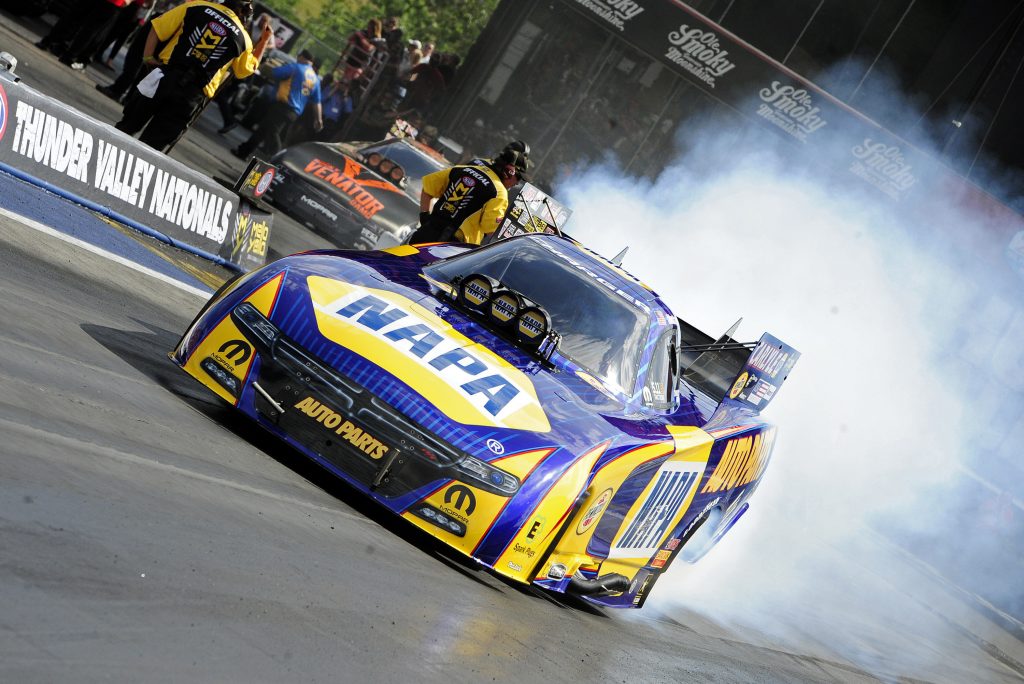
A Dodge Charger burns out on a drag racing track.
Dodge Charger | Michael Allio/Icon Sportswire via Getty Images

Motorsports participants and parts sellers are largely against this rule. Specialty Equipment Market Association (SEMA), a trade association dedicated to all things related to specialty parts, is at the forefront of the battle. 

SEMA is rallying supporters to make their opposition to this interpretation of the Clean Air Act known. SEMA says that, “Converting street vehicles into dedicated race vehicles is an American tradition dating back decades and has negligible environmental impact.” SEMA also notes that California, which is known for being strict about emissions, exempts race cars from these rules.    

Basically, advocates of the RPM Act want cars that are being modified for the track to be exempt from the Clean Air Act. The RPM Act would continue to allow people to modify cars in ways that make them fit for racing. These cars could be used as race cars (or other purposes), but not on regular roads.

What else does the bill do?

A man in a hot rod talks to a spectator at a hot rod racing event.
An old hot rod | Target Presse Agentur Gmbh via Getty Images

In addition to allowing people to continue modifying their cars, the RPM Act helps motorsports parts sellers, too. If it passes, the RPM Act protects the right to sell parts for modifying cars into racecars. Major specialty parts companies have faced fines and other penalties related to violating the Clean Air Act.

What happens next?

The bill has 56 cosponsors, from both the Republican and Democratic parties. If the bill passes, above all else, motorsport enthusiasts will be able to continue enjoying drag racing. If it doesn’t pass, it is likely that bill supporters will continue their crusade.

The post RPM Act Introduced to House to Protect Converted Street Racing Cars appeared first on MotorBiscuit.

by Gabrielle DeSantis

The 2021 Ford Mustang Mach-E is an all-new electric vehicle (EV) with plenty to offer eco-conscious shoppers. But when it comes to pricing out this SUV, you may be asking, is the Ford Mustang Mach-E eligible for EV tax credits? Let’s find out.

How EV tax credits work

RELATED: Ford Is About to Start Building Affordable EVs

Before jumping into whether the 2021 Ford Mustang Mach-E is eligible for EV tax credits, let’s talk about what these credits actually are. According to the U.S. Department of Energy, EVs and plug-in hybrids purchased new after 2010 may be eligible for the federal EV tax credit. The credit maxes out at $7,500.

Unfortunately, it’s not quite that simple. As it turns out, not all EV tax credits are available to all buyers or on all vehicle models, says U.S. News & World Report. In fact, the amount of tax credits you qualify for depends on your tax status, making it essential to talk to a tax professional before finalizing your purchase. 

To qualify for the EV tax credit, EVs and plug-in hybrids must also come equipped with battery packs rated for at least 4 kWh of energy storage and must be recharged using an external source, Edmunds reports. Further, once more than 400,000 models of a particular vehicle model are sold, it’s no longer eligible for the federal EV tax credit. 

Save money on the Mustang Mach-E with EV tax credits

2021 Ford Mustang Mach-E | Ford

RELATED: 3 Reasons Why the Ford Mustang Mach-E is the Coolest EV

Yes, the 2021 Ford Mustang Mach-E is, in fact, eligible for EV tax credits. Opt for the base model Mach-E, which starts at $42,895, and taking advantage of EV tax credits can save you up to $7,500. All in all, Ford says, if you’re eligible for it, the federal EV tax credit could get you behind the wheel of the all-new Mach-E for as low as $35,395.

As a matter of fact, the same goes for all trim levels. Take, for example, the California Route 1 model. Upgrade to this particular trim level and taking advantage of EV tax credits could have you spending roughly $42,900 on a model that typically costs $50,400. 

However, keep in mind that your mileage will vary when it comes to taking advantage of these tax credits. As reported by U.S. News & World Report, the number of credits you qualify for depends on your tax status. 

2021 Ford Mustang Mach-E features

A woman charging the 2021 Ford Mustang Mach-E
2021 Ford Mustang Mach-E | Ford

RELATED: Ford Fans Have Some Strong Opinions on the Mustang Mach-E

Sure, the 2021 Ford Mustang Mach-E starts at $42,895 and is eligible for EV tax credits, but what does it actually have to offer? Quite a lot, as it turns out. It comes with a standard range 75.7 kWh battery and is available with an extended-range 98.8 kWh battery. While the standard battery delivers 230-miles of range, the extended battery offers up to 305 miles of range.

Car and Driver reports that the Mach-E boasts fast-charging capabilities too. In fact, as Car and Driver explains, all models are standard with a mobile charger that adds up to 30 miles of range when charged at night. Use a 120-volt outlet, and it restores up to 80 percent of the battery’s life overnight. 

Now, range and charging times are undoubtedly important. What’s equally important, however, are the Ford Mustang Mach-E’s standard features. The good news is that the Mach-E comes stock full of standard features, including Ford Co-Pilot360 2.0 driver-assist technology and a 15.5-inch touchscreen featuring SYNC 4A.

The touchscreen display in a 2021 Ford Mustang Mach-E
2021 Ford Mustang Mach-E | Ford

RELATED: The 2021 Ford Mustang Mach-E Is Taking a Shot at Tesla With This Feature

Should you choose the 2021 Ford Mustang Mach-E?

There’s no denying that the 2021 Ford Mustang Mach-E has a lot to offer those on the hunt for a new EV. It provides plenty of range and is eligible for EV tax credits. To determine whether or not this all-new model is the right fit for you, we recommend taking it out for a test drive.

The post Is the 2021 Ford Mustang Mach-E Eligible for EV Tax Credits? appeared first on MotorBiscuit.

by Gabrielle DeSantis

There is no single type of lawn mower. Rather, there are several different types of lawn mowers. When it comes to shopping for the best lawn mower for your lawn care needs, that can make for an overwhelming situation. The good news is that understanding the most common types of lawn mowers can make choosing the best lawn mower for your needs a more manageable task.

Riding lawn mowers. | Daniel Acker/Bloomberg

The most common types of lawn mowers to consider

RELATED: A John Deere Isn’t the Most Expensive Lawn Mower on This Consumer Reports List

According to Consumer Reports, the most common types of lawn mowers include push lawn mowers, riding lawn mowers, zero-turn mowers, and rear-engine riders. As you might expect, each type of mower is designed to meet various lawn care needs. 

Take, for example, riding lawn mowers. Riding lawn mowers can reportedly cut two to three times faster than most push gas mowers. As Consumer Reports explains, that makes them a good option for cutting bigger lawns. On the other hand, zero-turn mowers are controlled using a pair of levers, making them both easier to navigate and best suited for yards with lots of trees and garden beds.

Rear-engine riders are also among the most common types of lawn mowers. These types of lawn mowers are typically less expensive than riding lawn mowers. However, according to Consumer Reports, they often don’t cut as well. They aren’t nearly as quick at getting the job done either.  

The difference between gas-powered and electric lawn mowers

RELATED: Here’s Why Buying an Electric Lawn Mower Might Not Be Such a Bad Idea

Now, among the most common types of lawn mowers, you’re bound to come across both gas-powered and electric lawn mowers. While the differences might seem obvious, one is powered by gas, and the other isn’t, there’s a bit more to it than that. 

Take, for instance, gas-powered mowers. Because gas mowers are powered by, well, gas, they often offer more power than electric mowers do, The Spruce reports. For the same reason, gas-powered lawn mowers are typically better at cutting long grass. The downside to choosing a gas-powered lawn mower is they use gasoline and engine oil, can be pretty noisy, and require regular maintenance.

Electric lawn mowers offer their own perks, reports CNET. While a gas-powered mower can be as loud as a motorcycle, electric lawn mowers are typically only as loud as a washing machine. Electric lawn mowers are also easier to maneuver and, because they aren’t powered by gas, don’t require as much lawn mower maintenance. 

These are the best type of lawn mowers for small yards

RELATED: The 10 Best Lawn Mowers for Small Yards According to Consumer Reports

For yards up to about a quarter of an acre, Consumer Reports recommends choosing a push mower. You might also consider a self-propelled push lawn mower. Although this type of mower is often more expensive, choosing a self-propelled lawn mower can make mowing your lawn an even easier task.

As for the best lawn mowers for small yards? Consumer Reports recommends a few different options. Among the best push lawn mowers are models like the Ryobi RY401200 ($480), the Honda HRN216PKA ($400), and the Toro Recycler 21332 ($269.)

Consider these types of lawn mowers for big yards

RELATED: The Best Lawn Mowers for Big Yards According to Consumer Reports

Consumer Reports recommends a wide-deck self-propelled mower or a rear-engine rider for yards about three-quarters of an acre or more. While a wide-deck self-propelled mower can save you time mowing your lawn, rear-engine riders are basically smaller riding lawn mowers that don’t use as much storage space.

As for Consumer Reports’ top-rated picks for these types of lawn mowers? Those include the Troy-Bilt TB WC28 ($800) and the Cub Cadet CC30e ($2,800.) The Troy-Bilt TB WC28 is a wide-deck self-propelled lawn mower, while the Cub Cadet CC30e is a rear-engine rider. 

How to choose the best lawn mower for your yard

Choosing the best lawn mower for your yard doesn’t have to be an impossible task. In fact, once you understand what the different types of lawn mowers actually are, choosing the best type of mower for your lawn isn’t all that difficult. 

The post The Most Common Types of Lawn Mowers appeared first on MotorBiscuit.

by Gabrielle DeSantis

EV startup Canoo has just announced the price it will ask for its “lifestyle van.” Somehow, starting at $34,750 seems like a chum more than a price. Combine the blue sky price with Canoo being under investigation by the Securities and Exchange Commission and we start to wonder. Is Canoo for real or not?

Canoo has seen some negative news as it announced starting van prices

The Canoo EV Adventure van | Canoo

Canoo is one of those EV manufacturers getting startup money through a SPAC. The shares of Canoo stock have tanked 66% since December 2020. It has seen a slew of executives leave the company including both founders Stefan Krause and Ulrich Kranz. And it is a defendant in two separate class-action lawsuits brought by shareholders. 

This past quarter it lost $15.2 million. Its quarterly losses have lessened, but combined with all of the turmoil surrounding Canoo it announces a cheap price for its core product, the EV van. Somehow it seems too cheap and too good to be true. 

Canoo joins Nikola and Lordstown being investigated by the SEC

Canoo camper van in forrest
Canoo camper van | Canoo

CEO Tony Aquila says that the SEC probe is only an obstacle. “EV SPACs are now facing some near-term headwinds, including the SEC’s interest in determination on how warrants are treated,” he said to Automotive News. He’s referring to the Nikola Corp. and Lordstown Motors SEC investigations also being conducted. 

Canoo is taking deposits for the van at $100 each. Of course, Tesla has had a similar program for new, unreleased vehicles. While the announced $34,750 is the base price, a maxed-out van can run just shy of $50,000. But even that seems too cheap to make money off of. 

Canoo says that four versions of the van will be made. One of those, the “Adventure” version, will have a lifted suspension and “a more muscular profile.” But overall, since Aquila took over the company has begun focusing more on commercial sales. At one time Canoo planned on selling its products through a subscription model. Apparently, that idea now seems to be fading from the overall Canoo picture. 

So far there are no concrete plans for production

Canoo pickup in forrest
Canoo pickup | Canoo

The modular chassis underpinning the van is also used for the Canoo pickup truck and delivery commercial van. Those two models won’t see production until at least 2023. No means of manufacturing has been announced which poses another question mark around the venture.

Canoo signed a contract with Hyundai last year to build EVs for them. But Hyundai pulled out of that agreement not long after it was announced. So taken as a whole the negative news coming out of Canoo and question marks about production are overshadowing whatever else it is accomplishing. 

The post Canoo Says EV Van Price Is $34,750: Ah, Really? appeared first on MotorBiscuit.