by Gabrielle DeSantis

When Tesla unveiled the Cybertruck, it made waves thanks to its unconventional design. Still, the EV maker soon became overwhelmed with Cybertruck preorders. Tesla also wants to add more features to the Cybertruck before its release, such as curved and heat-treated windows.

Unfortunately, the Tesla Cybertruck has been delayed until at least 2022 despite Tesla’s promises to the contrary, Electrek reports. As a result, many would-be buyers have canceled their preorders. So, what’s going on with the Cybertruck’s release, and how can concerned customers get their deposits back?

The troubled Tesla Cybertruck

Tesla Cybertruck | FREDERIC J. BROWN/AFP via Getty Images

The Tesla Cybertruck comes in two configurations: a single-motor front-wheel-drive version and the dual-motor all-wheel-drive variation. A tri-motor AWD model is also in the works, but Car and Driver predicts one will be delayed until 2023. The single-motor version can reportedly get over 250 miles of range and reach 60 mph in 6.5 seconds.

The Cybertruck dual-motor can hit 60 mph in 4.5 seconds and boasts over 300 miles of electric range. The tri-motor version is the most powerful, with a sub-three-second 0-60 time and over 500 miles of range. Tesla also says the tri-motor will have the highest towing capacity, up to 14,000 pounds.

The single-motor can pull 7,500 pounds, while the dual-motor can tow up to 10,000 pounds. Over one million customers have enough faith in the Cybertruck’s power to buy one, the Tesla Reservation Tracker reports. Production was originally scheduled for late 2021.

Tesla hasn’t officially indicated the cause of the delay, but the industry-wide semiconductor chip shortage likely has something to do with it. If the EV maker decides to add even more features, this could also slow down production. Many consumers also worry there won’t be enough Cybertrucks to go around with so many preorders.

According to Finbold, customers have also canceled their preorders due to an Elon Musk tweet. It was far less controversial than Musk’s standard fare, stating that mining bitcoin is “a great cost to the environment.” As a result, Tesla will no longer accept bitcoin as payment for any of its vehicles.

Has the EV maker ever experienced similar delays?

The redesign of the Tesla Roadster has also been moved from 2021 to 2023. It’s slated to be the fastest model in the automaker’s lineup, reaching 60 mph in only 1.9 seconds. It will reportedly have a top speed of 250 mph. It will also be the most efficient Tesla, with 620 miles of range.

Tesla also plans to bring its own semi-truck to market, which would get 500 miles on a full charge. The automaker claims this would still be possible with a maximum payload while traveling at 60 mph. Tesla now says the Semi will be released in 2022, three years late.

Given Tesla’s track record, it’s understandable why consumers are hesitant to trust the automaker. Fortunately, the Cybertruck’s $100 reservation fee is refundable.

TeslaLounge Reddit users say it’s easy to cancel your reservation under the Manage setting on your preorder page. If you’re still holding out, TorqueNews shows you how to see when your Cybertruck might arrive.

Will the Tesla Cybertruck be late to the party of truck EVs?

In addition to disappointing its fans, the Cybertruck’s late release sets it up for potential failure. The Rivian RT1 is set to debut later this year, and the Ford F-150 Lightning might be available as soon as May 2022. The GMC Hummer EV will likely debut around the same time because it will also begin production this fall.

The Tesla Cybertruck will no doubt have some heavy competition. However, if it can live up to its performance promises, a few thousand canceled preorders might not affect the electric pickup’s sales.

RELATED: How Did This Company Create a Tesla Cybertruck Camper Before It’s Been Released?

The post Here’s Why You Should Cancel Your Tesla Cybertruck Preorder appeared first on MotorBiscuit.

by Gabrielle DeSantis

This year’s global chip shortage has been relentless on new and used car inventories and pricing. The shortage of chips has led to a shortage of cars, which has, in turn, increased car pricing across the board.

That means that consumers are paying a lot more for new and used cars than ever before and the market values of these cars are increasing as well. And while you would think that any consumer paying more money for a car would handily turn down an extended warranty to go with it, think again.

There has been a large increase in extended warranty purchases this year

New Chevy’s for sale fill the lot at Raymond Chevrolet in Antioch, Illinois, July 17, 2014. (Photo by John Gress/Corbis via Getty Images)

Normally, if you’re buying a car, you would most likely turn down the extended warranty, also known as a “vehicle service contract” (VSC). But in today’s car market, it could be a better idea to buy one considering the increase in car values this past year. Auto Dealer Today reported that extended warranty sales have increased by 44% year over year as compared to 2020 – as reported by AUL Corp, an automotive warranty and service contract provider.

“This increase in sales is due in large part to people wanting to protect what has changed from a depreciating asset to what is now an appreciating one, combined with the increasing complexity of today’s technology-focused vehicles,” explained Jimmy Atkinson, AUL’s President, and CEO, to Auto Dealer Today. “The resulting high prices for used cars and trucks are driving more owners and buyers to purchase coverage plans to ensure their vehicles stay on the road longer.” 

JD Power recently reported that the average price for a used car surpassed $25,000 this year, which is a tell-tale sign as to why many car buyers are electing to protect their purchases for a longer period of time. Kimberly Kline, a member of YAA and a finance manager of 15 years, recently spoke on the matter in a recent YAA video about extended warranties:

“People want to feel protected when they’re buying a used car especially when they’re spending so much money. Typically, (a car) is a depreciating asset, but that’s not the case right now and people want to protect it with a VSC.”

Is it worth it to buy an extended car warranty?

If the car that you’re buying has a lot of miles on it or you plan to keep the car for a long time, then an extended warranty can be worth the money. Credit Karma notes that an extended warranty can end up saving you money if the car needs repairs that are covered under the plan. It’s also worth it if you actually use it, many buyers purchase extended warranties and never end up actually using them.

Also note that extended warranties can cost a pretty penny and if you purchase one from a dealership, they could mark up the price. According to Ray Shefska of YAA – and car buying advice site – many dealers markup extended warranties by as much as double the price the dealer’s cost. So do your research ahead of time and check out companies like AUL Corp and CarShield to see if you can save some money before heading to the showroom.

It’s possible to negotiate the price of extended warranties

VOLGOGRAD, RUSSIA – NOVEMBER 19, 2016: A client looks at a used car for sale at the AGAT Profi dealership. Dmitry Rogulin/TASS (Photo by Dmitry RogulinTASS via Getty Images)

If you do find yourself discussing extended warranties with the Finance Manager when you purchase a car, then make sure to negotiate the price as much as possible. Not many car buyers know that every product being sold to them in the finance office can be negotiated. So take your time and don’t be too surprised when the extended warranty initially costs around $1,995 or more. Finance managers have to eat, too.

But the good news is that you no longer have to fear being sold an extended warranty, especially if the car that you’re buying comes with a higher price tag. In this current market, it could be worth it to protect your investment.

RELATED: Can You Get a Refund on Your Unused Extended Warranty?

The post Those Pesky Phone Calls Aren’t the Reason More Car Buyers Are Purchasing Extended Warranties appeared first on MotorBiscuit.

by Gabrielle DeSantis

Could the sale of this 1987 Camaro for $56,000 have anything to do with the current state of used cars? Or is it because these IROCs are becoming highly collectible? Is a 1987 IROC a used car or a classic? Let’s smoke this Camaro over and see why it sold for more than a new 2021 Camaro.

1987 Chevy Camaro IROC | BaT

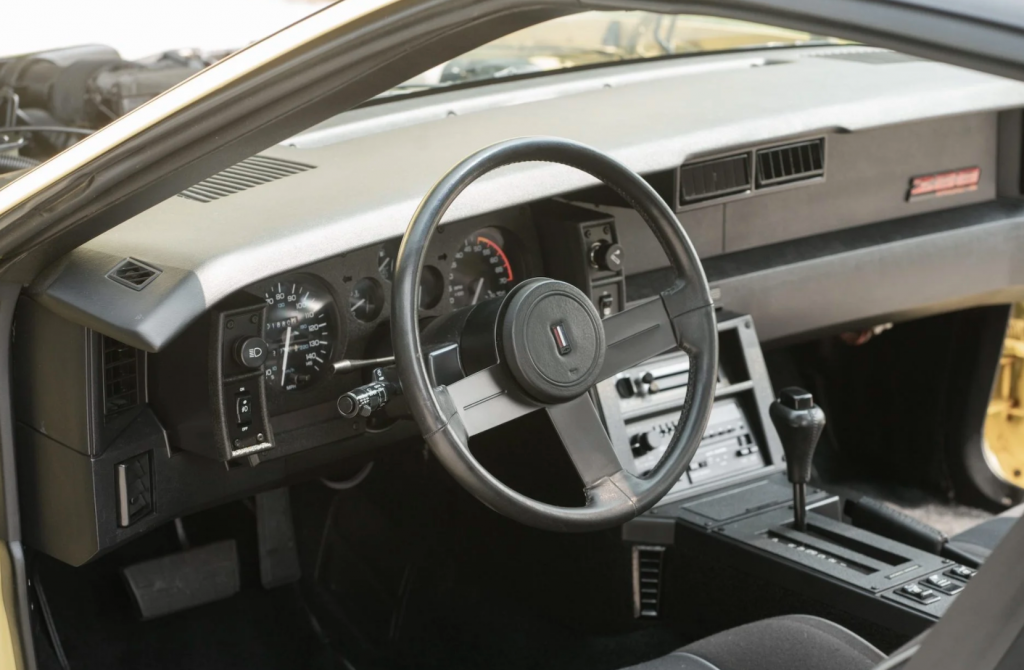
These old IROCs were limited edition models to celebrate the International Race of Champions series that was popular in the 1980s. They packed a lot of desirable features, some of which you can no longer find on new cars. Like glass T-Tops, for instance.

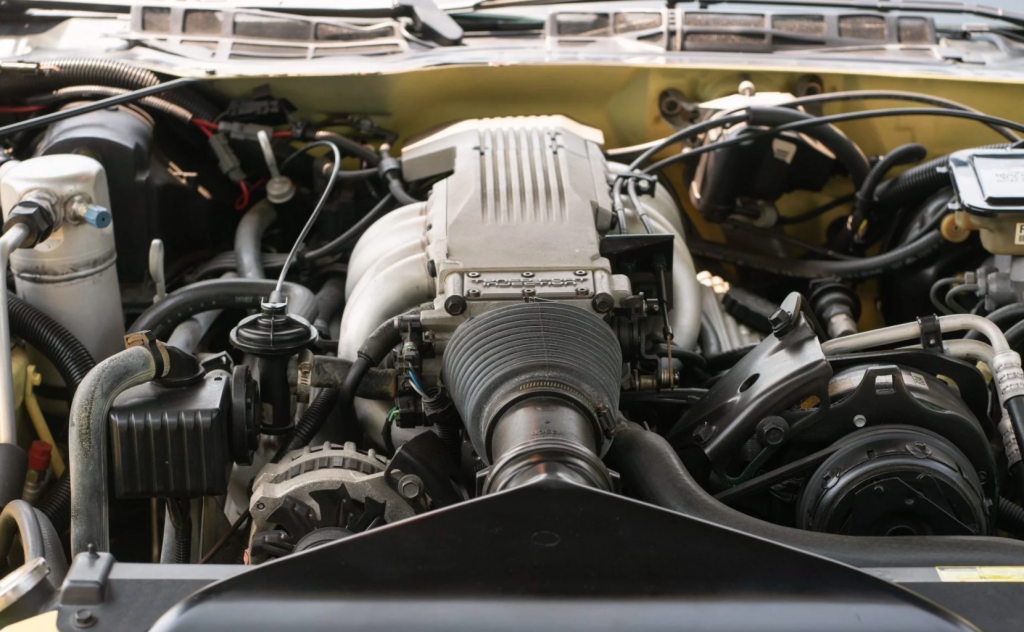
Plus, features we expect in our 2021 cars. This comes with power windows and locks, bucket seats, a four-speed automatic transmission, air conditioning, limited-slip diff, sport suspension, Goodyear Eagle VR50 tires, and a Delco AM/FM cassette deck with a graphic equalizer. And that punchy 5.7-liter L98 V8. 

Yes, this is a typically detuned Camaro of the 1980s

1987 Chevy Camaro IROC
1987 Chevy Camaro IROC | BaT

In its factory detuned form, it is only able to crank out 225 hp. But it is the ubiquitous small block. It feels so much better than a four-banger busting its guts for the same ponies.

Still, this is really just a gussied-up from the factory 1987 Camaro that sold on Bring a Trailer. It seems like its appeal is from those who lusted for one when they were new. After all, nobody in the 1950s started restoring  Model Ts because they were particularly great cars. Intrinsic value plays a big role in what becomes collectible

Could this be the cleanest 1978 Camaro in the world?

1987 Chevy Camaro IROC
1987 Chevy Camaro IROC | BaT

This is an exceptionally clean, 2,000-mile 34-year-old Camaro. Well, we think 2,000 miles. The CarFax is noted as finding it was involved in some speedometer rollback shenanigans in 2003. But while the mileage may be of some question, there is nothing questionable about its condition.

So we have the top-of-the-line 34-year-old IROC Camaro with some great options we now take for granted, V8 muscle (sort of), and as clean as they come. If a first-gen or second-gen Camaro popped up with those attributes, how much would the buyer be asking? But this is a third-gen.

When these debuted in 1982 they were a styling knockout

1987 Chevy Camaro IROC
1987 Chevy Camaro IROC | BaT

When introduced in 1982, they were the best-looking thing that Chevy sold. By then the Corvette was old and slow. That had to have stuck with younger car enthusiasts wanting to revive that time and feeling. Those growing up to hold prominent careers can throw $56,000 around all day. 

The new owner can drive or show a car that has no excuses. It could be the most perfect 1987 Camaro in the world. If used as a daily driver, would you rather have it or a 2021 2SS instead? Or for just a few grand more a ZL1? Let us know what you would prefer.

RELATED: The 4 Most Expensive Chevy Camaros Ever

The post This 1987 Camaro Just Sold For More Than a Loaded 2021 Camaro appeared first on MotorBiscuit.
by Gabrielle DeSantis

Now that it’s launched the Serial 1 brand, Harley-Davidson isn’t only competing against electric motorcycles. It now has another EV category to compete in—electric bicycles, or ebikes. That means ‘legacy’ bicycle companies like Giant potentially have a new rival. But how well does a Serial 1 ebike compete against what Giant offers? For example, the Giant Revolt E+ Pro gravel bike? After riding both at the 2021 International Motorcycle Show in Chicago, the answer became clear.

2021 Serial 1 RUSH/CTY Speed vs. 2021 Giant Revolt E+ Pro: how does Harley-Davidson’s ebike compare to the Giant?

Serial 1 RUSH/CTY SPEED ebike side view | Matthew Skwarczek, MotorBiscuit
Spec 2021 Serial 1 RUSH/CTY Speed 2021 Giant Revolt E+ Pro
Frame material Aluminum Aluminum
Fork material Aluminum Composite
Motor Brose TF Mag permanent-magnet Giant SyncDrive Pro permanent-magnet
Torque 66 lb-ft 59 lb-ft
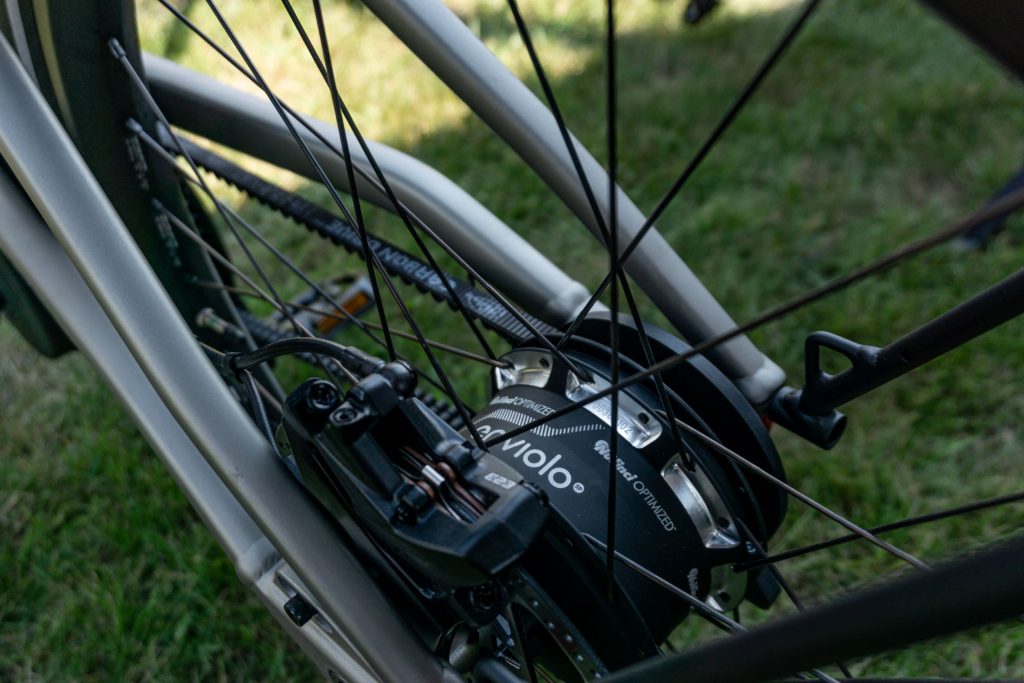
Rear derailleur/hub Enviolo AUTOMATiQ intelligent auto-shifting CVT hub Shimano RD-RX812 GRX 11-speed
Final drive type Carbon belt Chain
Battery capacity 706 Wh 500 Wh
Claimed range 25-115 miles 25-90 miles
Top speed 28 mph 28 mph
Weight 59 lbs (Large frame) Unavailable (Road E+ Pro weighs 41.9 lbs, eBikeTips)
Price $5599 $5150

Both the 2021 Serial 1 RUSH/CTY Speed and the Giant Revolt E+ Pro are classified as Class 3 ebikes. That means they don’t have hand throttles—these ebikes are pedal-assist only. But because they’re Class 3, that assistance maxes out at 28 mph, rather than just 20 mph.

Also, both the RUSH/CTY Speed and Revolt E+ Pro have multiple riding modes that provide differing assistance levels. The rider changes these modes via the handlebar-mounted controls and LCD display. Both ebikes’ displays also show the remaining range, charge status, and current speed. The Giant ebike, though, has five modes, while the Harley-Davidson one only has four.

But, while the Serial 1 RUSH/CTY Speed and Giant Revolt E+ Pro both have aluminum frames and hydraulic disc brakes, they’re noticeably different ebikes.

How do the Serial 1 RUSH/CTY Speed and Giant Revolt E+ Pro ebikes differ?

The side view of a dark-purple 2021 Giant Revolt E+ Pro on a stand
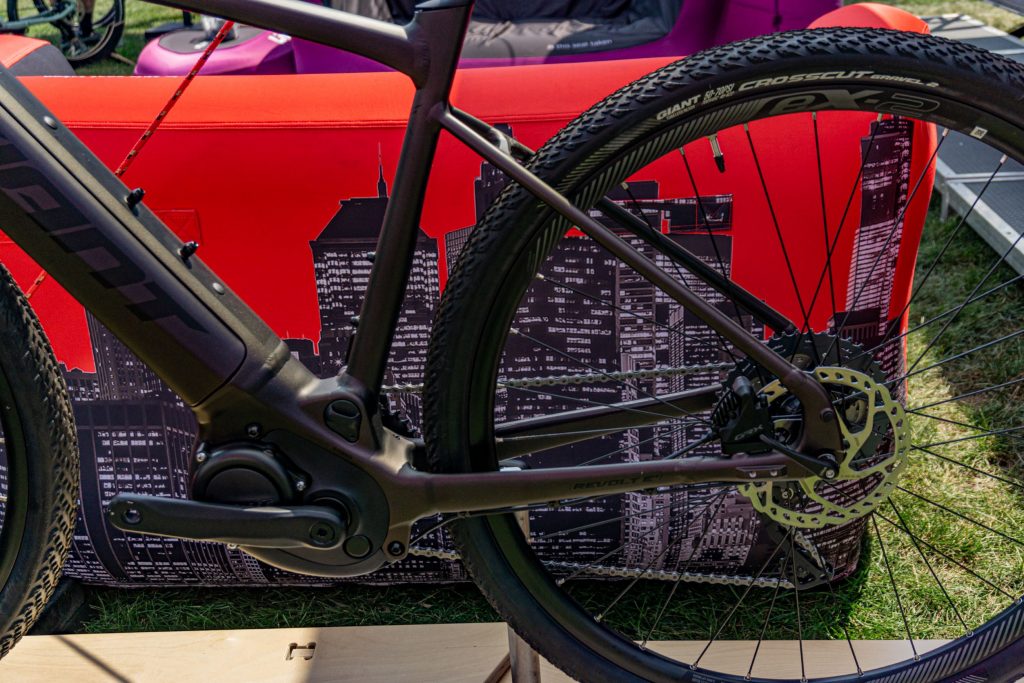
2021 Giant Revolt E+ Pro side view | Matthew Skwarczek, MotorBiscuit

RELATED: Vintage Electric’s E-Bikes Have Retro Style With Modern Speed

Harley-Davidson’s ebike is designed to be an urban commuter/cruiser-style bicycle. Hence its relatively relaxed frame geometry, maintenance-free carbon belt, and that rear hub, which works just like a car’s CVT. And it has several standard features that help with the former mission beyond just its frame geometry. It comes standard with two fender racks as well as integrated LED brake lights, taillights, and an LED headlight. Plus, the RUSH/CTY Speed has a lockable storage compartment and a light-up badge.

In contrast, the Giant Revolt E+ Pro is a more ‘traditional’ gravel ebike. So, while it has an integrated headlight, it lacks integrated taillights and a kickstand. Plus, while you can install fender racks and bottle cages, they’re optional extras. And instead of a CVT rear hub, it has a conventional Shimano derailleur. Also, unlike the Serial 1 ebikes, the Revolt E+ Pro’s battery isn’t removable for recharging.

However, its relative dearth of features compared to the RUSH/CTY Speed explains why the Giant ebike is lighter. Plus, while neither ebike has suspension, being a gravel bike, the Revolt E+ Pro’s composite fork and seat post are designed for off-pavement riding. Ditto, its aluminum frame and drop handlebars. Also, while the Giant Revolt E+ Pro’s battery isn’t removable, being integrated into the frame lowers the ebike’s center of gravity.

And while some of these differences may seem minor, when the rubber hits the road—er, gravel—they add up quickly.

They’re both electric bicycles, but IMS Chicago 2021 showed how different their riding experiences are

The ebike demo course at IMS Outdoors Chicago 2021 was set up across several acres of gravel-covered farmland. Given that it’s explicitly a gravel ebike, the Giant Revolt E+ Pro was arguably better-suited to the terrain than the Serial 1 RUSH/CTY Speed. However, the Harley ebike handles surprisingly well off-road, The Verge says, in part due to its wide tires. Plus, the IMS Course wasn’t any more extreme than some forest-preserve paths I’ve ridden on, and commuter bikes ride those all the time.

Off-road handling aside, it’s clear that Giant and Harley-Davidson took different paths in ebike design. The Serial 1 RUSH/CTY Speed’s integrated lighting, belt drive, storage features, and CVT hub make it more appealing to casual cyclists and/or those buying an ebike for the first time. It’s comfortable even over bumpy gravel, and the electric motor kicks in so smoothly, I literally didn’t feel it at several points. This is cycling made easy, which is by no means a bad thing.

Meanwhile, the Giant Revolt E+ Pro is an ebike designed by a bicycle company, rather than a motorcycle one. Hence its chain drive, the Shimano derailleur, and the drop handlebars. And while Giant’s electric motor kicks in slightly less smoothly than the Harley one, it offers a more explosive launch, especially at higher assist levels. Part of that is no doubt due to its sportier design and lower weight.

Also, as a gravel ebike, the Revolt E+ Pro’s composite fork transmits less vibration than the Serial 1’s aluminum fork. And that integrated battery does make it feel and handle even lighter than the specs suggest. But, with its wider, flatter handlebars, the RUSH/CTY Speed is arguably more comfortable at lower speeds.

Which is the right ebike for you: the Serial 1 RUSH/CTY Speed or the Giant Revolt E+ Pro?

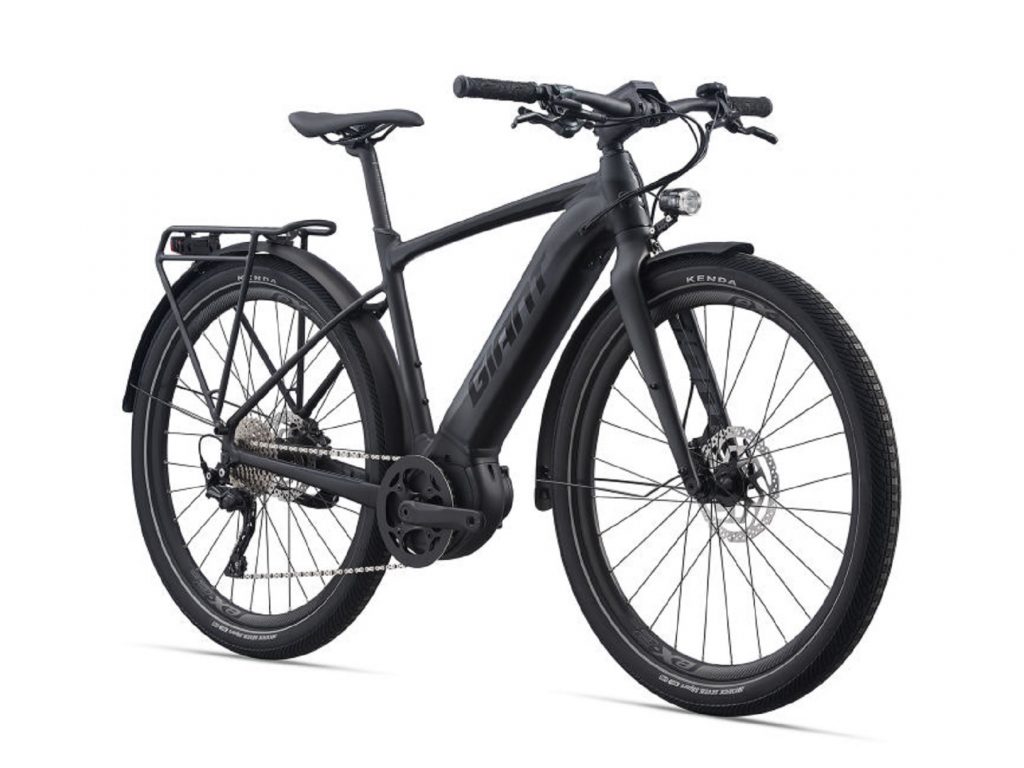
A matte-black 2021 Giant FastRoad E+ EX Pro
2021 Giant FastRoad E+ EX Pro | Giant

RELATED: Harley-Davidson Schwinn Sting-Ray-Like eBike Sells For $14,200

However, while these ebikes have different ethe, neither is inherently worse than the other. Admittedly, the Giant Revolt E+ Pro’s display is easier to read than the Serial 1 RUSH/CTY Speed’s display in bright sunlight. The Serial 1’s controls are less awkward to use when you’re riding, though. But both offer strong disc brakes, smooth assistance, and solid handling even on gravel.

That being said, these two ebikes likely won’t be cross-shopped. Someone who wants a gravel bike won’t be looking for a cruiser and vice versa. However, Giant does have a more direct Serial 1 rival, the $4100 FastRoad E+ EX Pro. It has all of the same features as the RUSH/CTY Speed and the same 28-mph top speed, albeit with a mechanical Shimano derailleur. And it has the same motor and battery as the Revolt E+ Pro.

Regardless, picking between Giant and Serial 1 boils down to a simple question. Do you want an ebike designed like a bicycle or more like a motorcycle? The Serial 1 models skew towards the latter, Motorcycle.com says, and Giant’s models towards the former. So, try both out, and see which kind of riding style you prefer.

Follow more updates from MotorBiscuit on our Facebook page.

RELATED: This $999 Ariel Rider E-Bike Offers a Tremendous Value

The post Serial 1 RUSH/CTY Speed vs. Giant Revolt E+ Pro: Which Ebike Should You Ride? appeared first on MotorBiscuit.