
by Gabrielle DeSantis

The legendary Mitsubishi Evo is a polarizing piece of automotive history. The car has its signature flaws, but its fans are devoted. What does this whippy sport sedan have in common with a bulky budget SUV? A lot more than meets the eye.

Mitsubishi changed the game with the Lancer Evolution

2003 Mitsubishi Lancer Evolution VIII | National Motor Museum/Heritage Images via Getty Images

The first Mitsubishi Evolution hit the streets in 1992. Powered by a 2.0-L turbocharged 4-cylinder engine, the Evo was fast. This car was known for being a lightweight 303 hp lightning bolt. It was fun to drive and easy to push to its limits.

From 1996 to 1999, Evos won the World Rally Championship. American enthusiasts coveted the Evo, which was unavailable on the U.S. market until 2003. This is the same year the car was featured in ‘2 Fast 2 Furious’, solidifying its legendary status.

As the buyers that had idealized the Evo in the 1990s began to age out of the fast but stiff and brutal car, sales dropped. The market was adapting away from the speedy and immersive car. It was a race car, not a family sedan.

Diamond-Star Motors was a historic joint venture

Mitsubishi and Chrysler formed a business relationship in 1970, birthing Diamond-Star Motors. The two automakers co-developed the GS platform under this name. Four separate cr brands built models on this platform. Out of all of the vehicles that share it, no two are as different as the Mitsubishi Evolution and the Dodge Journey.

One is a budget SUV with a rental feel, and the other is a racing legend with incredible pickup. Despite being polar opposites, the two share the same GS platform. The Evo was compared to the STI with its communicative handling and top-notch all-wheel drive. Its platform sibling, the Dodge Journey, is the cheapest SUV on the market.

The Jeep Patriot and Compass are both built on the GS platform, the Dodge Avenger, a few Peugeots, and a few Citroens. Among all of these models, the Mitsubishi Evolution stands out from the crowd.

If the Mitsubishi Evo is fast and furious, the Dodge Journey is slow and complacent
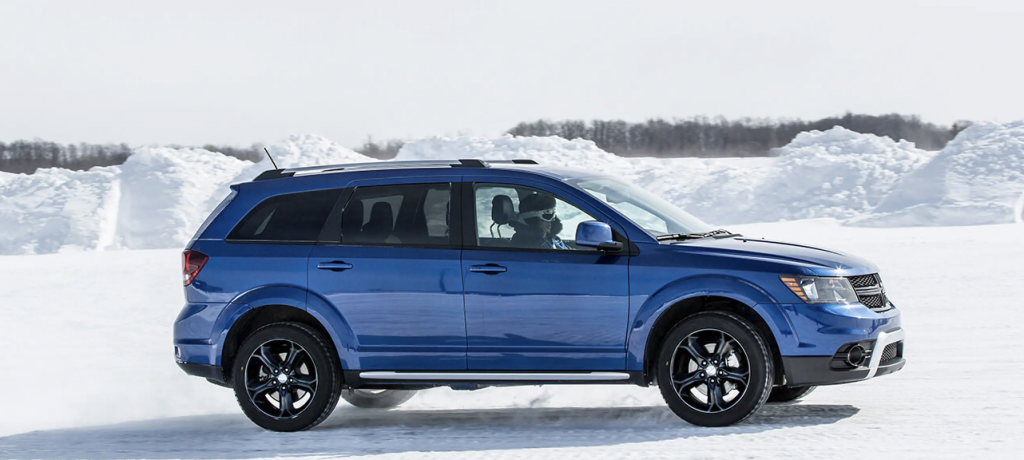
A blue Dodge Journey SUV in the snow
Dodge Journey SUV | Dodge

Dodge ended production of the Journey in 2020 after the demand for the thrifty SUV dropped. The seven-passenger vehicle was woefully underpowered with a 172 hp 2.4-L 4-cylinder engine that Car and Driver called “antiquated.” The interior was lacking in upscale materials. It was criticized for feeling like cheap plastic.

What the Journey lacked in refinements, it made up for in practicality. The configurable interior was flexible for a variety of cargo. Second-row floor storage and a passenger seat storage bin gave the SUV plenty of places for gear. The 2020 Dodge Journey started at $25,170 and had two trim levels, the SE Value and the Crossroad.

The Dodge Journey felt like a glorified minivan to many drivers. Its cheap interior, unresponsive handling, and slow acceleration made it feel low quality. It’s as different from the spritely Evo as possible, but the two share so much in structure. This pairing of platform siblings is a striking reminder of just how far a design can be pushed.

RELATED: 2015 Mitsubishi Evo Final Edition Review: The Long Goodbye

The post The Surprising Secret Shared Between the Mitsubishi Evo and the Dodge Journey appeared first on MotorBiscuit.

by Gabrielle DeSantis

The 2021 Audi Q7 is a midsize luxury SUV with lots to offer: a turbocharged V6, eight speed transmission, and a range of 20 mpg. The IIHS safety ratings are excellent; except in one area. Why isn’t the 2021 Audi Q7 safe enough to get an IIHS safety award?

2021 Audi Q7 | Audi

How are the 2021 Audi Q7’s crash test ratings?

Every year the Insurance Institute of Highway Safety (IIHS) tests a variety of vehicles to determine how they would do in an accident. They award Top Safety Pick and Top Safety Pick+ awards to the vehicles which do well in all of their tests. 

The 2021 Audi Q7 is super crashworthy. While not exactly a technical term, the Q7 gets good crash test ratings in all of its crashworthiness tests. These include the small overlap front: driver side and passenger side, the moderate overlap tests, and side crash tests. Overlap tests measure how well a vehicle does when part of the front of it crashes into a barrier.

Not only did the Q7 do well in each of these tests, it got good marks in all of the subcategories across the board. This is excellent. You’d think we’re on our way to a Top Safety Pick award, but no. 

The 2021 Q7 also got good scores in roof strength, head restraints and seats. It even got good scores in all of the subcategories. The Q7 is still looking good. 

Is the 2021 Audi Q7’s crash avoidance good?

Crash avoidance is the most important part of – well, avoiding a crash. You’ll never have to know how safe your vehicle is if you never crash it. Having good safety systems is one way that you can do this. Many car manufacturers are including good safety equipment in their new cars, and the Audi is no different. 

The 2021 Audi Q7 comes standard with all of the safety features that Consumer Reports recommends car shoppers look for in new cars. And yet crash avoidance is the category in which the Q7 falls short. 

The Audi Q7 gets superior ratings for both of its crash prevention systems. These include the vehicle-to-vehicle and vehicle-to-pedestrian. It even gets a G+ for its child seat anchors. 

And yet the headlights are poor. To receive an IIHS Top Safety Pick, a vehicle must have a good or acceptable rating on available headlights. To receive an IIHS Top Safety Pick+, acceptable or good headlights must be the standard.

The 2021 Audi Q7 has neither of these things. All of its tested headlights received a poor rating, which means there’s no way to buy a Q7 with good headlights. Among other things, the IIHS found that the Q7’s headlights produced glare and only offered fair visibility. 

Is the 2021 Audi Q7 safe?

It’s a shame that the headlights keep the Q7 from being one of the IIHS’ safety picks. With such great crash test ratings and all of those advanced safety systems, the 2021 Audi Q7 is almost perfect. Almost. If you’re looking for a midsize luxury SUV, you may want to look elsewhere. 

RELATED: Consumer Reports: 10 2021 Midsize Luxury SUVs With Advanced Safety Systems

The post The 2021 Audi Q7 Is Almost Perfect appeared first on MotorBiscuit.

by Gabrielle DeSantis

When it comes to luxury SUVs, the BMW X3 has always been a solid choice. And what’s not to love about it? It’s stylish, well-built, and capable for the daily drive as well as the weekend camping trip. However, many new car buyers might currently be wondering if the recent inventory shortage could mean that they can’t get a good deal on a luxury SUV like the BMW Z3 right now. Believe it or not, it is possible.

There are few different 2021 BMW X3 trims

2021 BMW X3 | BMW

For the 2021 model year, the BMW X3 is broken down into four different trim levels: X3 sDrive30i, X3 xDrive30i, X3 xDrive30e, and the X3 M40i. While that might look like some confusing alphabet soup, the core models that you need to be aware of are the sDrive30i (rear-drive) and the xDrive30i (AWD).

The X3 xDrive30e is the plug-in hybrid model that can achieve up to 17 miles of all-electric range. And if you’re seeking performance, then the X3 M40i packs a solid punch with its turbocharged inline-six that produces 382 hp and can get from 0 to 60 mph in just 4.4 seconds, BMW says. However, the base models provide plenty of thrust with a standard turbocharged 2.0-liter engine that produces 248 hp and gets the X3 up to 60 mph in a respectable six seconds.

Choose the X3 sDrive30i to get a better deal

Now that we know what each X3 trim level is, we can figure out how to get the best possible. Fortunately, Ari Janessian – an auto broker at Boston Automotive Consulting – figured it out for us. According to Janessian, there are currently 2,079 X3 sDrive30i models sitting at dealerships nationwide. Comparing that with just 1,021 xDrive30i models, we can see why going for the rear-drive version could net you a better deal.

If you’re planning on financing the X3, then Janessian’s sample deal looks like this:

2021 BMW X3 sDrive30i
MSRP: $48,260
Target price: $46,329
Rebate: $2,500
APR (60 months): 1.9%
Final price: $43,739
Monthly payment: $791 plus tax

To break down this example, the X3 sDrive30i has a starting MSRP of $48,260. Janessian says that you should aim for a 4% discount off of that price, which would equate to $46,329. BMW is currently offering a finance rebate of $2,500 and a special APR of 1.9% for up to 60 months (until 6/30). If you were to finance the car at this rate, and with the discounts, then you would be looking at a monthly payment of around $791 plus tax.

Leasing a BMW X3 can lead to lower monthly payments

2021 BMW X3 side
2021 BMW X3 | BMW

If you’re the type of buyer that doesn’t keep their car for a long time, then leasing a BMW X3 might be a better idea. In that case, Janessian’s lease deal example looks like this:

2021 BMW X3 sDrive30i
MSRP: $48,260
Target price: $46,329
Rebate: $1,250
Residual: 56%
Money Factor: .00093
Monthly payment: $601 (6.25% tax)
Down payment: $2,351

To break down this lease example, the MSRP and target selling price are the same as before. BMW is currently offering a lease rebate of $1,250 and the residual amount after three years is 56%. There is a special money factor rate of .00093, which is equivalent to a 2.2% APR. And when all the numbers are crunched together, you will be looking at a lease payment of around $601 per month if you factored in a 6.25% sales tax rate with $2,351 down.

Keep in mind that your deal might vary

If you do plan to lease or purchase a 2021 BMW X3, then keep in mind that your actual pricing and payments may vary. Also, the discounts listed here expire at the end of this month, so they may be different next month. As always, your taxes and registration fees will also depend on where you are located, so don’t be too surprised if you’re numbers look a little different than those stated above.

RELATED: What’s the Difference Between the BMW X1 and the BMW X3?

The post Scoring a Good Deal on a 2021 BMW X3 Is Possible Right Now appeared first on MotorBiscuit.

by Gabrielle DeSantis

The realm of car finance can be difficult to understand. Interest rates, down payments, hard and soft credit checks, loans or leases. It’s all a bit much. A loan is one of the most popular methods for buying any car. It can be an intimidating process, playing with money you don’t “have”. Time then, to clarify this process and learn when to pay up front or pay over time for your next ride.

How interest works

A line of Ford trucks | Justin Sullivan via Getty Images

One of the most important aspects of any type of car financing is the interest rate. The lower the better is almost always key. Dealerships, credit unions, and banks are all very competitive with their interest rates, but it is important to keep up a solid credit score, as that has the most bearing on yours. Interest is how banks and dealerships make money on your loan, and you don’t want to go giving out money to everyone, now do you?

Automakers lost a lot of money trying to move inventory during the pandemic last year, often giving out loans with low-interest rates and longer terms. Now, interest rates from dealerships are back up as they try to recover lost funds. Bearing this in mind, it’s probably a better idea to check in with your local bank or credit union to see if you can’t get that rate lower. Usually, anywhere between 1-3% is a solid rate, credit notwithstanding.

What credit has to do with a car loan

Hyundai models for sale on a dealership lot
A lot of cars available for a car loan | Patrick T. Fallon via Getty Images

As mentioned above, credit is key. It is certainly the largest determining factor when being considered for a loan. If your score is less than ideal, there are plenty of ways to improve that just a quick Google search away. This said, both banks and dealers alike want to see strong payment history; they don’t want to have to chase anyone down for their money.

It is often helpful to go to an institution you are familiar with, as they may be willing to work with you on things like the loan term and interest. The length of the loan can also have an effect on your monthly payment. The longer the term, the more spread out the value of the vehicle is over a set period of months. According to Bank of America, common terms range from 24 to 64 months, though some will go longer.

Is financing a good idea?

GMC models advertised on a lot
GMC models for sale at a dealership | Bill Pugliano via Getty Images

Whether a loan is right for you depends entirely on your financial circumstances. Good credit, plenty of savings, and a good relationship with your bank? Why not? You might be able to take the money you’d have used on the car and put it towards something else, like investing. However, be wary when entering into a loan, especially of interest rates, and always make sure your payment is something you can afford even in a worst-case scenario.

RELATED: Lease The 2022 Genesis G70 for Less Than You Think

The post This Is How a Car Loan Works, and How to Get One appeared first on MotorBiscuit.