by Gabrielle DeSantis

If you’re in the market for an off-roading SUV, chances are the 2022 Toyota 4Runner is on your radar, and for a good reason. With an ultra-reliable naturally aspirated engine under its hood, capable off-roading trims, and space for a large family, this Toyota is tough to beat. However, just because it’s spacious and capable doesn’t mean it’ll be the best daily driver. In fact, some of the sportiest trims with their off-roading suspension setups can be quite uncomfortable for everyday use.

That’s where the brand-new TRD Sport model comes in. As its name suggests, this new version isn’t an all-out performer like the TRD Pro. However, it gets some unique visual upgrades as well as one massive upgrade to its suspension.

What upgrades does the 2022 Toyota 4Runner TRD Sport offer?

2022 Toyota 4Runner | Toyota

The main upgrades you’ll see on the 2022 Toyota 4Runner are visual. According to Toyota’s latest press release, this new trim level is based on the entry-level SR5 trim. However, instead of the base 17-inch wheels, you get a brand-new set of 20-inch wheels with dark gray accents.

Additionally, this 2022 Toyota 4Runner offers up color-keyed accents on the grille, rocker panels, and body molding. The goal here is to take the entry-level version of this off-roader and spice it up with some welcomed visual upgrades. In terms of sporty elements, you get a new hood scoop, front spoiler, and black roof rails.

Inside, you get plenty of upgrades as well. For example, the TRD Sport ditches the standard cloth seats in favor of ones finished in SofTex, the brand’s leather-like material. You even get gray stitching throughout and TRD logos on the headrests. However, the biggest change lives in this model’s suspension.

This off-roading SUV should be a more comfortable daily driver

An image of a 2022 Toyota 4Runner parked outdoors.
2022 Toyota 4Runner | Toyota

RELATED: Indestructible Toyota Hilux Manages to Tow 30,000 LB With a Gooseneck Trailer

As mentioned earlier, this version of the 2022 Toyota 4Runner is still based on the SR5 entry-level trim. However, Toyota gave this TRD Sport model a unique present from one of the most expensive trim levels on offer. More specifically, this new model gets the Cross-Linked Relative Absorber System or X-REAS suspension setup. In short, this system adjusts the SUV’s front dampers automatically to create a softer ride.

Additionally, a center control cross absorber cross-links the shock absorbers on opposite corners of the SUV. The goal here is to reduce body roll by offsetting opposing inputs, says Toyota. In layman’s terms, this new model’s adaptive suspension should allow you the most comfortable ride possible without having to spend upwards of $45,670 on a Limited model.

How much does the 2022 Toyota 4Runner cost?

An image of a 2022 Toyota 4Runner parked outdoors.
2022 Toyota 4Runner | Toyota

If you’re looking at buying a 2022 Toyota 4Runner TRD Sport, chances are you won’t have to spend big dollars to get one. For starters, the current SR5 on which the TRD Sport is based starts at $36,765. From there, the TRD Off-Road model starts at $40,730. Given its SR5 base, the TRD Sport model should start somewhere in between those two trim levels. While the 4Runner’s lineup is already quite diverse, adding a better daily driver at a cheaper price point will likely pay off significantly.

The post 2022 Toyota 4Runner Gets 1 Massive Improvement to Make Your Life More Comfortable appeared first on MotorBiscuit.

by Gabrielle DeSantis

The EV segment is heating up, and one of the most exciting models is the Chevy Bolt. This little electric car is earning high marks as a top choice for commuters. And the purchase price might be the most appealing part: The Chevy Bolt starts at only about $30,000.

If you’re considering this EV, you’re probably also wondering about charging. Where and how can you charge it? And perhaps more important, how much will it cost you to do it?

Where Chevy Bolt owners can find a charge

Charging the battery in a Chevy Bolt is relatively easy if you have access to a charging station. Topping off your charge periodically instead of running your battery down will help reduce the time and effort needed to park at one of these stations. And you can find public charging stations at various restaurants, parking garages, and retailers in most metropolitan areas. 

Typically, these locations are Level 2 stations, making it easy to add a quick 25 miles of range per hour. Some areas also offer DC fast-charging stations. Finding these public stations is easy when using an app such as ChargePoint. And recharging your Chevy Bolt at home is easy. Plug the car into your home-based charging unit, and let it juice up overnight.

Associated Chevy Bolt charging costs to consider

Charging a Chevy Bolt isn’t free. And the prices for recharging at public stations vary depending on your region and the station network. According to ChargePoint, averages suggest Level 2 station fees are about $1.18 to add 50 miles of range. A DC fast-charging station usually costs about $2.66 for the same range.

Torque News says new Chevy Bolt owners can expect to spend about $7 to $8 to charge a 60-kWh battery at home. That’s based on an average cost of home electricity used, calculated at around 13.27 cents per kWh.

Electric versus gas in cost and time

When you’re weighing the associated costs and time between a gas-powered vehicle and an EV, the savings can add up quickly with the latter. If a Chevy Bolt costs only about $1.18 to go 50 miles, that’s a win compared with an average of 24 miles per $2.38 gallon of gas. The U.S. Department of Energy rates the Chevy Bolt with 118 miles per charge for combined highway and city driving. With a 259-mile range on a full charge, that’s a significant amount of driving between charges.

How much time you have to spend recharging your battery will matter, too. Fast-charging stations can usually add another 90 miles of range to a Chevy Bolt in about a half-hour. There are also tips for getting the most out of your Bolt battery in the least amount of time. 

The folks at Torque News say it’s important to know your ongoing taper points and idle fees, for example. They also say to charge nearly every time you park if possible to avoid fully draining your battery and having to spend lengthy amounts of time recharging from low voltage.

Charging a Chevy Bolt won’t likely be any more of a hassle than filling up a car’s gas tank. Know where to find charging stations in your area, and be mindful of recharging costs. In the end, this EV’s cost savings will likely impress you.

RELATED: A Used Chevy Bolt for Under $20,000 Will Help You Avoid Chip Shortage Stress, Consumer Reports Suggests

The post How Much Does It Cost to Charge a Chevy Bolt? appeared first on MotorBiscuit.

by Gabrielle DeSantis

Although their recent proliferation may dull the shine somewhat, some supercars will stay special. Among the vehicles on that select list are the Ferrari F40 and the Porsche Carrera GT. And despite the years separating them, these two supercars have a similar approach to speed. But which one is more impressive: the classic F40 or the modern Carrera GT? YouTuber Doug DeMuro got behind the wheel of both to answer.

Even today, the Ferrari F40 “is still an outrageous poster child,” MotorTrend says

1987 Ferrari F40 | Ferrari

Some may call it overrated, and a Honda Civic Type R can out-pace it. But the Ferrari F40 is still a striking piece of functional design. And it’s arguably “one of the mightiest and most iconic supercars of all time,” Automobile says.

The Ferrari F40 earned this status from a combination of factors. Firstly, it’s one of the last road cars designed under Enzo Ferrari’s direct supervision, MotorTrend reports. Secondly, unlike its successor, the F50, the F40 didn’t originate with Formula One. In the ‘80s, Ferrari wanted to compete in Group B rallies with the 288 GTO Evoluzione, but the class folded before the car was ready, MT explains. And rather than see the work go to waste, the Evoluzione morphed into the F40.

The carbon-fiber interior of a red 1987 Ferrari F40 with red seats
1987 Ferrari F40 interior | Ferrari

However, that wasn’t the only thing that inspired the Ferrari F40. Two years before its 1987 debut, Porsche unveiled the 959, a rally-inspired technological supercar tour de force. And Enzo wanted something that could beat it, Hagerty explains.

That’s the third reason why the Ferrari F40 is held in high regard: how it went about rivaling the 959. Compared to the 959, the F40 is rather spartan. It has A/C, but there’s no radio, no adjustable dampers, no AWD, and no ABS. And the windows are crank-operated while the door pulls are literal cords, Hagerty reports.

But the lack of equipment makes the Ferrari F40 light. So does a Plexiglas engine cover, carbon-fiber bucket seats, and a chassis and body panels made of carbon fiber and Kevlar. And with a mid-mounted 2.9-liter twin-turbocharged V8 linked to a gated five-speed manual, the F40 is fast. With 478 hp and 424 lb-ft of torque, 0-60 mph comes in 4.2 seconds, Car and Driver reports. And thanks to its sleek shape and rear wing, it tops out at 201 mph—faster than the 959.

The Porsche Carrera GT was one of the last gasps of the truly analog supercar

A silver 2004 Porsche Carrera GT being driven at speed
2004 Porsche Carrera GT | Porsche

To be sure, the Porsche Carrera GT is a more advanced and more powerful supercar than the Ferrari F40. But in some ways, the newer Porsche mirrors the classic Ferrari.

For example, unlike the F40, the Carrera GT has ABS, airbags, audio and navigation systems, and power windows, MT reports. And rather than cloth, it has leather upholstery. Plus, while it has magnesium wheels and aluminum suspension components, the Porsche also has a carbon-fiber chassis, seats, and removable roof panels.

RELATED: Audi R8 V10 or Porsche 911 Turbo S: Which Daily Supercar Is Better?

And yet, although it has traction control and an adjustable anti-roll bar, the Porsche lacks stability control, Automobile points out. That last ‘missing’ feature is why the Carrera GT continues to fascinate owners like Jay Leno. And it’s why, in today’s world of high-tech vehicles, the Porsche still looms large.

Plus, while the Ferrari F40 might be spartan, the Porsche Carrera GT is arguably more old-school in one area: its powertrain. Instead of a turbocharged engine, the Carrera GT has a mid-mounted 5.7-liter V10 rated at 605 hp and 435 lb-ft of torque linked to a six-speed manual. A manual that, in a nod to Porsche race cars of the past, has a beechwood shifter.

RELATED: $20k Lets You Lease 3 Iconic Modern and Classic Porsches

So, although it weighs more than the F40, on paper, the Porsche Carrera GT is faster. Car and Driver recorded a 0-60 mph time of 3.5 seconds. And flat out, it can go up to 205 mph.

Which one does Doug DeMuro think is better, and which does he prefer?

RELATED: There’s Another Ferrari Hybrid Coming and It Has a…V6?

YouTuber Doug DeMuro has driven both the Ferrari F40 and the Porsche Carrera GT in the past, though never back-to-back. And in a past video, he called the Carrera GT his “favorite car ever made.”

But ever since he drove an F40 for the first time, DeMuro has been thinking that he “might actually like [the Ferrari] more.” So, what did he glean from driving what he calls “the most driver-focused” Porsche and Ferrari back-to-back?

RELATED: Ultra-Rare $13.2 Million Ferrari F40 Collection Gets Abandoned by the Royal Family in Brunei

For Doug DeMuro, the Porsche Carrera GT drives better than the Ferrari F40. “Perfect clutch, perfect shifter, perfect sound, perfect handling,” he says. But he concedes the F40 is still “a thrill” to drive, too, and arguably more of an icon. And if he were going to spend his money on one of these two supercars, he’d buy the Ferrari—if it cost as much as the Porsche. Or rather, as little as the Porsche.

Although a Carrera GT isn’t cheap, you can still find sub-million-dollar examples, Hagerty reports. In contrast, it’s not unusual to see F40s valued at $1.5 million or more. So, with that in mind, DeMuro would pick the Porsche.

Follow more updates from MotorBiscuit on our Facebook page.

The post It’s Ferrari F40 vs. Porsche Carrera GT in a $1 Million Supercar Showdown appeared first on MotorBiscuit.

by Gabrielle DeSantis

As of this moment, the government of the good ol’ U.S of A will write you a check when you buy an EV. More specifically, an EV tax credit check. A hefty check at that, to the tune of $7,500, with some exceptions. It’s pretty strong reasoning to go out and take advantage of this program and get into a new EV. Like some corny mob boss in a movie, the Senate wants to further “motivate” you to buy an EV.

What the new legislation proposes

A 32 amp EV charger | Mike Kemp via Getty Images

This new legislation, titled “Clean Energy for America” could potentially raise the EV tax credit from a max of $7,500 to a maximum of $12,500. However, there’s a little bit of catch. The proposed legislation wouldn’t outright increase the tax credit to $12,500 no matter what. Just like with that corny mob boss, there are some, uh, “terms and conditions”.

The credit is effectively split into two chunks, each adding $2,500 to your potential savings come tax day. The first adds $2,500 if the EV was assembled on American soil, and the second is tacked on if the EV was made in a plant represented by a labor union, like the United Auto Workers. Moreover, the proposed legislation caps the sale price of the EV you may want at $80,000.

Where the EV tax credit stands now

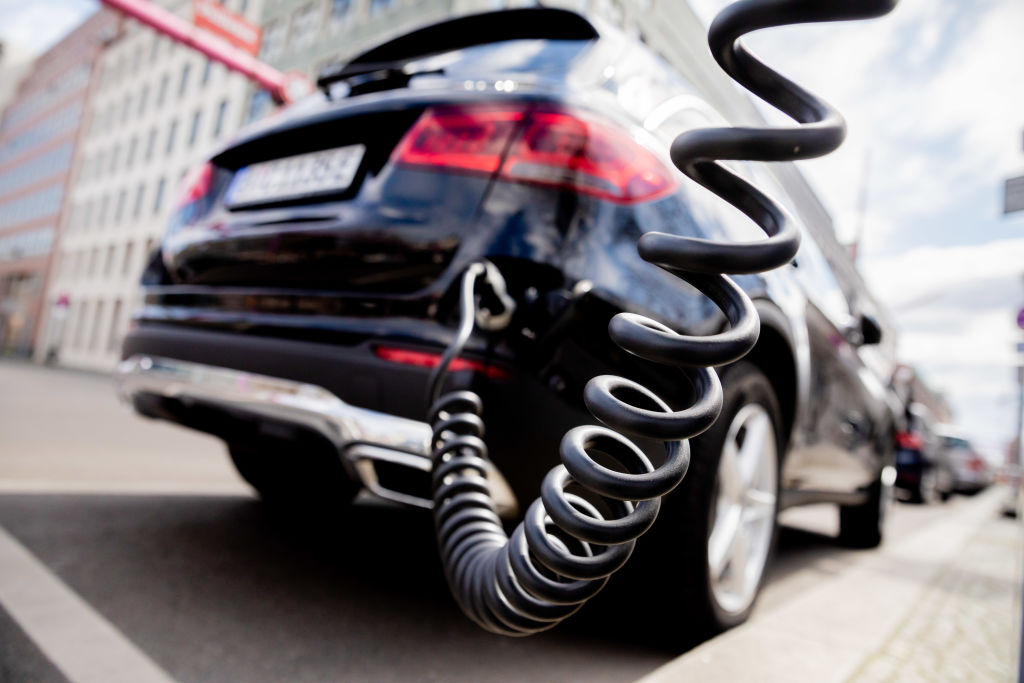
A black Mercedes SUV plugged in to an EV charger
A Mercedes-Benz EV charges street-side | Christoph Soeder via Getty Images

RELATED: The UAW Wants to Introduce a New Chicken Tax for EVs

However, that last stipulation is a little odd. Currently, there is no price cap for EVs eligible for the EV tax credit in 2021. It’s not hard to see the logic in this. If someone can swing a brand new car valued at close to six figures, should they really be getting a tax credit? Politics aside, requirements for the EV tax credit are pretty loose at the moment, and it seems the Senate wants to change that.

As of today, a cornucopia of EVs are eligible for the credit. The Audi e-tron, for example, is eligible for the full $7,500. The U.S Department of Energy even provides a list of eligible vehicles. At a quick glance it’s hard to pick out which EVs would no longer apply for the EV tax credit with the $80,000 cap, so some good news there. What’s more, depending on the state, there may be further incentives available. Colorado, for example, will cut you a check for buying and registering an EV there.

Will the EV tax credit boost EV sales?

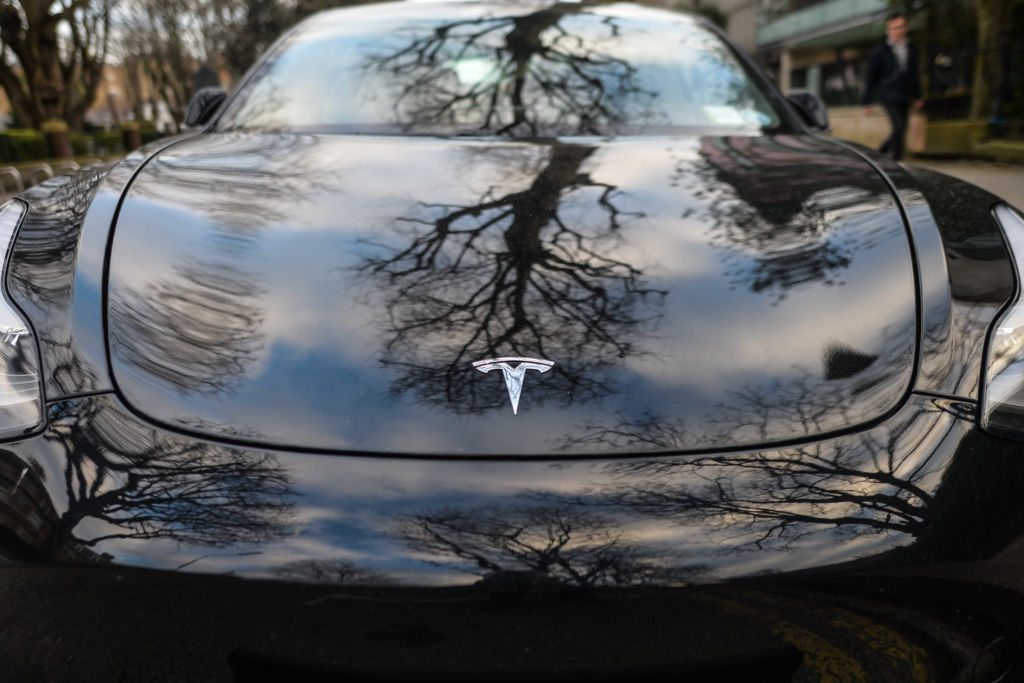
The front of a black Tesla sedan with hood and badge visible
Where some American’s EV tax credit ends up- in a Tesla | Artur Widak via Getty Images

The whole point of the EV tax credit is to push EV sales, something the current administration is fond of. Not to be political, but politics are often wrapped up in commerce. As things stand, it appears that the current credit is doing its job, lots of Americans are curious about EVs, and some are taking the plunge, even branching out from the mainstream EV makers like Tesla. Whether this new credit becomes relevant depends wholly on if it advances through the government, but consumers will know more later this summer.

The post The Senate Wants to up the EV Tax Credit, Again appeared first on MotorBiscuit.