by Gabrielle DeSantis

The new Opel Manta GSe EV is on a bold new “e-mission”, according to a press release from the German brand and their pun department. The GSe is a one-off vision of the company’s commitment to a zero-emission future with retro touches throughout the new EV. However, it’s not a totally new design, borrowing heavily from Mantas of the past. The name isn’t the only retro touch on the GSe, and the car is part of a continuing trend across the industry.

The Opel Manta GSe continues a trend

Manta GSe ElektroMOD | Opel

Recently, Ford brought back the “Lightning” name. GMC brought back “Hummer”. If it’s an old, long-dead name, manufacturers are looking to bring those names back as EVs to boost sales. Admittedly, it’s a strong marketing tactic. Old names are recognizable, and help get people into showrooms, especially older generations with money to spend. Now, Opel is doing the same thing.

The last Manta rolled off the production line in 1988 and has been dead until now. The original Manta was a rear-wheel-drive sports coupe with a four-cylinder motor and the famous black hood which small sports coupes of this era are known for. That black hood was used to cut down glare from the sun while racing, just like the black paint under a pitcher’s eyes. Of course, you’d be forgiven for not knowing this, or who Opel is, as the name is rather obscure in America.

Who is Opel anyways?

The logo of Opel hangs above a dealership on a yellow background
An Opel dealership in Athens | Nikolas Joao Kokovlis via Getty Images

RELATED: Does the 2022 Hyundai Ioniq 5 EV Really Have a 300-Mile Range?

If you’re a super car geek, odds are the last time you remember seeing the name Opel was in Need for Speed. That’s because the Germany-based carmaker has been out of the U.S market for some time, leaving in 1978. The brand was boxed out of the market by evermore competitive offerings from big German names like Audi, and perhaps because Opel has always been a little different.

Their older cars put up acceptable sales numbers, but never approached the big dogs in the market. The Manta GSe is no different. Real retro touches set it apart from retro-inspired EVs like the Honda E, such as manual windows and handbrakes. Speaking of manual, this one-off has a four-speed manual transmission- in an EV! While it’s not necessary to use because of the instant torque, the effort is appreciated. It’s exactly that sort of thing that will help keep enthusiasts engaged and happy in EVs.

Can new EVs save old cars?

The highlighter yellow Manta GSe in profile at speed
The Manta GSe ElektroMOD | Opel

What won’t make anyone happy is the Manta’s range of only 125 miles. Not that it matters, as Opel has no plans to build this one-off. Still, this 147 hp retro whip has more style and presence than pretty much every EV on the road. Therein lies the brilliance in cars like the Manta GSe and the Honda E. Manufacturers are able to pull in old and new buyers alike with the “old-car-new” trend while keeping classically beautiful shapes alive. Let’s just hope Opel changes its mind about making it.

The post The Opel Manta GSe Is the New EV You Didn’t Know You Wanted appeared first on MotorBiscuit.
by Gabrielle DeSantis

When it comes to manufacturing, we don’t often stop to think about where our cars actually come from. Sure, we know which cars are made in which countries, for the most part, but unless you live in an area that’s known for having a major vehicle production site, chances are you don’t give it much thought. We know that the Chevrolet Corvette is homegrown here in America, but you may not realize that it’s been in the same production facility since 1981.

A Chevrolet Corvette | VCG, Getty Images

The Corvette manufacturing plant

40 years ago, Monday, June 1st, 1981, Chevrolet began production of the Corvette at its new production facility in Bowling Green, Kentucky, where production has remained ever since. According to 365 Days of Motoring, the Corvette is the longest-running production car to remain in continuous production, with the first generation starting off in 1953. In fact, the first 300 Corvettes ever built were built by hand in Flint, Michigan. It generated interest since its first car show debut at the 1953 General Motors Motorama, and it’s become a piece of the American car culture ever since.

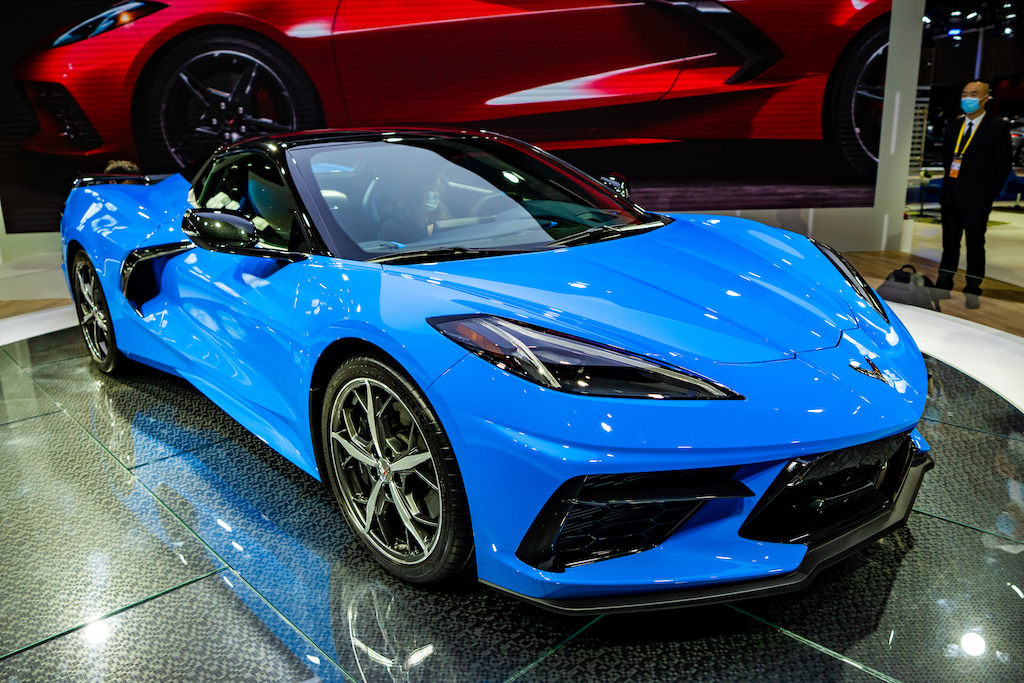
A blue mid-engine c8 corvette
A Chevrolet Corvette | VCG, Getty Images

Eight generations of heritage

In all of the production years, there are eight generations that mark the major differences in era for the Chevrolet Corvette. With the fifth generation of Corvette, the entire facility, which was chosen because of its size and location, was completely renovated, making way for more efficient machinery that allowed for the car to remain low-cost to produce — a novelty which the manufacturer was happy to pass along to buyers. Because of this, the Corvette was oftentimes referred to as the ‘poor man’s supercar.’

But, being the poor man’s supercar has never been a bad thing for the Corvette. In fact, many owners and fans of the car boast more about the sports car being a ‘supercar killer’ because of its raw power, the stability of the LS motors used for generations which allow for heavy aftermarket boost from superchargers and turbochargers, and the handling — all at a fraction of a price that you would get a supercar with similar performance.

RELATED: On This Date: The World’s First Traffic Jam

A new era for the American sports car

Among the decades, the Chevrolet Corvette has grown and changed significantly. While the manufacturer held on to the aspects that made the car great, they were able to change and adapt with the times, creating a generation of the Corvette for every generation of car enthusiasts. Whether you love modern muscle or classic cars, it’s easy to see why so many people love the Corvette.

With the production of the newest generation of Corvette, we see a major shift in the car that could make or break it altogether. The C8 Corvette is the first mid-engine version of the car, designed to have competitive performance and handling, and with the weight distribution evened out to what we expect from most supercars that have been mid-engine since the Lamborghini Miura.

RELATED: On This Date: The First Woman to Drive a Jet-Powered Car

Since its most to the Bowling Green facility, the Corvette has grown into its roots, remaining a true American icon among car enthusiasts and sports car fans.

The post MotorHistory: Kentucky Becomes Sole Manufacturing Plant for Corvettes, 1981 appeared first on MotorBiscuit.

by Gabrielle DeSantis

The luxury compact sedan market is filled with sporty competitors like the Audi A4, BMW 3 Series, and the Mercedes-Benz C-Class. Some would consider those three the luxury sport sedans the shopping “trifecta” as they all embody what most buyers would look for in such a car. If you’re looking for something sporty, the 3 Series has you covered. And if you’re looking for comfort, then the Mercedes will give you what you need.

But what if you’re looking for something Japanese instead? In that case, the 2021 Lexus IS 350 F Sport provides the comfort you expect from the brand and it looks sporty to boot. But is it really as sporty as it looks?

The Lexus IS 350 F Sport has the right sporty elements

2021 Lexus IS 350 F Sport | Joe Santos

RELATED: Why Did Consumer Reports Give the 2010 Lexus GX a ‘Don’t Buy’ Label?

The term “sporty” typically refers to a car’s ability to accelerate quickly, reach a high top speed, and tackle corners with the agility of a cheetah. And while many sports cars exude these characteristics, it can be tough to make a luxury car do the same, especially if you’re Lexus.

That doesn’t mean that Lexus doesn’t make fast cars, it does, in the form of the LFA and the LC 500. But it doesn’t have the sporty formula quite dialed in with its lower-tiered sedans like the IS 350. Don’t get me wrong, the IS 350 is still a great car in its own right. It’s comfortable enough for the daily drive and with a 311-hp V6, it has plenty of power to play around with. But it leaves me wanting just a little more.

To get a good feel for the car, I put the Lexus IS 350 F Sport through its paces by tackling some canyon roads outside the Denver, Colo., area. The car handled well around the corners, especially in “Sport” mode, which stiffened up the steering feel and sharpened up the shifts. But I felt like the transmission held it back.   

The six-speed automatic transmission is lacking

a side shot of the 2021 Lexus IS 350 F Sport
2021 Lexus IS 350 F Sport | Joe Santos

RELATED: The 2021 Lexus RC 350 F Sport Makes Commuting a Relaxing and Thrilling Experience

If you opt for the AWD version of the IS 350, like my test car is, then you’ll get the six-speed automatic transmission to go with it. It’s a good gearbox for everyday driving as it makes good use of the powerband with its ratios and leaves the engine at a comfortable RPM when cruising.

However, if you opt for the rear-drive version, you’ll get the eight-speed direct-shift gearbox, which I’m presuming shifts a lot quicker. That would theoretically be a lot better than the six-speed that the AWD one is equipped with as I found that the transmission seemed to bog down the driving experience with slow up and down shifts.

Curiously enough, according to Lexus, the AWD drive version is 0.1 seconds slower to 60 mph than the RWD version (5.6 vs 5.7 seconds). It could be due to the extra weight, but I wouldn’t be surprised if the transmission has something to do with the slightly slower time.

With the F Sport package, there are paddles behind the steering wheel, but they don’t do much to make the drive that much sportier, thanks to the slow shift speeds.

What does the F Sport package have?

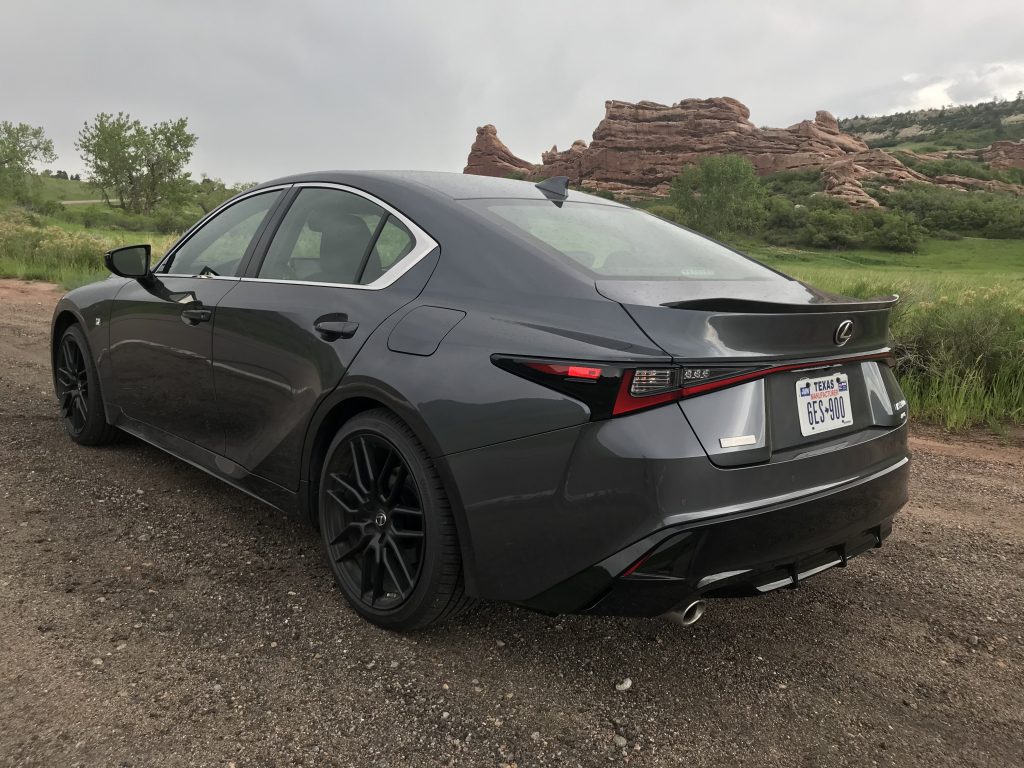
a rear three quarter shot of the 2021 Lexus IS 350 F Sport
2021 Lexus IS 350 F Sport | Joe Santos

RELATED: Choose a 2021 Lexus RC 350 Over a Toyota Supra if You Value Comfort Over Sportiness

While the term “F Sport” makes the car sound even sportier, it’s mainly the appearance package. Opting for the F Sport trim will give you a stiffer F Sport suspension, but the rest is mainly cosmetic. In addition to some aggressive styling cues like the mesh front grille, the dark 19-inch wheels, and the carbon trunk spoiler, you’ll also get more supportive 10- and 8-way powered front seats.

Ultimately, If you’re looking to make a statement with your luxury compact sedan, then the Lexus IS 350 F Sport is a great way to go. It looks athletic, it drives well at speed, and it definitely looks the part. But if you want something that you can take to a race track or you crave a more visceral driving experience, then you might want to stick with one of those aforementioned European rivals.

The post Is the 2021 Lexus IS 350 F Sport as Sporty as it Looks? appeared first on MotorBiscuit.

by Gabrielle DeSantis

New cars are expensive to purchase, so no one wants to pay for repairs sooner than necessary. A new car warranty with great coverage helps keep repair costs down. It’s certainly something to keep in mind when car shopping. Here’s what an average new car warranty looks like in 2021 and which automakers offer the best warranty coverage.

The average 2021 new car warranty

Today, standard new car warranties provide coverage for three years or 36,000 miles (whichever comes first), Motor1 reports. Warranties from popular brands such as Ford and Toyota provide the average amount of coverage. Ford’s warranty has bumper-to-bumper coverage for three years or 36,000 miles and powertrain coverage for five years or 60,000 miles, AutoGuide.com reports. Toyota’s warranty is similar in these primary categories, AutoGuide.com says.

A manufacturer’s warranty outlines the problems the dealer will fix if the owner follows the conditions. This bumper-to-bumper warranty covers all vehicle parts except items that tend to wear out, such as tires and brakes.

Manufacturers often also offer powertrain warranties. This is usually longer than the bumper-to-bumper warranty, but it covers only the engine and transmission. In addition to the factory warranty, extended warranties are available through the automaker or third parties.

Car companies with the best warranty coverage

Some manufacturers offer warranties that are better than average. Hyundai, Kia, Genesis, and Mitsubishi boast the best overall warranty coverage, Motor1 reports. Hyundai Motor Group owns the first three brands. But all four offers warranties that provide bumper-to-bumper coverage for five years or 60,000 miles. They also have powertrain coverage for 10 years or 100,000 miles.

Hyundai and Genesis have corrosion coverage for seven years with unlimited miles. They also provide roadside assistance for five years with unlimited miles. Kia has corrosion coverage for five years or 100,000 miles and roadside assistance for five years or 60,000 miles. Mitsubishi’s warranty covers corrosion for seven years or 100,000 miles and has roadside assistance for five years with unlimited miles.

Also, Jaguar offers bumper-to-bumper coverage for five years or 60,000 miles. However, its powertrain coverage is shorter than the above, for five years or 60,000 miles.

Different ways to interpret who’s best

Though Hyundai and Genesis offer the longest overall warranties, there are different ways to interpret which one is best. For new cars bought in 2018 and 2019, Volkswagen had one of the best warranties, with bumper-to-bumper coverage of six years or 72,000 miles. However, for 2020, VW reduced its warranty to four years or 50,000 miles.

It also depends on the vehicle type. Hyundai doesn’t sell trucks, so buyers shopping for a new pickup will need to look instead at Chevrolet, GMC, Ford, Ram, or Jeep. Those manufacturers offer three-year or 36,000-mile bumper-to-bumper coverage and five-year or 60,000-mile powertrain warranties. Hybrid, electric, and diesel vehicles also often have warranty coverage different from the rest of a brand’s vehicles.

Also, some warranties provide extra features, such as “roadside assistance, free scheduled maintenance, courtesy transportation, and service pickup and delivery programs,” U.S. News notes.

On top of its excellent warranty, Hyundai provides three years or 36,000 miles of complimentary scheduled maintenance and will even tow your vehicle to the nearest dealership if needed. Tesla’s warranty stands out for its corrosion coverage, which is 12 years and unlimited miles. Lincoln provides unlimited roadside assistance. And though not strictly part of the warranty, Hyundai, Genesis, and Jaguar offer several years of complimentary maintenance.

When car shopping, the warrranty might not be the first thing you think about. But don’t forget to read the small print to make sure you’re getting the coverage you expect.

RELATED: Why You Should Never Buy a Tire Based on Its Warranty

The post Which Car Company Has the Best Warranty in 2021? appeared first on MotorBiscuit.