
by Gabrielle DeSantis

The car market is all about give and take. What may be good for sellers is not always good for buyers, and vice versa. Right now, a global chip shortage has sent used car prices sky-high as supply chains dry up. Those looking to purchase a new vehicle have turned to the used market in light of the delays in supply, pushing prices higher. Thankfully, Consumer Reports has a few tips and tricks to get around this boom in the used car market.

What’s causing the chip shortage?

A microchip sits amidst semiconductors and other hardware | Chris Ratcliffe via Getty Images

Semiconductors are terribly important. They control anything and everything in modern electronics, especially cars. Everything from your digital dash to your brake lights is controlled by semiconductors, and the industry is fresh out for the time being. Per Consumer Reports, what happened is more complex than simply making more semiconductor chips.

The global pandemic is arguably one of the leading causes of the semiconductor shortage. People are spending more and more time away from home as strife caused by the pandemic continues to ease, increasing demand for new products. This new demand, combined with manufacturers ordering any and all chips they can has led to the current situation in the auto market, according to Consumer Reports.

Consumer Reports: what you can do?

A row of used Lincolns sit on a lot with promotional signage in the background.
Used Lincolns sit on a lot | Jeffrey Greenberg via Getty Images

RELATED: Most Reliable 2018 SUVs According to Consumer Reports

There is a silver lining to all this if you’re looking for a new or used car right now. Because the demand for cars is so high right now, it’ll be no trouble at all to get good money for your used car according to Consumer Reports. As a result, this translates to being able to roll those profits into a newer vehicle. High sale price also helps negate the effects of high car prices.

Additionally, the COVID-19 pandemic finally has some solace to offer. With consumers working from home, some aren’t looking to immediately replace that car they just sold with a new one. If that isn’t enough good news, look to sedans. If you’re able to get by without a massive SUV, the popularity of said SUVs has caused sedan prices to stay low, even with the semiconductor shortage blowing up the market.

When will the shortage end?

A man works in a lab, wearing protective garb while producing semiconductors.
A man works in a lab producing semiconductors | Lauryn Ishak via Getty Images

Unfortunately, it’s difficult to say when the shortage will end. Semiconductor production is a multi-step process relying on many other industries to produce a final product, causing a ripple effect. Once the supply chain catches up, car prices will begin to stabilize again. As for when this happens, it’s hard to say.

For example, some estimates point to an end as early as fall, some as long as the year 2023. Either way, if you want a car right now, the best advice Consumer Reports has for you is patience. If possible, sell your car now and wait for the market to calm, or use the high sale price to offset the cost of that new ride. Either way, there’s a lot of waiting to be done.

The post Consumer Reports: How to Avoid High Used Car Prices Right Now appeared first on MotorBiscuit.
by Gabrielle DeSantis

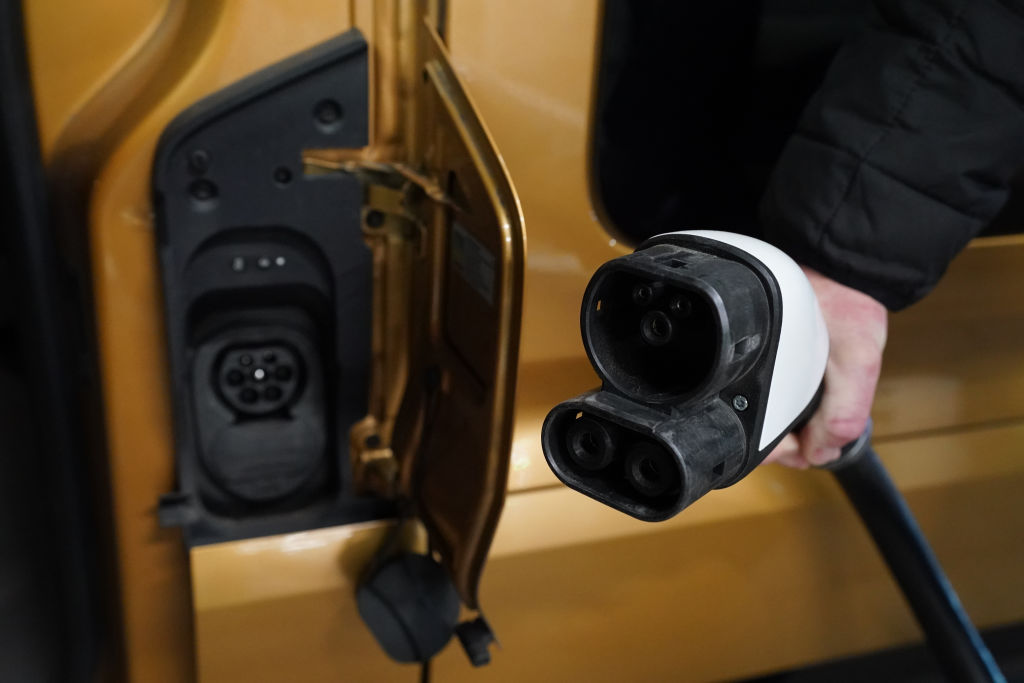
Tax rebates and other monetary incentives are one of the biggest reasons to buy an EV. The government won’t give you free money for your Ferrari, but they will if it’s electric. The U.S Government will grant you a massive $7,500 tax incentive for the purchase of any EV, foreign or domestic. Recently, the United Auto Workers union stated that it wants that money to go to EVs made only in America. The announcement was made in light of GM moving the production of its electric vehicles to Mexico. The changing of EV incentive policies would help keep jobs in America, but it could also lead to another Chicken Tax scenario in America.

What is the Chicken Tax?

The Volkswagen logo at a factory in Germany | Hendrik Schmidt via Getty Images

The Chicken Tax exemplified the height of Cold War politics. Introduced in 1964 by President Johnson, the tax was aimed at imports into the United States. The law stated that there would now be a 25% tariff on small trucks, among other items. The logic behind it was to prevent the importation of lite trucks by taxing foreign competitors out of the market.

This move was successful and forced many manufacturers to either circumvent the tax or find another place to sell their trucks. In doing so, Johnson bolstered the U.S auto industry but also introduced a host of consequences for America. For example, the Chicken Tax alleviated the pressure on American manufacturers to build more fuel-efficient vehicles. Doing so exacerbated the looming climate crisis and shifted the focus away from ecological goals.

What this means for the EV industry

A man unplugs an EV from its charger.
A man unplugs an EV taxi from its charger | Photo by Marcus Brandt via Getty Images

RELATED: Is the 2022 Ford F-150 Lightning Eligible for EV Tax Credits?

The American auto market finds itself in a very similar place today. EVs are the most popular response to the climate crisis, and there will certainly be changes to that “climate” as a result of this proposed tax change. For one, competition from other markets will be reduced; a positive for the American EV industry, but a negative for the climate. Of course, the positive is more American production of EVs and the jobs that come with it. This is something desperately needed in the American economy in the wake of the COVID-19 pandemic.

Moreover, the negatives for the climate are a larger issue. Unfair advantages for American EV production mean fewer EVs in America overall, hurting U.S climate goals. It is admittedly a very fine line to toe. On the one hand, American jobs and economic recovery are certainly important. On the other, if we aren’t on top of the climate crisis, and encouraging competition in the field, it will harm everyone in the long run.

How can we strike a balance with EVs?

A sign stating "EV charge station" on a blue background
A sign advertising EV charging | Getty Images

Thankfully, there is a balance to be struck. Compromise is necessary to ensure both the economy and the climate get where they need to be. Bolstering the American auto industry and its Evs alongside the UAW is a solid move. However, handing a loaded deck to the industry can hurt the climate. So, the best way forward is to meet in the middle. Hand American EV buyers a little more scratch for their purchase of a Tesla over an I.D 4. This way, everyone still gets a cut of the EV stipend, without harming the industry on a global scale. For now, it’s best to pursue every avenue we have to combat the climate crisis.

The post The UAW Wants to Introduce a New Chicken Tax for EVs appeared first on MotorBiscuit.

by Gabrielle DeSantis

The C-Class sedan is Mercedes-Benz middling four-door sedan model, sitting just below the E-Class and S-Class models, but above the A-Class. As such, it’s the Goldilocks of Mercedes’ lineup. Just nice enough to be premium without breaking the bank. Options are plentiful, but up until recently, there was really only one trim level. With the C-Class being all-new for 2022, Merc has introduced some new trim levels and tech to spice up the C.

Mercedes-Benz C-Class Premium Trim

The 2022 Mercedes C-Class | Daimler

Despite its misleading title, the Premium trim is the most basic trim level available for the new baby Merc. According to MotorTrend, it does come with some choice options that can’t be overlooked. Most of these included options are focused around Mercedes’ fantastic infotainment system. The new C-Class gets a sizable 12.3-inch digital dash, in addition to an 11.9-inch touchscreen. While those options are great, Mercedes-Benz has made sure to throw some more unique tech down to the C-Class

First among these is the fingerprint scanner. While Mercedes-Benz doesn’t specify how it’ll be used, it’s sure to center around the smartphone integration that is also offered. The S-Class is always a pioneer of new safety tech, and the C-Class gets a little bit of that glory with the German marque’s full suite of safety features like lane departure and blind-spot monitoring.

Mercedes-Benz Exclusive and Pinnacle Trims

The interior of the Mercedes C-Class, with a large touch screen in the center and coffee-colored seats
The all-new interior of the C-Class | Daimler

RELATED: The 2022 Mercedes-Benz EQS Subtly Pushes Major New Design Language

Moving up the line, there’s only one middling trim for the new C-Class. Should you spec out a C-Class any options from the trim level below are included in the cost of the next trim level up. The Exclusive trim level comes with everything in the Premium trim and then some. Buyers will also be given a heated wheel, wireless charging, and the lovely Burmester sound system. Not only does the system sound fantastic, but it also looks amazing, with the speakers covered in milled aluminum.

The Pinnacle builds on the trim levels below it, and it’s where the Mercedes-Benz tech really shines. Pinnacle trim C-Class models will come with a heads-up display. If you’ve never used one before, they’re extremely useful; helping to keep your eyes focused on the road while feeding you anything you might want to know at a glance. Heads up displays like this will only get more common, and it’s good to see some higher-end tech trickle down a little. The cream of the crop trim level also integrates a sci-fi augmented video navigation feature for the nav unit. Turns will be shown in real-time on the navigation feed along with their surroundings, aiding in navigation.

Which C-Class is the one for you?

The Mercedes-Benz badge photographed on the nose of a car.
The Mercedes-Benz logo | Giulia Marchi via Getty Images

The new 2022 C-Class is set to be a fantastic entry-level luxury sedan, with plentiful amenities and tech. However, that Mercedes-Benz badge does cost something, and the top-of-the-line C-Class is bound to get a bit pricey. The middling Exclusive trim is bound to offer the most tech and features for the best price, without getting exorbitantly expensive. More information on the C-Class and its pricing will be available soon.

The post Mercedes-Benz Unveils Three Interesting Trim Levels for the 2022 C-Class appeared first on MotorBiscuit.

by Gabrielle DeSantis

When it comes to great affordable used cars, Honda models are excellent choices. The automaker’s vehicles win plenty of awards, so it’s no surprise that even a used model is a good one. Honda recently discontinued its subcompact hatchback, the Fit. Regardless, it’s still a highly reliable car. Here’s a look at the two used Honda Fit model years under $18,000.

A quick recap of Consumer Reports’ list

According to Consumer Reports, plenty of great used cars and SUVs cost $15,000 to $20,000. And as far as automakers go, Honda boasts plenty of entries on CR’s list “Best Used Cars and SUVs for $15,000 to $20,000.”

In fact, multiple model years of four of Honda’s most popular cars appear on the list. For instance, the CR-V and Accord made the list, in addition to the Fit. Not only do all cost between $15,000 and $20,000, but they’re also great cars with few drawbacks.

Indeed, Consumer Reports says the Honda Fit is one of the best pre-owned small cars in that price range. CR recommends two model years in particular: the 2017 and 2018 model years. That’s because they’re both highly reliable and boast good owner satisfaction ratings.

Why CR picks the 2017 Honda Fit

Thanks to its small stature, the Honda Fit is a great car for city driving, Consumer Reports notes. It may not be the best choice for a road trip, though. But according to Consumer Reports, though the 2017 Fit is undoubtedly small, it offers plenty of interior space for its size. 

Plus, the Fit “comes with lots of equipment” and gets great gas mileage: 24 mpg in the city and an astounding 42 mpg on the highway for 33 mpg combined. That being said, it’s not a sports car by any means, and it offers only one engine option. The 2017 Fit has a 1.5-liter four-cylinder engine, which gets, at most, 130 hp. The silver lining, however, is that the Fit handles well, CR’s testers say.

Despite its impressive handling, the Fit isn’t the most comfortable car. The interior can be noisy, and the ride can be uncomfortable and harsh. Currently, Consumer Reports estimates a used 2017 Fit costs between $15,000 and $18,000. 

Why the 2018 Honda Fit is a smart used buy

Though it’s only one model year newer, the 2018 Honda Fit offers significant upgrades over the 2017 model. But it’s like the previous model year in that it also has similar pros and cons, Consumer Reports notes. 

Regardless, the 2018 Fit was the first model year that Honda offered smart safety features on its subcompact hatchback. For example, the 2018 model could be equipped with forward-collision warning, automatic emergency braking with a pedestrian detection system, lane departure warning, and lane-keeping assist, CR says. Though the 2017 Fit boasted plenty of equipment, it offered none of those smart safety features.

Another difference between the two model years is in their reliability. The 2017 Honda Fit garnered a 5/5 score for its reliability from Consumer Reports, while the 2018 Fit’s reliability score was slightly lower at 4/5. And, of course, because the 2018 model is slightly newer, it costs a bit more. CR says the 2018 Fit could cost between $15,000 and $20,000. 

RELATED: The 2020 Honda Fit Is the Most Reliable Subcompact Car You Can’t Get Next Year

The post Consumer Reports Finds These 2 Used Honda Fit Models Are Best Buys Under $18,000 appeared first on MotorBiscuit.