
by Gabrielle DeSantis

If you’re planning on modifying your car for more power, then there are many different parts that you can add to it. For most cars, you can add parts like a new exhaust system or manifold, or perhaps a new air intake. But what about a larger throttle body? Could that add more horsepower?

The throttle body adds air into the engine

A large throttle body | Amazon.com

RELATED: Your Throttle Cable Could Use an Adjustment

In order for your car’s engine to work properly, it needs to have air pumped in and out of it. the throttle body is located after the air intake – at the end of the intake manifold – and is essentially the gateway between the air that’s being sucked in by the air intake and the engine itself. Inside the throttle body itself, there are two flaps that open and close. According to It Still Runs, when the accelerator is pressed, the flaps on the throttle body open up and allow air into the engine.

A bigger throttle body means more air

Now that we understand how a throttle body works, we can delve into why making it bigger could be better. If you expand, or increase, the size of the inner diameter portion of the throttle body, more air will be pushed into the engine. And since the engine is basically a large air pump, increasing the air intake level will increase the engine’s power output as well, in some cases by up to 15 to 25 hp.

Car ID reports that “packing more air into your engine allows more fuel to be burned, which creates more power.” Fortunately, there are sensors on your engine that monitor its air/fuel rate, so you car’s ECU should be able to compensate for the added air. But in some cases, you might need to tune the ECU to adjust to the new air/fuel ratio, typically if you have other power-adding modifications as well.

In those cases, tuning the ECU is paramount as the air-to-fuel ratio in any engine needs to be at the optimal range to make more power. Having more air, but not enough fuel, going into the engine could lead to no extra power being made.

You can expect an increase in throttle response
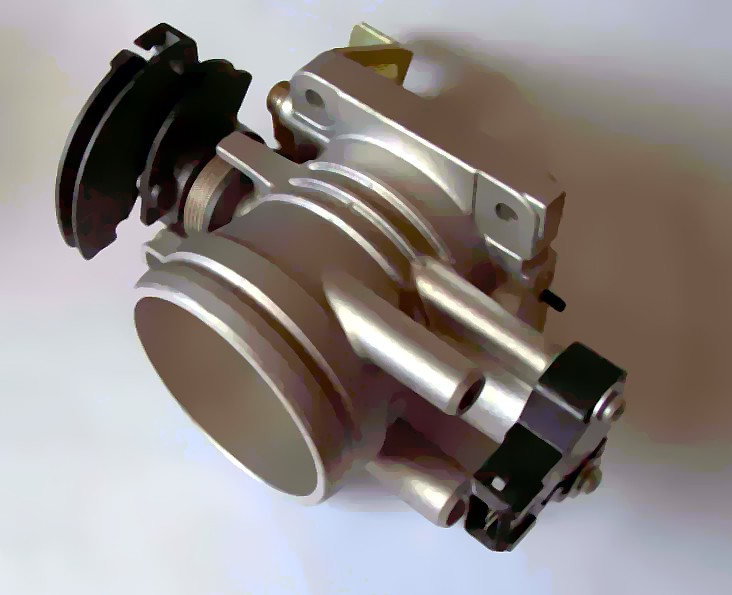
A picture of a throttle body
A picture of a throttle body | Wikimedia Commons

While increasing horsepower is the main reason anyone would add a larger throttle body to their car’s engine, another benefit is added throttle response. Many auto manufacturers measure a car’s airflow at the peak RPMs and then choose a throttle body that ensures 50% of throttle will produce 50% airflow, according to Car ID.

While that formula works for everyday driving, it’s not optimal for those seeking more performance out of their cars. So when you add a larger throttle body, you’ll feel a sharper increase in the engine’s responsiveness, especially at a higher RPM, since the engine’s airflow is increased.

Other engine modifications will make more power      

Another benefit to adding a larger throttle body to your car’s engine is that any other modifications that you add will make more power too. Since you’re adding more airflow, other power adders like a supercharger, turbocharger, or even simple bolt-on parts will make more power as well. However, just make sure to get the correct throttle body size for your specific application.

The post Can a Larger Throttle Body Really Increase a Car’s Horsepower? appeared first on MotorBiscuit.
by Gabrielle DeSantis

We don’t mean to be critical of the GMC Hummer EV. It looks great and is full of tons of features that make it intriguing. Oops, maybe we shouldn’t have said “tons.” You see, that’s the problem with the GMC Hummer

Yes, the GMC Hummer has a curb weight of 9,046 lbs!

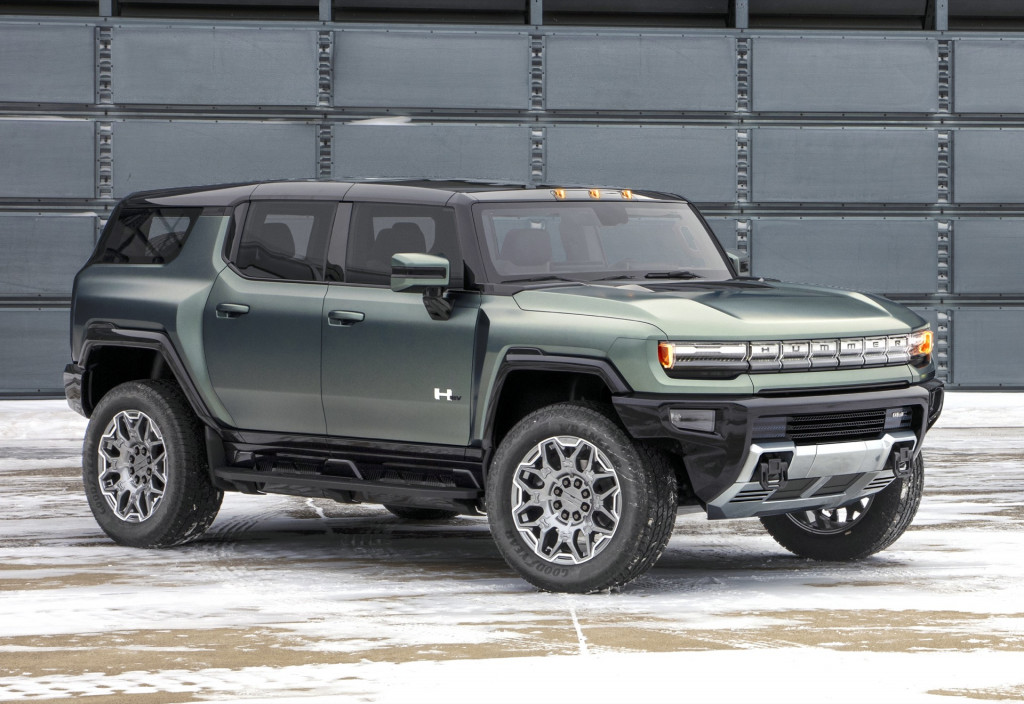
2022 GMC Hummer | GM

Have you looked at the specs for the GMC Hummer? This thing has a curb weight of 9,046 lbs. That’s like almost one and one-half Ford F-150 Lightning EVs. This is supposed to be a “light-duty truck.” We think GM didn’t get the complete segment description and missed the “light” part. 

The last Hummer vying the highways and dirt roads was 4,883 lbs. And we thought that was crazy-fat back in 2005 when it was first introduced. That’s 2.44 tons. The GMC Hummer is 4.5 tons. Almost twice its predecessor’s weight. 

And we all know why these EVs are heavy-duty heavy; those batteries. They weigh a ton-well not literally, but they’re heavy. They’re mostly made of lead. That big battery also equates to a more expensive vehicle. 

Yes, the price of a GMC Hummer starts at $105,595!

2022 GMC Hummer
2022 GMC Hummer | GM

RELATED: The 2024 GMC Hummer EV Has Less Power Than It Should

Have you seen the estimated price of the GMC Hummer EV? It hit home when this week Ford announced that its F-150 Lightning EV pickup would cost a hair under $40,000. That is in comparison to Hummer’s $105,595 base price. 

Yeah, we get that everything about the GMC Hummer is big. But when that applies to the weight and price we look at those as being minuses, not pluses. What happens when one of these plows into a Mini or Bolt? On second thought we don’t want to know. 

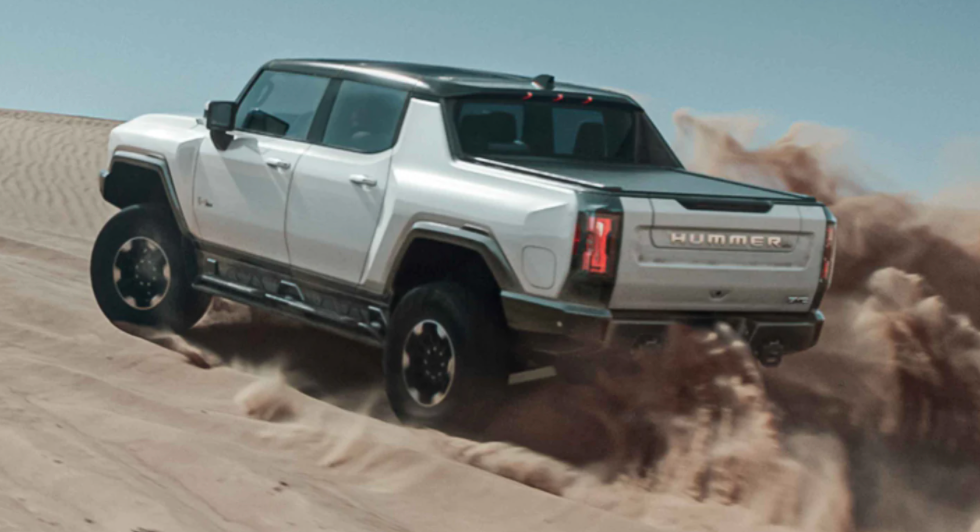
And how much more likely is it to sink into loose gravel or sand with almost 10,000 lbs to support it? Since this is being touted as an off-road-capable truck, is it off-road-capable at this weight? At first glance, we were impressed with the 1,000 hp figures in the stats. But now we wonder if all of that grunt is just to make sure this thing gets out of its way? 

The GMC Hummer weighs enough to be classified as a Class 3 medium-duty truck

2022 GMC Hummer kicking up sand at the dunes
2022 GMC Hummer | GM

With an estimated 10,400 lbs GVWR it is not a light-duty pickup but is, instead, a Class 3 medium-duty truck. At least as defined by the US Department of Transportation. That translates to a Silverado/Sierra 3500, Ram 3500, or Ford F-350. 

We guess that buyers can reconcile the weight, or else won’t be aware. But what is the environmental advantage of an electric medium-duty pickup that weighs over 9,000 lbs? 

The post Heavy-Handed: Get a Load of the GMC Hummer’s Weight appeared first on MotorBiscuit.

by Gabrielle DeSantis

Last month, Hyundai revealed new images of its upcoming 2022 Santa Cruz. And the unique body design looks a little confused. But the brand’s first-ever crossover truck (uh, not a truck?) is an exciting entry into whatever segment it’s supposed to fit. Just don’t let it confuse you.

What features of the Hyundai Santa Cruz give it a confused look?

The 2022 Hyundai Santa Cruz’s unique has many people confused. Even the grille has a perplexed look. Is this a truck? No, it’s not, Hyundai claims. The unibody design shares some truck-like features, including a cab and a small bed. However, the automaker makes clear the Santa Cruz is a “sport adventure vehicle.”

If we were to put it into an equation, it would look like this: Unibody construction like a crossover SUV + Open bed like a pickup truck = The 2022 Hyundai Santa Cruz SAV. Does that clear things up? If not, that’s OK, because the design and features are new. 

Don’t let the design throw you off. This SAV comes with power. The standard 2.5-liter four-cylinder should make about 190 hp with 180 lb-ft of torque. And the upgraded turbocharged engine is a 2.5-liter four-cylinder harnessing about 275 hp and 310 lb-ft. 

Critics’ opinions about the Hyundai Santa Cruz

The Hyundai Santa Cruz might be getting a little pushback over the truck/not-a-truck controversy, but critics appear impressed overall. We may not be accustomed to all that SAVs offer, but that’s thanks to the newness of this vehicle class. Hyundai is looking to the future, and it’s putting consumers’ needs front and center.

There’s been a growing demand for vehicles that fit into our lives. Today’s consumers consider daily activities, weekend adventures, and price points when shopping for new cars, trucks, or SUVs. The Hyundai Santa Cruz SAV provides the best aspects of a truck in a smaller package like a crossover SUV. It’s easier to get around the city and to fit in parking spots. Plus, it can hold up well off-road for a quick adventure away from the city. And with an estimated starting price of $25,000, you won’t be afraid to test some limits. 

According to Car and Driver, “The Santa Cruz certainly looks more distinct than the Honda — or any other mid-size truck, for that matter­ — with its interesting face and creased sheet metal.” 

Who would buy this SAV?

The Hyundai Santa Cruz‘s versatility appeals to a whole new group of consumers. Some of the obvious would be adventure seekers like rock climbers, off-roaders, and campers. Some not-so-obvious future Santa Cruz drivers might be parents, millennials, and professionals stuck in the city all week.

The 2022 Hyundai Santa Cruz looks confused, thanks to its unique crossover design. But its design makes it work for most situations. According to Hyundai, the “open-bed flexibility coupled with closed-cabin security meets the changing everyday needs of its adventure-oriented buyers.”

The SAV’s bed is perfect for hauling bulky, not heavy items. It has a max payload of 1,300 pounds and a towing capacity of up to 5,000 pounds. Hyundai also designed it with a trunk under the flatbed to keep items hidden or secure. And there’s a slide-out cover to protect items in the bed. Another cool feature is the remote-operated tailgate release for easier loading. 

Sure, this vehicle might not earn much respect from truck purists, but what it lacks in size, it makes up for in style. The Hyundai Santa Cruz’s confused look will wear off as more manufacturers develop their own SAVs.

The post The 2022 Hyundai Santa Cruz Looks Confused, but Don’t Let It Confuse You appeared first on MotorBiscuit.

by Gabrielle DeSantis

Autonomous driving software is a massively convenient thing. It’s an exciting new technology that will certainly change the face of driving as we know it. Convenience is king in marketing and assisted driving technology like Autopilot, by the EV company Tesla, capitalizes on that.

Disappointingly, some Tesla owners have chosen to abuse this feature, causing accidents and sometimes even fatalities. This unfortunate trend is further sullying Tesla’s reputation, which consistently advertises the safety of the Autopilot system.

No loss is an acceptable loss

Elon Musk speaks at a press conference in Nevada | Photo by Max Whittaker via Getty Images

Because it is a new technology, Tesla’s Autopilot needs testing, just like all new tech. However, it would appear much of that testing is being conducted in the presence of the general, and likely unwilling, public. Simply put, the EV company’s Autopilot system is too easy to trick into thinking someone is at the wheel when no one is.

According to this article by KHOU-11, two men were killed in a Tesla while no one was driving. The story made national headlines, drawing the criticism from many that the Palo Alto-based company’s autopilot can be too easily tricked into thinking someone is at the wheel. It’s a fair criticism, too, as this is not the first time someone using Autopilot crashed a Tesla without touching the wheel.

Why would someone use Autopilot like that?

A white Tesla EV supercharger with red lettering sits in the sun
A row of Tesla Superchargers | Photo by Smith Collection via Getty Images

RELATED: Why Are Tesla Electric Vehicles Not Eligible for the Tax Credit?

As a matter of fact, this is far from the first time something like this has happened, with several incidents cropping up over the years. So why does this keep happening? Perhaps the answer doesn’t lie with Tesla, though they certainly share some blame.

There are products that will help you defeat the systems that detect if there is a driver present while Autopilot is in use, like this one. There are some things in life that will inevitably be ruined by other people, and Autopilot systems are one of them. Just like the drunk guy at the bar in your local sports team’s jersey, ruining the game for everyone else.

What can be done to stop this?

A woman sits in the driver seat of a Tesla, hands off the wheel, while autopilot guides the car down a road
A woman sits with her hands off the wheel using Autopilot | Photographer: Jasper Juinen via Getty Images

The easiest fix to this problem is on Tesla’s end. Without more critically important countermeasures in use, crashes will continue to happen. Tesla already has cameras in-car that face the occupants. Adding a parameter that the camera must see someone in the driver’s seat is one solution. Another potential fix could require the driver to press a button, acknowledging that they are present and attentive.

Other fixes are more dependent on the human brain. Human beings are excellent at actively monitoring things. Unfortunately, the human attention span is short. Self-driving software takes away that monitoring component, letting minds wander. Of course, this only applies if someone is actually in the driver’s seat.

The post Some Tesla Drivers Are Abusing Autopilot appeared first on MotorBiscuit.