by Gabrielle DeSantis

While the Levante Trofeo is an excellent SUV, Maserati as a whole hasn’t been scoring well in comparison tests. But there are signs that the Italian marque is getting its mojo back. One of the clearest is that it finally has a new supercar, the 2022 Maserati MC20. And based on the initial reviews, it should be enough to make Ferrari worry.

The 2022 Maserati MC20 is a supercar with F1 tech and modern luxuries

2022 Maserati MC20 | Maserati

Launching a new supercar is a momentous occasion for Maserati. It’s been well over a decade since its last supercar, the Ferrari Enzo-based MC12. Only now, Ferrari and Maserati are no longer part of the same stable. As a result, the 2022 Maserati MC20 is a clean-sheet design, with technology that will likely trickle down to the brand’s other cars.

Speaking of technology, the Maserati MC20 borrows some from Formula 1 in its engine’s combustion chambers, Road & Track reports. The engine is a 3.0-liter twin-turbocharged V6 rated at 621 hp and 538 lb-ft linked to an eight-speed dual-clutch automatic. This V6 is Maserati’s first in-house engine in two decades, R&T points out, and it redlines at 8000 RPM. And with it, the MC20 goes 0-60 mph in a claimed 2.9 seconds, The Drive reports. The upcoming AWD EV version will likely be even quicker, MotorTrend notes.

The rear 3/4 view of a white 2022 Maserati MC20
2022 Maserati MC20 rear 3/4 | Maserati

Besides power, the 2022 Maserati MC20 also owes its speed to a relatively low 3306-lb curb weight. That’s thanks to its carbon-fiber chassis and aluminum subframes; race-car supplier Dallara helped with the design. The multi-function steering wheel is also made of carbon fiber, as are the body panels and shift paddles, Automobile reports. And speaking of bodywork, it has multiple built-in aero features, including front-mounted vortex generators, a rear-mounted diffuser, and an active rear spoiler, The Drive reports.

The 2022 Maserati MC20 has plenty more supercar touches, though. It has adaptive fully-independent double-wishbone suspension, Brembo brakes, multiple driving modes, a limited-slip rear differential, and butterfly doors. And carbon-ceramic brakes are optional.

The black-and-blue interior of the 2022 Maserati MC20
2022 Maserati MC20 interior | Maserati

The MC20’s interior is “minimalist,” but it’s not barren, Roadshow notes. There’s a 10” digital gauge cluster, a 10” center touchscreen, a front-axle lift, and leather-and-Alcantara Sabelt sport seats, Motor1 reports. And it offers WiFi, Amazon Alexa connectivity, and the same Android Automotive software as the Polestar 2. Plus, the supercar has two trunks.

With the 2022 Maserati MC20, the brand’s “days of living in Ferrari’s shadow are over,” The Drive says

RELATED: Ultra-Rare $6 Million Ferrari Enzo Is The Best Popemobile Ever Made

Although it has two trunks, their “space is largely symbolic,” The Drive notes. Also, the MC20’s climate controls are touchscreen-only, Hagerty reports, and the V6 “lacks the howling repertoire of a good old-fashioned V8.” And while the DCT has excellent upshifts and is overall very smooth, Autocar found it stumbled occasionally on downshifts. Also, there’s only one small cupholder.

Those are the only real negatives reviewers found with the 2022 Maserati MC20. Otherwise, to quote Auto Express, “Maserati’s first supercar in a generation is a hit, and a triumph for the brand.”

RELATED: Project Rekall: Maserati Creates a Cyberpunk 2077 Inspired Shamal

The twin-turbo V6 delivers “relentless acceleration,” Hagerty reports, with linear power delivery and no deficits anywhere in the rev range. It’s also lighter and more compact than a V8 of similar output, meaning a lower curb weight and center of gravity and better weight distribution.  The steering is “sublime,” Motor1 gushes, with “telepathic feedback,” quick turn-in, and no dead zones. Auto Express found it “better than most Ferraris’ [steering.” And the brakes are reassuringly strong with plenty of feedback.

Then there’s the handling and ride quality. The Maserati MC20 grips well without understeering, and drifts are easy to control. It’s a supercar that doesn’t require prior racing experience to have fun in or drive quickly. And it absorbs even the worst road imperfections with the aplomb of the best rally cars, Hagerty reports. As a result, the Maserati MC20 is a true daily-drivable supercar.

Is it worth the cost?

RELATED: What’s the Most Reliable Used Maserati?

Being a supercar, the 2022 Maserati MC20 doesn’t come cheap. The base price is $210K, The Drive reports, and that’s before destination or options like the Sonus audio system. And for those who want extra sound or handling prowess, Maserati will offer performance parts like carbon-fiber wheels and a sports exhaust system.

However, the Maserati MC20 is cheaper than the ‘entry-level’ Ferrari Roma. It’s also better equipped, more powerful, and more of a true sports car. And while it’s slightly slower than the Lamborghini Huracan Evo, the Lambo costs almost $60,000 more. Plus, while styling is always a personal matter, many reviewers note the MC20’s looks set it apart from most of the competition.

The MC20, then, is a sure sign that Maserati has its mojo back.

Follow more updates from MotorBiscuit on our Facebook page.

The post The 2022 Maserati MC20 Is a Ferrari-Fighting Daily Supercar appeared first on MotorBiscuit.

by Gabrielle DeSantis

For adrenaline junkies or drivers who can’t afford a car, a motorcycle is one of the best options. A motorcycle is also cheaper to maintain and can be less expensive to insure, depending upon the bike. However, recent data shows motorcycles have become more dangerous as cars have gotten safer.

Of course, motorcyclists are more vulnerable because they’re completely exposed to injury and without advanced safety features. That’s not to say driving one is necessarily dangerous — riders can protect themselves with helmets and airbag clothing. Still, Forbes recently reported that motorcycle deaths are rising.

The latest numbers for motorcycle deaths

RELATED: How Much More Dangerous Are Motorcycles Than Cars?

A 2018 NHTSA study showed that motorcycle drivers are 22 times likelier to be involved in a deadly crash. The fatalities per 100 million drivers steadily rose between 2009 and 2018, as high as 21 percent of drivers from 2015 to 2018. Fatalities were down by 5 percent in the final year of the study, but almost 5,000 motorcyclists still lost their lives.

At the same time, car fatalities have considerably decreased. Only 1.11 deadly accidents were reported per 100 million vehicles, a figure that continues to drop each year. Stricter ticketing laws and advanced driver safety technology have contributed to the decrease.

Are motorcycles getting more dangerous?

RELATED: There Was Only 1 Harley-Davidson Good Enough for Evel Knievel

Driving a motorcycle isn’t inherently dangerous, but several factors contributed to the NHTSA study’s high death count. A Freedonia Group press release published on PR Newswire reported that interest in two-wheeled vehicles has spiked, especially in 2020. The expected demand could result in motorcycle sales reaching $6 million in the next three years.

With more motorcyclists on the road, experts expect the number of accidents to rise. More customers could lead manufacturers to release new models to meet demand. However, more models on the market could bring more potential recalls, something that has also increased in the motorcycle industry.

Forbes notes that Yamaha has issued 49 recalls over the past 10 years. These recalls haven’t contained many motorcycles at once, but the issues could still cause fatal injuries. The largest recall involved 14,384 motorcycles over a possible stalling malfunction.

According to HG.org Legal Resources, inattentive car drivers cause many motorcycle accidents. Over 66 percent of multivehicle collisions happen when car drivers fail to adhere to motorcycle right-of-way rules. Many car drivers also fail to see motorcycles in time to avoid crashes. 

Also, motorcyclists often try to perform unsafe maneuvers, like weaving between lanes. Drivers of large vehicles can’t react quickly enough to avoid collisions.

The NHTSA’s study also sheds light on why motorcycle deaths have risen. In 2018, 28 percent of riders involved in fatal crashes didn’t have a motorcycle license. And riders aged 16 to 24 tend to get in the most accidents, which means they’re likely inexperienced.

The NHTSA also found that motorcycles had the highest percentage of intoxicated drivers. Drunk motorcycle driving accounted for 39 percent of single-vehicle crashes in 2018. And 57 percent of riders in fatal crashes weren’t wearing helmets.

What can be done to address the rising fatalities?

The National Transportation Safety Board has urged the NHTSA to harden its standards for motorcycle safety equipment, Forbes reported. The NTSB wants all new motorcycles to have antilock braking systems and stability control. The agency also wants motorcycles to meet the same performance standards as cars.

Still, driver error causes most motorcycle accidents. Riders should always wear helmets and drive sober. 

The post Motorcycle Deaths Are Up a Scary Amount as Car Fatalities Drop, Forbes Reports appeared first on MotorBiscuit.

by Gabrielle DeSantis

In light of the ongoing chip shortage and talk of possible new model inventory shortages, Consumer Reports just dropped a new ‘best’ list. If you need a new SUV and your top choice isn’t available, there are affordable and reliable options. In fact, this is the best used SUV under $10,000 according to Consumer Reports.

It makes sense that some consumers don’t want to buy a new car in the current market. Both new and used car prices are on the rise and buyers may just want to settle for something reliable and affordable until things level off a bit more. In fact, there are many buyers that would rather pass on the latest and greatest for a more practical choice instead.

A flag with the Honda logo is displayed on brand new Honda car | Justin Sullivan/Getty Images

The best used SUVs under $10,000

For buyers hunting for good used SUVs and crossovers, Consumer Reports only gives one choice. The ever-practical Honda CR-V wins yet another accolade. But which is the best model year for a used Honda CR-V?

According to Consumer Reports, used crossover SUV buyers virtually can’t go wrong with the 2011 Honda CR-V. In fact, the 2011 Honda CR-V is recommended as the best model year for a used model of this popular family crossover. It’s the best used SUV under $10,000 you can buy right now as per the new list from Consumer Reports.

What does Consumer Reports say about a used Honda CR-V?

a 2011 honda CR-V parked outside
2011 Honda CR-V | Consumer Reports

The 2011 model year is the recommended vintage for a used Honda CR-V. Consumer Reports says that “The 2011 model CR-V is a great used-car choice because it’s the final year of that generation.” Due to the fact that it’s late in the generation, the components are tried and true. The Honda CR-V is a crossover SUV with a lot to offer.

While it’s not known for track-ready handling or sleek modern style, the CR-V is spacious inside, with an accessible interior. It also offers improved handling. The 2011 Honda CR-V is no race car, but the 2.4-liter four cylinder engine provides what Consumer Reports calls “strong acceleration.”

Complaints about the Honda CR-V

2011 Honda CR-V | Consumer Reports

RELATED: Do Pickup Trucks Have a Higher Resale Value Than Crossover and SUV Models?

Consumer Reports doesn’t love everything about the 2011 Honda CR-V. The styling of the CR-V. The visibility could also improve. The publication did have one specific complaint about the “constant road noise (making) the cabin loud, which becomes tiresome.”

On CarComplaints.com, the 2011 model year is definitely one of the lesser complained about models. The most complaints for the 2011 CR-V are for engine problems. That said, there are only 140 total complaints filed on the CarComplaints platform. Considering 229,703 CR-V units were sold in 2011 (GoodCarBadCar) really puts those 140 complaints into perspective––this is a good used SUV.

A good used SUV

RELATED: Are Kubota Tractors Made in America?

The bottom line is that the 2011 Honda CR-V is a good used SUV. In fact, Consumer Reports says it’s the only one under $10,000 to consider. For buyers that want something reliable, accommodating, and practical, a 2011 Honda CR-V is a great choice for a used SUV under $10,000.

There are certainly other good used SUV models out there. But Consumer Reports only put this Honda CR-V model year on the best under $10k list. For anyone car shopping in this price range, the CR-V may find its way to the head of the pack.

The post Best Used SUV Under $10,000 According to Consumer Reports appeared first on MotorBiscuit.

by Gabrielle DeSantis

Consumer Reports recently published a list of used cars most likely to need a complete engine rebuild. Current owners and used car shoppers should be on the lookout for these known issues. Engine rebuilds cost thousands of dollars. Knowing what to look out for could prevent disaster.

Engine awaiting rebuild | Bruce Bisping/Star Tribune via Getty Images

Consumer Reports recently reviewed years of data from its Annual Autos Report. The organization was looking for the frequency of major system failures requiring expensive repairs. The three complaints that the research focused on were the engine, head gaskets, and transmission.

More than a dozen older models were found to be more likely to require a complete engine rebuild. Drivers should know the signs that their engine may be headed toward a major failure. Avoiding a complete rebuild can save a lot of headaches.

Consumer Reports Chief Mechanic John Ibbotson said, “Engine failure can be caused by many things. Some engine rebuilds are needed due to low compression from worn piston rings, resulting in lack of power, misfiring, or excessive oil consumption, while others suffer from crankshaft or connecting rod bearing failure, signaled by a knocking sound.”

Engine rebuilds can cost more than just money

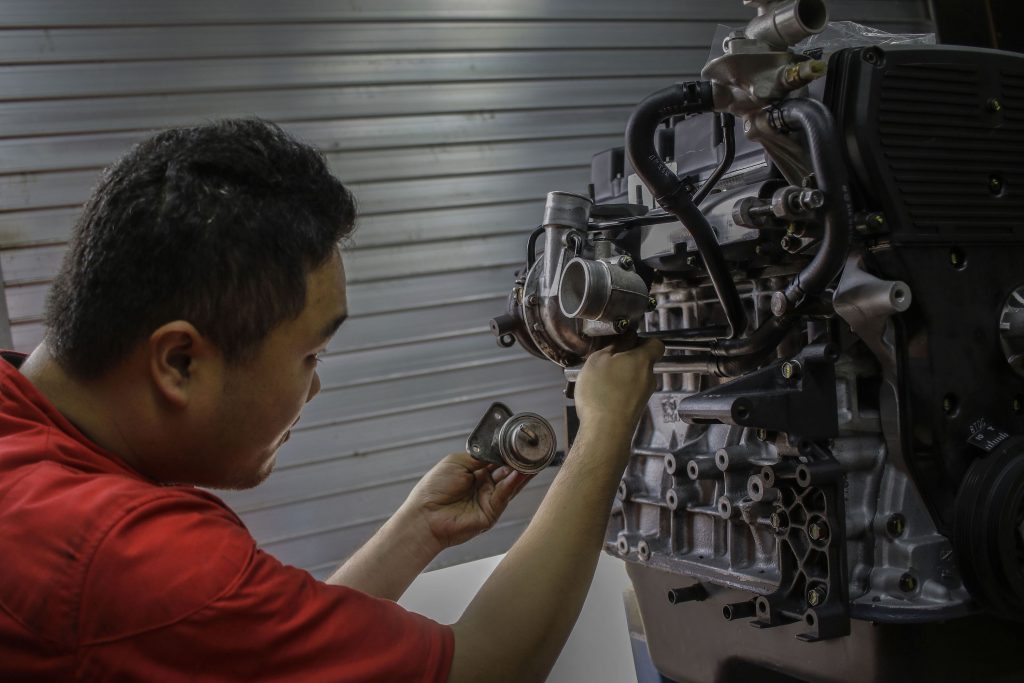
A mechanic rebuilding an engine
An engine being rebuilt | Seung-il Ryu/NurPhoto via Getty Images

RELATED: The Most Common Audi A4 Problems Owners Run Into

There are few things as frustrating as a costly car repair. Especially one that can take days to complete. Fortunately, some engine repairs caused by manufacturer errors are covered by the automaker. One Santa Fe owner told Consumer Reports, “The engine seized and failed without warning. Internet research identified a recurring issue with metal shards in engine. Fortunately, the manufacturer paid for a replacement engine.”

When manufacturer relief isn’t in the cards, drivers take a hard hit, including parts and labor. A typical engine repair costs drivers between $2500 and $4000. In some instances, the price of repair can exceed the value of the car. Perhaps even more costly is the time drivers will be without their vehicles.

An engine rebuild is not a simple repair. It takes weeks, if not months, depending on which parts are needed. Owners may have to rent a car during this timeframe adding to the cost of the repair. Months spent without a vehicle are a major inconvenience that many owners don’t have a contingency plan.

Which cars does Consumer Reports say to watch out for?

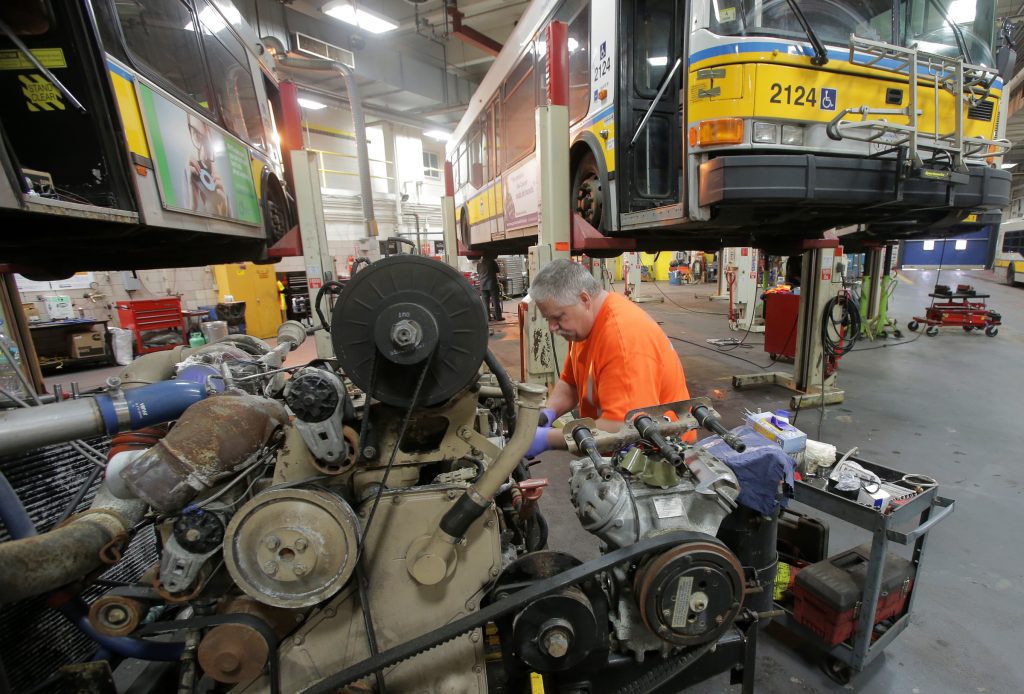
A machinist in an orange tee shirt and blue gloves rebuilds a large bus engine
Machinist rebuilds engine | Lane Turner/The Boston Globe via Getty Images

RELATED: The 1 Kia Sorento Model Year You Should Avoid at All Costs

One surprising maker stood out on the list. With a solid reputation for reliability, Hyundai has more cars on this list than any other brand. The 2012-2013 Santa Fe is prone to engine failure between 97,000 and 118,000 miles. 2013-2014 Santa Fe Sport is also affected, failing at 74,000-101,000 miles. 2011-2014 Sonata was shown to fail even sooner at 72,000-142,000 miles.

Engine failure issues can happen any time, but one model on this list has an average failure milage that seems unrealistically low. The 2015 Volvo XC60 is known for engine failure at only 60,000 miles. The 2011 Audi A4 makes it another 2,000 miles on average than the Volvo XC60.

Another automaker known for its engineering stood out in Consumer Reports’ research. The 2013 BMW X3 has been shown to experience engine failure before 100,000 miles. Subaru joins the list of typically reliable brands with engine failure issues. Around 81,000 miles, the 2012 Forester can get into trouble.

These trends are not a guarantee that these models will need a full engine replacement. Rather, they serve as a reminder that vigilant maintenance is necessary, even for cars with a reputation for being resilient.

The post Consumer Reports Says These Cars Are Headed for an Expensive Repair appeared first on MotorBiscuit.