
by Gabrielle DeSantis

Fast and Furious is one of the longest-running modern film franchises. The Fast and the Furious was released in 2001. 20 years later, audiences are enjoying F9. One of the biggest reasons the franchise has lasted so long is the amazing vehicles that are featured in the films.

20 years of fast

Mitsubishi Eclipse | Ollie Millington via Getty Images

The storyline can get convoluted, but let’s be honest, we all show up to the theaters to see what new cars Dom and his crew are cruising around in. The franchise has built a huge following and profited billions of dollars. At the heart of the franchise’s success are the cars that fans have obsessed over for decades.

The Fast franchise was built around the premise of illegal street racing. Racing imported and modified cars are a huge part of car culture for better or worse. The franchise capitalized on this phenomenon at its peak and has transformed the concept into a wildly profitable movie series. So, how exactly was this series able to survive 20 years of mixed reviews?

The cars behind ‘The Fast and the Furious’

Lykan HyperSport car from 'Fast and Furious 7', shown on the 2nd World Intelligence Congress , held in Tianjin Meijiang Exhibition Center.
The Lykan Hypersport | Zhang Peng/LightRocket via Getty Images

Huge multimillion-dollar budgets and some of Hollywood’s biggest stars are factors that contribute to the success of the films. However, the real stars have always been the cars since the very first film. The first movie included the 1970 Dodge Charger R/T, 1970 Chevrolet Chevelle SS, 1993 Mazda RX-7, 1994 Toyota Supra, 1995 Mitsubishi Eclipse, and many more iconic vehicles.

For years viewers would flood theaters to see which American muscle car Dom (Vin Diesel) would drive and which Japanese domestic vehicle Brian (Paul Walker) would drive. The movies showcased the latest automotive innovations as well as some classic throwback vehicles. Over the years, the budgets have gotten bigger, and the cars have gotten better.

Greatest ‘Fast and Furious’ cars

A blue Nissan GTR used on screen by Paul Walker in Furious 7.
The Nissan GTR | Ollie Millington/Getty Images

The franchise has a reputation for showing off some of the most notable cars in history. Some of the more exclusive vehicles include the 2007 Koenigsegg CCXR, the 2012 Nissan GT-R, and the Lykan Hypersport. Dom and the crew came a long way from driving modded affordable cars.

The hardest thing about running a franchise for so long is giving audiences something they have never seen before. The films have included so many stunts and explosions that they have almost become mundane and predictable. This time around, the team behind F9 tapped custom car builder SpeedKore Performance in Wisconsin to build them a muscle car that would blow the minds of viewers.

SpeedKore’s Hellcat-powered ’68 Dodge Charger

A black car is displayed during the Universal Pictures "F9" World Premiere at TCL Chinese Theatre on June 18, 2021 in Hollywood, California.
“F9” World Premiere at TCL Chinese Theatre | Frazer Harrison/Getty Images

Dom is known for his American muscle cars, but F9 was the first time he’s ever driven anything like this. The mid-engine Hellcat-powered ’68 Dodge Charger featured in the film included parts from Mopar and several different builders. SpeedKore Performance provided the custom chassis for this unique Hellcat/’68 Dodge Charger creation. Picture car coordinator Dennis McCarthy, the man responsible for most picture cars in the franchise, called the custom ’68 Charger the fastest charger the team had ever created.

The tuned custom mid-engine Charger easily makes over 800 horsepower and uses Lamborghini Gallardo six-speed manual transaxles. McCarthy’s team built nine versions of the vehicle, two of which are in actual working condition, according to MotorTrend. What makes this widebody custom charger so special is, unlike many picture cars, it can actually drive, making it all the more appealing on screen. With the right team and budget, maybe you can create a Fast and Furious build of your own.

RELATED: Surprising Fast Facts from the ‘Fast and Furious’ Franchise

The post SpeedKore Makes Custom ‘Fast and Furious’ Muscle Car appeared first on MotorBiscuit.
by Gabrielle DeSantis

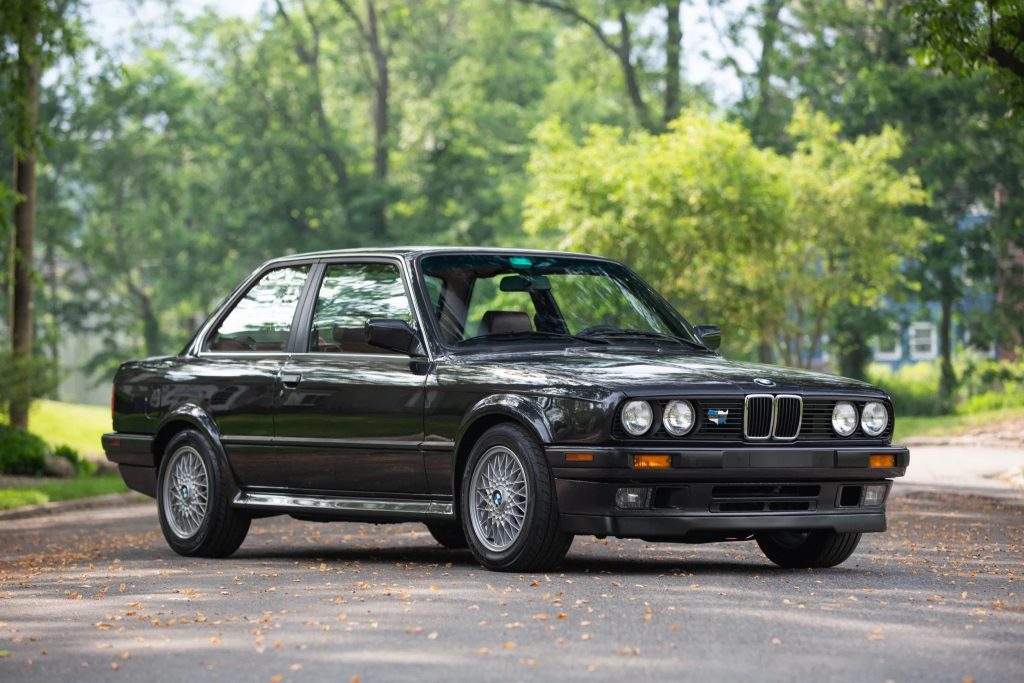
These days, the E30 M3 has a near-mythic status not just among BMW fans, but car enthusiasts as a whole. And that status means it and most other E30 3 Series models have appreciated significantly in value. But a few bargain E30s still exist, including some with special features of their own. One of these cars is up for sale this week on Bring a Trailer: a 1991 BMW 325iX.

The E30 BMW 325iX was the German automaker’s first AWD car

E30 BMW 325iX | BMW

Today, BMW offers its xDrive all-wheel-drive system in a variety of models, including sedans. But xDrive didn’t exist in the early 1980s, nor did any of the AWD systems other automakers use today. Back then, 4WD and AWD were limited to off-road and military vehicles. It took the arrival of the Audi Ur-Quattro to spur the development of the first AWD road cars. And in BMW’s case, that first outing was the E30 325iX, Silodrome explains.

First shown in 1985 as the E30 BMW 325i ‘Allrad,’ the production 325iX debuted one year later. However, US buyers had to wait until 1988 to get their hands on one, Autoweek reports. And we only got the sedan, while European buyers could also get it as a wagon.

But while the US-market BMW 325iX was only available in one body style, it’s not identical to the standard E30. It has a wider track, taller ride height, modified front suspension setup, and model-specific wheels and fender flares. And while its 168-hp ‘M20’ 2.5-liter inline-six engine is roughly identical to the ones in other 325i models, the 325iX’s M20 has a slightly different oil pan and block, Hagerty explains.

These modifications are all to support what makes the BMW 325iX unique among E30 models: that AWD system. With a viscous limited-slip center differential it’s “pretty trick” even compared to the Audi Quattro’s system, Road & Track notes. And it lets the 325iX act almost like a RWD car, Autoweek explains. As a result, it’s both fun to drive and easy to drift.

There’s a 1991 BMW 325iX on Bring a Trailer

A black 1991 BMW 325iX on a tree-lined road
1991 BMW 325iX | Bring a Trailer

Even though the US didn’t get the BMW 325iX until 1988, it was only available until 1991. That makes the 325iX currently listed on Bring a Trailer a final-production-year car.

It’s also a fairly well-equipped car with just over 71,000 miles on the clock. From the factory, this 1991 BMW 325iX has A/C, a sunroof, cruise control, an M-Tech steering wheel, power windows, fog lamps, and side-skirt extensions. Plus, while the 325iX was available with an automatic, this car has a five-speed manual. That’s a desirable feature, as automatic 325iXs tend to develop transfer case leaks, Hagerty says.

The modified red-leather front seats and black dashboard of a 1991 BMW 325iX
Modified 1991 BMW 325iX front interior | Bring a Trailer

In addition, this 1991 BMW 325iX has a few noteworthy modifications. It has a front strut bar, Scorpion cat-back exhaust, aluminum radiator, Bilstein shocks, H&R springs, and an aftermarket stereo system with a trunk-mounted subwoofer. Also, the standard seats were replaced with red-leather-upholstered sport seats.

Bring a Trailer notes that this 325iX was in an accident in June 2011. However, since then the damaged hood, front bumper, and front fenders were repaired and refinished. And the timing belt was replaced in July 2020. That’s important for E320 BMWs with M20 engines because they’re interference engines, R&T explains. If the timing belt and water pump aren’t changed regularly, the belt can snap and cause the pistons to damage the valves.

It’s a well-maintained E30 bargain worth buying

As of this writing, this 1991 BMW 325iX is listed on BaT at $10,250 with three days left in the auction. That’s below average for an E30 BMW, which typically costs around $15K on BaT these days.

In terms of reliability, the 325iX is fairly solid, Hagerty notes. Besides the timing belt, the only real issues are occasional part shortages and the need to replace the viscous center differential. However, the AWD is purely mechanical; no expensive or complicated electronics to break. And with some winter tires and extra rust protection, this 325iX could potentially be a year-round classic. Not to mention it’s a bargain way of getting into an E30.

Follow more updates from MotorBiscuit on our Facebook page.

RELATED: Which Used BMW Engines Are the Most Reliable?

The post Bring a Trailer Bargain of the Week: 1991 BMW 325iX appeared first on MotorBiscuit.

by Gabrielle DeSantis

The automotive industry has officially entered the alternative energy era. Some consumers will join begrudgingly, but eventually, all new vehicles will be electric vehicles. The revolution is here. Why else would Ford put out an electric truck? Things are changing, and not just for personal vehicles either. The trucking industry is experiencing a major shift as well.

Trucking is about to get safer

A commercial truck | Cole Burston/Bloomberg via Getty Images

Truckers are responsible for just about everything consumers can think of being delivered to their favorite shops and stores. If you buy it at a store, there’s a huge chance it came from a truck, especially big retailers. Trucking has provided stable jobs for millions in the U.S. alone. Unfortunately, diesel-fueled semi-trucks aren’t doing great things for the environment.

Until someone invents a safe teleportation device, the trucking industry will be around for a long time. This presents a huge problem for the environment but never fear. Automakers are getting to work on several alternative energy options to prevent the trucking industry from being one of the biggest causes of pollution. Thanks to new technology, we soon won’t have to feel bad about our next-day-delivery online purchases.

How do hydrogen fuel cells work?

A red 2021 Honda Clarity Fuel Cell hydrogen vehicle.
The 2021 Honda Clarity Fuel Cell | Honda

So first, what on earth is a hydrogen fuel cell, and why are so many automakers suddenly incorporating it in their vehicles? Most modern vehicles use internal combustion engines. These engines burn fuel (mostly petroleum liquids and crude oil). This fuel-burning process creates heat inside the engine that moves the pistons at a rapid pace to drive the wheels and transmission.

Battery-powered electric vehicles aren’t the only type of electric vehicle. Battery-powered EVs are powered by electric motors and can be charged at various charging stations. Hydrogen fuel cells use a different type of technology to power vehicles. These vehicles actually produce electricity rather than consuming it.

Hydrogen fuel cells produce power by using fuel from a tank similar to an internal combustion engine. The big difference is the hydrogen fuel cell vehicles don’t actually burn anything. Hydrogen fuel cell-powered vehicles use hydrogen to produce electricity to drive the vehicle chemically. The big difference between battery electric vehicles (BEVs) and fuel cell electric vehicles (FCEVs) is the way they refuel.

Hydrogen fuel cell vehicles Vs. battery electric vehicles

A blue 2021 Toyota Mirai hydrogen fuel cell electric vehicle.
The 2021 Toyota Mirai Fuel Cell Electric Vehicle | Toyota

BEVs are becoming more common across the globe. Companies like Tesla have popularized BEVs, and they only seem to be increasing in demand. However, there is one huge advantage that FCEVs have over BEVs. It has to do with one of the biggest BEV pitfalls: charging time.

Charging a BEV can take hours. To achieve a full charge, drivers have to sit their vehicle at the electric charger for an extremely long time compared to the time it takes to refuel a vehicle with an internal combustion engine. Tesla has a supercharger network, but the superchargers are not currently compatible with most other vehicle brands.

Hydrogen fuel cells and the trucking industry

A Nikola Motor hydrogen fuel cell truck.
The Nikola TRE FCEV | Nikola Motor

So, what does this all have to do with the trucking industry? The end of internal combustion engines is near, and semi-trucks will need a fuel source to replace diesel. Semi-trucks powered by electric batteries are completely impractical at the moment because the charging technology isn’t up to par yet.

Truck drivers don’t have hours to refuel. They need to get back on the road quickly and usually travel long distances on a tight schedule. Hydrogen fuel cells are here to save the day. FCEVs can be refueled just like regular old gas-powered vehicles because hydrogen is their main fuel source. Hydrogen can be pumped into a vehicle’s tank just like gas, and a FCEV can be ready to roll within minutes.

According to MOTOR, over 800,000 commercial trucks powered by hydrogen fuel cells will be sold by 2035. Faster fueling and higher range are the main reasons hydrogen fuel cell commercial trucks are favored over trucks with electric batteries. Hydrogen fuel cell trucks are expensive, and more hydrogen fueling stations must be built, but they are the superior EV for long hauling. Hydrogen fuel cells are about to change the trucking industry forever.

RELATED: The Reason Why Fuel Cell Vehicles Won’t Outsell EVs Is a Myth

The post Are Hydrogen Fuel Cells Taking over the Trucking Industry? appeared first on MotorBiscuit.

by Gabrielle DeSantis

Whether automotive enthusiasts like it or not, the industry is changing. In the late 90s and early 2000s, Honda and Toyota mass-produced the first commercially successful hybrid vehicles. In 2010 GM introduced a plug-in hybrid, and Nissan unveiled the fully electric Nissan Leaf. Today in 2021, the future is certainly electric, and the present is starting to reflect the new trend as well.

Hybrid and EV stepping stones

The 2021 Toyota Prius | Toyota

The switch to alternative energy and sustainable fuel sources has been a long time coming. The journey that started at the turn of the century is finally coming to its climax as hybrid and EV models are positioned to disrupt the automobile industry. How did we go from a world that relied solely on gas to this electric future?

Before EVs could even be considered at a large scale commercially, automakers knew they had to ease their way into this new technology. Toyota had the foresight to develop the Toyota Prius in the early 2000s. The Prius was controversial because of its novelty and became one of the most successful hybrids because it had broken new ground in many ways.

Honda also tried their hand at a hybrid vehicle with the Honda Insight, but it didn’t quite stick the way the Toyota Prius did. Soon other automakers began to follow suit as greenhouse gases became more of an environmental threat. The Chevy Volt arrived in 2010 as the first widely available plug-in hybrid. In 2010 Nissan also released its Nissan LEAF, one of the first all-electric vehicles to be sold in high quantities.

Age of the hybrid and EV

A red Toyta RAV 4 Prime hybrid at the 112th Annual Chicago Auto Show at McCormick Place in Chicago, Illinois.
The Toyota RAV4 Prime | Raymond Boyd via Getty Images

In 2021 hybrid options are common. Electric vehicles are also much more common, and Teslas are a regular sight on the roads of big cities. Tesla is a huge part of the rise of the EV. Their vehicles use amazing technology and boast performance that is often better than most gas vehicles. Tesla is the undisputed leader in the EV race, but what about hybrids?

EVs are a much larger shift to make from gas-powered vehicles, leaving hybrid vehicles as the less extreme transition. As a result, automakers across the board have been offering some of their most popular models in trims that use electricity. Look no further than the 2021 Honda Accord and 2021 Hyundai Sonata as perfect examples.

The transition to hybrid options is an easier step for most automakers and a way to capitalize on the ongoing shift to alternative energy sources. Most of your favorite automakers already offer alternative energy options. Now companies like Ford, Honda, GM, and many more are looking to the future and fully electric vehicles.

What sells more?

A white 2021 Nissan LEAF electric vehicle.
The 2021 Nissan LEAF | Nissan

While electric vehicles may be the flashier option because of their novelty, sales between hybrid and electric vehicles are actually competitive. Hybrid vehicles offer incredible gas mileage and are increasing in range using just electricity. Hybrids are the best of both worlds, offering a comfortable entry point into reducing emissions.

According to InsideEVs, hybrid vehicles outsold fully electric vehicles by over 50,000 units in April. Consumers were almost three times as likely to buy a hybrid instead of an EV. With models like the Toyota RAV4 Prime and Ford Escape plug-in hybrid out, it’s tough for fully electric vehicles to compete. Models that use gas and electricity have become a way to offer more fuel-efficient alternatives to consumers’ favorite vehicles instead of brand new EVs that seem more foreign to drivers.

The total market share of none gas-powered vehicles is reaching record heights. Hybrids are outselling EVs, and plug-in hybrids are on the rise as well. Automakers are only becoming more creative with their alternative energy releases. Who would have ever thought the Ford F-150 Lightning would exist in our lifetime? The road to a more sustainable automobile industry is sure to be full of new exciting hybrid models.

RELATED: Driving the 2021 Ford F-150 Hybrid Changes the Game

The post Hybrid Vehicle Sales Crushed EV Sales in April appeared first on MotorBiscuit.